


Figuring out how much of your paycheck to save is one of the most common financial questions Americans ask themselves — and one of the most misunderstood. There’s no single magic percentage that works for everyone, but there are well-tested frameworks, benchmarks by age and income, and practical steps that can help you land on a number that actually fits your life. This guide breaks down the most popular savings rules, how to adjust them for your situation, and how to build a savings habit that sticks.
The Short Answer
Most financial experts recommend saving 20% of your gross income, split between retirement, an emergency fund, and other financial goals. This is the backbone of the widely used 50/30/20 budgeting rule. But 20% is a starting point, not a rigid rule — your ideal savings rate depends on your income, debt load, cost of living, age, and financial goals.
If 20% feels impossible right now, that’s okay. Saving something consistently — even 5% or 10% — is far more valuable than saving nothing while waiting for the “right” percentage to become affordable.
The 50/30/20 Rule: A Starting Framework
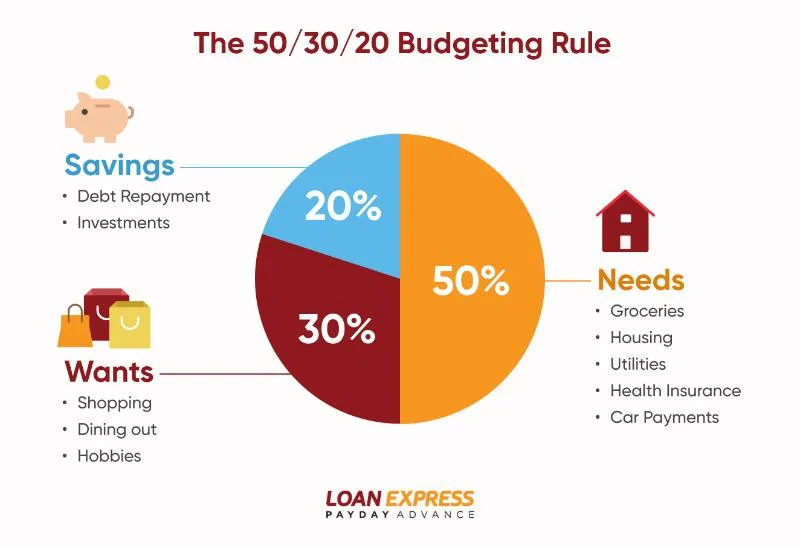
Popularized by Senator Elizabeth Warren in her book All Your Worth, the 50/30/20 rule divides after-tax income into three buckets:
- 50% for needs: rent or mortgage, groceries, utilities, insurance, minimum debt payments, transportation
- 30% for wants: dining out, entertainment, subscriptions, travel, hobbies
- 20% for savings and debt repayment: retirement contributions, emergency fund, extra debt payments beyond the minimum
This framework is popular because it’s simple and flexible. It doesn’t require tracking every category of spending — just three broad buckets. For many households, especially those with moderate living costs, this ratio is realistic and sustainable long-term.
However, it doesn’t work equally well everywhere. In high-cost cities like San Francisco, New York, or Boston, housing alone can eat well past 50% of take-home pay, making the 20% savings target harder to hit without adjusting other categories. Once a savings target is set, the next question is where that money actually sits — an account built for exactly that job keeps it separate from everyday spending.
Why 20% Isn’t Universal
The 20% benchmark assumes a household with manageable debt, stable income, and moderate cost of living. Several factors can push your ideal savings rate higher or lower:
Income level. Higher earners can often save a larger percentage because their fixed costs — rent, food, insurance — don’t scale proportionally with income. Someone earning $150,000 a year might comfortably save 30-40%, while someone earning $40,000 may struggle to hit even 10% after covering essentials.

Debt load. If you’re carrying high-interest debt, such as credit cards charging 20%+ APR, aggressively paying that down often makes more financial sense than maximizing savings, since the “return” from eliminating that debt exceeds what most investments would earn.
Age and timeline. Someone starting their career at 22 has decades for compound growth to work in their favor, so even a modest savings rate can build significant wealth. Someone starting retirement savings at 45 needs a considerably higher rate to catch up.
Cost of living. Housing costs vary enormously across the US. A 20% savings rate in a low-cost-of-living state like Ohio or Oklahoma is a very different challenge than the same rate in California or Massachusetts.
Job stability and benefits. Someone with a pension, generous employer 401(k) match, or highly stable government job may need to save less personally than a freelancer or gig worker who has no employer-sponsored retirement plan and inconsistent income.
Savings Benchmarks by Age
Financial firms like Fidelity and T. Rowe Price publish widely cited retirement savings milestones, expressed as multiples of your annual salary that you should aim to have saved by certain ages:
- By age 30: 1x your annual salary
- By age 40: 3x your annual salary
- By age 50: 6x your annual salary
- By age 60: 8x your annual salary
- By age 67: 10x your annual salary
These targets assume you start saving in your 20s and contribute consistently, generally around 15% of income toward retirement specifically (not counting other savings goals like a house down payment or emergency fund). If you’re behind these benchmarks, it doesn’t mean disaster — it means your savings rate may need to increase, or your retirement timeline may need to shift.
Breaking Down the 20%: Where Should It Go?
A common way to structure the 20% savings bucket is:
1. Emergency fund (until fully funded). Most experts recommend keeping 3 to 6 months of essential living expenses in a liquid, easily accessible account, such as a high-yield savings account. Freelancers, single-income households, or people in unstable industries may want closer to 6-9 months. Until this fund is built, it often makes sense to prioritize it over other savings goals, since it protects you from going into debt during a job loss, medical emergency, or unexpected expense.
2. Retirement accounts. Once you have at least a starter emergency fund (many people aim for $1,000 initially), retirement contributions typically take priority — especially up to the point where you capture your full employer 401(k) match, which is essentially free money. After that, common vehicles include:
- 401(k) or 403(b): employer-sponsored plans with 2026 contribution limits around $24,000 for those under 50 (check current IRS limits, as these adjust annually)
- Traditional or Roth IRA: individual retirement accounts with lower contribution limits but more investment flexibility
- HSA (Health Savings Account): if you have a high-deductible health plan, HSAs offer triple tax advantages and can double as a retirement vehicle after age 65
3. Other goals. This might include saving for a home down payment, a car, a wedding, education, or simply building a taxable brokerage account for long-term wealth building beyond retirement accounts.
What If You Can’t Save 20%?
Many Americans, especially those early in their careers, living in expensive cities, or paying off student loans, find 20% unrealistic right now. If that’s you, here’s a more forgiving approach:
Start smaller and build up. Even 1-5% is a meaningful start. Many financial planners suggest increasing your savings rate by 1% every few months, or every time you get a raise, until you reach a comfortable target.
Automate what you can. Setting up automatic transfers to a savings account or automatic payroll deductions to a 401(k) removes the temptation to skip saving in a given month. Many people find automation more effective than willpower.
Capture the full employer match first. If your employer offers a 401(k) match, contributing enough to get the full match should almost always be a higher priority than other savings goals, since it’s an immediate, guaranteed return that’s hard to replicate elsewhere.
Prioritize based on interest rates. If you have debt at a higher interest rate than you’d realistically earn by investing, paying it down faster often provides a better guaranteed return than a lower savings rate paired with investment growth.
Adjusting for Life Stage
Your ideal savings rate isn’t static — it should shift as your life circumstances change.
Early career (20s): Focus on building an emergency fund and capturing any employer match. Even a small percentage matters here because of the long compounding runway ahead.
Family-building years (30s-40s): Costs often rise with children, housing upgrades, or caregiving responsibilities. Savings rates may temporarily dip, but protecting retirement contributions — even at a reduced level — helps avoid falling too far behind.
Peak earning years (40s-50s): This is often the best window to increase your savings rate significantly, especially once major expenses like childcare or a mortgage start easing.

Pre-retirement (late 50s-60s): The IRS allows “catch-up contributions” for those 50 and older, permitting higher annual contributions to 401(k)s and IRAs. This is a valuable tool for anyone behind on their retirement targets.
Common Mistakes to Avoid
Waiting for a “perfect” savings rate. Some people delay saving anything because they can’t hit 20% yet. Saving less is far better than saving nothing.
Ignoring high-interest debt. Building savings while carrying 20%+ APR credit card debt often works against you financially, since the interest cost typically outweighs investment returns.
Not adjusting for inflation and raises. If your savings rate stays flat while your income grows, you’re missing an opportunity to accelerate your progress. A common strategy is saving 50% of every raise.
Keeping all savings in low-yield accounts. Emergency funds belong in accessible, low-risk accounts, but longer-term savings goals typically benefit from being invested, since inflation erodes the purchasing power of cash sitting idle for years.
The Bottom Line
There’s no one-size-fits-all answer to how much of your paycheck you should save, but 20% is a widely respected benchmark for households with average debt and cost of living. The right number for you depends on your income, expenses, debt, age, and goals — and it’s meant to change over time as your circumstances evolve.
The most important factor isn’t hitting a perfect percentage immediately. It’s building a consistent habit, automating contributions where possible, capturing any employer match, and gradually increasing your savings rate as your income grows or expenses shrink. Small, steady progress compounds into significant financial security over time — often more reliably than chasing an ideal number from day one.