
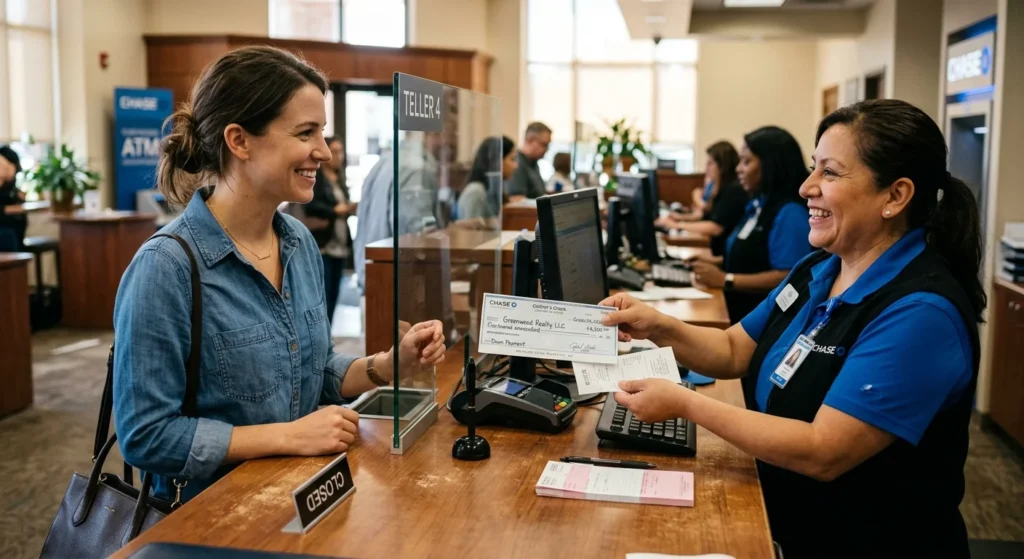

Bank draft vs certified cheque comes down to whose money backs the cheque. A bank draft is written against the bank’s own funds, while a certified cheque is your own cheque that the bank has verified and set the money aside for. That difference decides who carries the risk if something goes wrong, and which form a seller, landlord, or title company will accept.
In the US, a bank draft is usually called a cashier’s check, and the word is spelled “check” instead of “cheque.” This guide uses those American terms from here on. Elsewhere, such as Canada, “bank draft” is the standard term, and the UK uses “banker’s draft.” The sections below cover fees, funds-availability rules, lost-check procedures, scams, and a short test for choosing between the two.
Bank Draft vs Certified Check at a Glance
Both are safer than a personal check, and both get next-day funds treatment under federal rules. They differ in who writes the check and whose money stands behind it.
| Feature | Bank Draft (Cashier’s Check) | Certified Check |
| Who writes it | The bank | You, on your own check, then the bank certifies it |
| Money behind it | The bank’s own account, funded by you when you buy it | Your account, with the amount taken out or frozen at certification |
| Who promises payment | The issuing bank | The certifying bank |
| Typical fee | About $5 to $15 | Often $10 to $20 |
| Availability | Offered by nearly every bank | Dropped by some banks |
| Next-day funds (Reg CC) | Yes, if conditions are met | Yes, if conditions are met |
In short, a bank draft moves the risk to the bank the moment you buy it. A certified check keeps your name and account on the check, with the bank adding its promise to pay.
What a Bank Draft Is and How It Works
In the US, a bank draft is a check issued by a bank and drawn on that bank’s own account. You pay the amount plus a fee, and the bank prints a check payable to whoever you name. Because your money is already in the bank’s hands, the payee relies on the bank and not on your balance.
The law supports this. Under section 3-412 of the Uniform Commercial Code (UCC), the bank that issues a cashier’s check is obligated to pay it. States adopt their own versions of the UCC, so exact wording varies.
Many branches issue one while you wait. You need photo ID and enough in your account to cover the amount and fee. If the amount is above the bank’s limit, a manager can sometimes approve it, which comes up often in real estate purchases.
Where a Teller’s Check Fits In
You may be handed a teller’s check instead of a cashier’s check. It is drawn on the bank’s account at another bank rather than on the bank’s own books. For a payee, the practical difference is small, and Regulation CC treats both the same for next-day funds availability.
What a Certified Check Is and How Certification Works
A certified check starts as an ordinary check. You write it on your own account, take it to the bank, and an employee confirms that your signature is genuine and the money is there. The bank then marks the check as certified and sets the amount aside, usually by taking it out of your account right away.
The check is still yours. Your name, account number, and signature are on it, but the bank has now promised to pay it. That promise is what lets a stranger accept it with confidence.
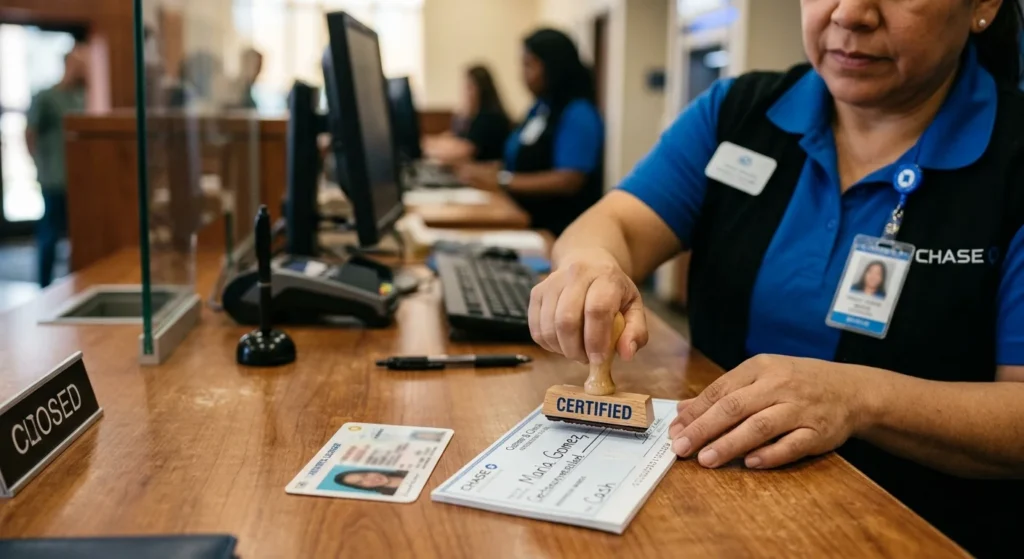
Availability is the catch. Cashier’s checks became the standard for guaranteed payments, and some banks dropped certified checks from their product lineup, so call your branch before you plan around one. Some contracts, court orders, and agency requests still ask for certified funds by name, and in those cases the paperwork decides for you.
How Much Each One Costs
Cashier’s check fees at major banks typically run $5 to $15, and many charge about $10, according to Legal Clarity’s banking guides. Certified checks tend to cost the same or a little more. SoFi puts the range for a certified check at $10 to $20.
The fee is usually taken from your account when the check is issued, and some banks let you pay it in cash. Certain premium accounts include free bank checks each month, so read your account’s fee schedule before you pay.
Online-only banks sometimes offer neither type. SoFi states on its own site that it does not issue cashier’s or certified checks to members. If you bank online, you may need an account at a bank with branches for this one payment.
Fees change often, so treat these ranges as a starting point and confirm the current number with your bank.
How Fast the Money Becomes Available
Federal Regulation CC (12 CFR 229.10) requires banks to make cashier’s, certified, and teller’s check deposits available by the next business day. Three conditions apply. The payee deposits the check into their own account, deposits it in person with a bank employee, and uses a special deposit slip if the bank requires one.
If the payee deposits through an ATM or mobile app instead, the bank gets one extra business day. There is also a dollar limit. Next-day treatment covers the first $6,725 deposited in a single day, a figure the Consumer Financial Protection Bureau raised from $5,525 effective July 1, 2025.
Amounts above that limit can be held longer. New accounts open 30 days or less get the same daily limit on next-day treatment. The thresholds are adjusted periodically, so verify the current figure before you rely on it.
Since both types get the same treatment, speed should not decide your choice. The more useful point is that available funds are not final funds. A bank can reverse a deposit later if the check turns out to be counterfeit, which is how fake-check scams work.
Lost, Stolen, or Wrong Amount: Getting Your Money Back
A cashier’s or certified check cannot be stopped the way a personal check can. If one is lost, stolen, or destroyed, you file a declaration of loss with the issuing bank. Under UCC 3-312, the claim generally does not become enforceable until the 90th day after the check’s date, or after acceptance for a certified check.
During that window, the bank may still pay the original if someone presents it. A refund or replacement can therefore take about three months, and state rules and bank policies differ. Ask the branch for its timeline and any forms it requires.
Two habits reduce the risk. Buy the check close to the day you need it, and photograph the front and keep the receipt, since the serial number is what the bank searches for. If the amount or payee name is wrong and you still hold the check, take it back to the issuing bank, which can usually void it and issue a new one.
Which One Should You Use? A Three-Question Test
Most guides stop at the point that cashier’s checks are slightly safer. That is true, but it does not help when a specific person is waiting on a specific payment. These three questions get you to an answer faster.
First, has the recipient said what they accept? Follow their instruction. Title companies, courts, landlords, and government offices often write the accepted form into their paperwork, and the wrong one can delay a closing or a filing.
Second, does the recipient know you? If the payee is a stranger, such as a private car seller, a bank draft is the cleaner choice. The recipient relies on the bank alone and does not need to wonder whether your account still holds the money.
Third, does the payment need to trace back to your account? A certified check carries your name and account number, which some agencies and attorneys want for their records. A bank draft can list you as the remitter, but it is not drawn on your account.

If all three answers are neutral, choose the bank draft. Nearly every bank offers one; it usually costs the same or less, and the bank itself carries the payment obligation.
1. Buying a Home
Down payments and closing costs often exceed a bank’s check limit, and many title and escrow companies ask for a wire transfer instead. Get the closing agent’s accepted payment forms in writing before you go to the bank. If checks are allowed, ask whether they want a cashier’s check or a certified check, because some offices take only one.
2. Buying or Selling a Used Car
As a seller, meet the buyer at their bank and watch the teller issue the check, or call the issuing bank before you sign over the title. As a buyer, a bank draft payable to the seller’s exact legal name is the common choice.
3. Rent, Deposits, and Court Fees
Landlords and courts often specify the form of payment. Some ask for certified funds, which can mean a cashier’s check, a certified check, or a money order depending on the office. Ask which they take instead of assuming.
Spotting a Fake Cashier’s Check
The Federal Trade Commission warns about fake check scams. A stranger sends you a check, asks you to deposit it, then asks you to send part of the money back by wire, gift card, or another method. The check looks genuine, and your bank may release the funds within a day or two.
Days or weeks later, the bank finds the check is counterfeit and takes the money back out of your account. You owe the difference, and the money you sent is usually gone.
Overpayment is the biggest warning sign. A real buyer has no reason to send more than the price and ask for a refund. Do not send anything back until the original check has fully cleared, which is different from being available.

To verify a check, look up the issuing bank’s phone number yourself instead of calling the number printed on the check. You can also deposit it in person at a branch of the issuing bank, or ask your own bank to confirm it has cleared.
When Neither Option Fits
Wire transfers move money between bank accounts, often the same day, but they usually cost more, according to Citi’s guidance. They are hard to reverse, so confirm the recipient’s instructions by phone before sending. ACH transfers and online payments cost less but take longer.
USPS money orders are capped at $1,000 and carry a small fee, which suits rent and deposits but not large purchases. An escrow service can hold the funds until both sides meet their terms, a good fit for sales between strangers.
How to Get One Without Mistakes
A few minutes of preparation prevents most problems at the teller window.
- Call the branch to confirm it issues the type you need, and ask about the fee and amount limit.
- Bring a government photo ID and your account details.
- Spell the payee’s name exactly as the recipient gives it, including words like LLC or Trust.
- Ask whether you can be named as the remitter, which helps if you need to prove who paid.
- Take the receipt, and photograph the cheque before handing it over.
If you are still weighing bank draft vs certified cheque for a specific payment, ask the person receiving the money which form they accept, then ask your bank which ones it offers. Fees, funds-availability limits, and bank policies change, so confirm current figures before you go. This article is general information and not legal or financial advice.