


The fastest way to get a free credit report is to visit AnnualCreditReport.com, the only site federal law authorizes for this purpose. You can request reports from Equifax, Experian, and TransUnion there for free. You do not need a credit card, and most people finish in under ten minutes.
Free weekly access began as a pandemic measure in 2020 and is now permanent, so you no longer wait a full year between checks. This guide covers every way to request your reports, the situations that earn you extra copies, how to read what you receive, and how to spot fake sites.
Why AnnualCreditReport.com Is the Only Site You Need
Plenty of websites advertise a free credit report, but only one is authorized under federal law to fill these orders. The FTC warns that other sites imitate it, use misspelled versions of the web address, or promise free reports, scores, or monitoring and then collect payment details.
AnnualCreditReport.com was created by the three bureaus, and each report you pull there is a full copy of the file that bureau keeps on you. There is no trial period to cancel, and no upsell between you and your own data.
One limit surprises people. The reports do not include credit scores, which are provided separately. A later section covers where to find a score for free.
What a Credit Report Contains and Who Sees It
A credit report is a record of how you have handled borrowed money. It lists your credit cards, loans, payment history, balances, and any accounts sent to collections, along with identifying details like your name and address.
Lenders, landlords, insurers, and some employers use it to judge risk, within limits set by federal law. Employers need your written permission before pulling it.
Because those decisions affect loan rates, apartment approvals, and insurance prices, one wrong entry can cost real money. Reading your report first is the cheapest protection available.
How to Get Your Free Credit Report Online, Step by Step
Online is the quickest route. Here is the process from start to finish.
- Type AnnualCreditReport.com straight into your browser instead of clicking a search ad, since lookalike sites sometimes appear above the real result.
- Select the option to request your free credit reports. The site takes you through one bureau at a time.
- Enter your full legal name, date of birth, Social Security number, and current address. Add your previous address if you moved within the last two years.
- Answer the identity questions. They are drawn from your credit file, such as a past lender or a loan you once held, and they keep someone else from pulling your report.
- Pick which bureaus to view. You can open all three the same day or spread them out over the year.
- Read the report, then save a PDF or print a copy for your records. Store it somewhere private, because it contains your Social Security number and account details.
Use a device and network you trust. A coffee shop’s public Wi-Fi is a poor place to type a Social Security number. Most people see a report within seconds of passing the identity check.

How to Get a Free Credit Report by Phone or Mail
If you would rather skip the internet, you have two other options. You can call 877-322-8228 or mail a completed request form to Annual Credit Report Request Service, P.O. Box 105281, Atlanta, GA 30348-5281.
The request form is a one-page PDF on the official site. Fill in your details, choose the bureaus you want, and sign it. Certified mail gives you a receipt.
Phone and mail requests return your paper reports, so expect to wait a couple of weeks. If you need the information for a mortgage application or a dispute with a deadline, the online route is faster.
How Often You Can Check Your Credit Report for Free
Federal law entitles you to one free report every 12 months from each bureau, and the three bureaus also run a permanent program that lets you check each report weekly at no cost. For most people, the weekly option is the one to use.
Equifax adds one more layer. Because of legal settlements, it has offered at least six extra free reports per year through December 31, 2026. That date is close, so confirm on the site whether the extra Equifax reports continue before you count on them.
Does Checking Your Own Credit Report Hurt Your Score?
No. When you request your own report, the bureaus log it as a soft inquiry, which does not affect your score and is not visible to lenders.
Hard inquiries are different. They happen when you apply for a loan or card and give a lender permission to pull your file, and they can lower your score by a few points for a short time.
That is why pulling a weekly report is safe, while applying for several cards in one month is not.
Extra Free Credit Reports You May Qualify For
The Fair Credit Reporting Act gives you additional free reports in specific situations, outside the weekly program. You can request one more free copy from each bureau within 12 months if any of these apply:
- A company denied you credit, insurance, or a job based on information in a report, and you ask within 60 days of the notice.
- You are unemployed and plan to apply for a job within 60 days.
- You receive public welfare assistance.
- You believe your file contains errors caused by fraud, including identity theft.
Equifax also lists placing a fraud alert on your file as a qualifying reason. If a lender turns you down, the denial notice names the bureau it used, so contact that bureau directly for your copy.
Free Credit Report vs. Free Credit Score
A credit report lists your history. A credit score is a number calculated from that history. Reports from AnnualCreditReport.com do not include scores, which is why many people feel they received half of what they wanted.
Many card issuers and banks now show a FICO or VantageScore in their apps at no charge. Check your statements or online account before paying anyone for a score. The number you see may not be the version a particular lender uses, so treat it as a close estimate.
The bureaus also run their own free accounts. For example, myEquifax includes free Equifax reports each year. These are legitimate, but they are separate from AnnualCreditReport.com.
What to Do If the Site Cannot Find or Verify You
Sometimes the request stalls. The identity questions may not match your file, or the site may say it cannot locate a report for you.
If a bureau cannot verify you online, it will usually direct you to request the report by phone or mail instead. Double-check that the name, address, and Social Security number you typed match your records exactly, including suffixes like Jr.
A message that no file exists often means you have little or no credit history, which is common for young adults and recent arrivals. A credit freeze does not block your own free report, though you may need to confirm your identity another way.
How to Read Your Credit Report Without Getting Lost
A report runs several pages and leans on abbreviations. A focused review catches most problems in about fifteen minutes.
1. Personal Information
Confirm that your name, addresses, and employer are correct. An unfamiliar address or a misspelled name can mean someone opened accounts in your name, or that your file got mixed with a relative’s.
2. Accounts and Payment History
Every credit card, mortgage, auto loan, and student loan appears with a balance, limit, and monthly status. Look for accounts you do not recognize and late payments you know you made on time. Accounts you closed should read closed.
3. Inquiries
Hard inquiries come from applications you submitted. Soft inquiries, such as your own checks or pre-approved offers, are visible only to you. Any hard inquiry you cannot explain deserves a closer look.
4. Collections and Public Records
Check that dates and amounts match your own records. Under the Fair Credit Reporting Act, most negative items fall off after seven years, and Chapter 7 bankruptcies can stay for up to ten.
5. Compare All Three Reports Side by Side
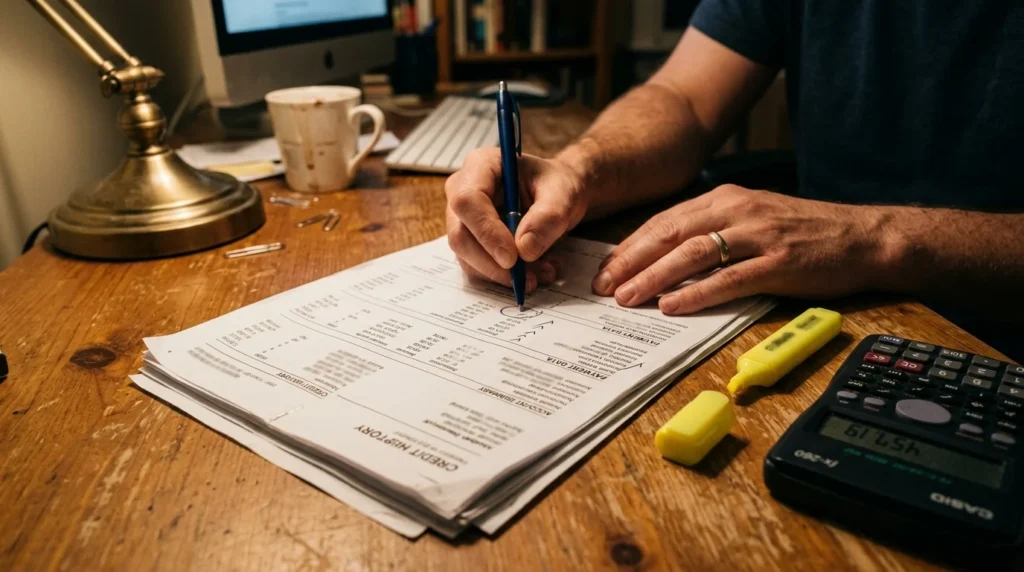
Lenders are not required to report to every bureau, so your three files can differ. A credit union might report only to Experian, for instance. Open all three on the same day and look for accounts or late payments that appear in one file and not the others. That mismatch is often where errors hide, and many guides skip this step.
What to Do If You Find an Error on Your Credit Report
Disputes are free. Contact each bureau showing the error separately, and also contact the company that supplied the wrong information, such as the lender or collector.
Start with the bureau’s online dispute portal or a letter sent by certified mail. Identify each item, explain why it is wrong, and attach copies of documents such as a payoff letter or bank statement. Keep copies of everything you send.
A strong dispute letter is short. Give your full name and address and enough identifying detail for the bureau to find your file, then list each disputed account with the creditor name and account number, say what is wrong, and ask for correction or deletion.
The Fair Credit Reporting Act generally gives the bureau 30 days to investigate and requires it to send you the results. If the item is corrected, ask for a fresh copy of your report. If the bureau keeps it, you can add a short statement of explanation to your file and submit a complaint to the Consumer Financial Protection Bureau.
Do not pay a company that promises to remove accurate negative items for a fee. Accurate information stays on your report for its legal time limit, and you can file disputes yourself at no cost.
Warning Signs of a Fake Free Credit Report Site
Scam and bait-and-switch sites often look official, and some appear in search results. Watch for these red flags:
- The web address is anything other than annualcreditreport.com.
- The page asks for a credit card number to verify your identity for a supposedly free report.
- The free report is tied to a trial that bills you later, a pattern the CFPB has described.
- You must buy a score or monitoring plan to see the report.
If you already entered payment details on a suspicious site, call your card issuer to dispute any charges. Consider placing a credit freeze with each bureau, which is free and blocks new accounts from being opened in your name until you lift it. You can also report the site at ReportFraud.ftc.gov.

A Simple Schedule for Checking Your Reports
Weekly access exists, but most people do not need that pace. A schedule that works for routine monitoring is one bureau every four months, rotating Equifax, Experian, and TransUnion.
Pull all three about 60 to 90 days before a major application, which leaves time to dispute errors. Check weekly while a dispute is open or if you suspect identity theft.
Set a calendar reminder for each check, and save each PDF in a folder with the bureau name and date. Comparing last year’s report to this year’s makes new problems easy to spot.
This article is general information, not financial or legal advice. Program dates and rules can change, so confirm current terms at AnnualCreditReport.com and ftc.gov before acting.