


The American Express Gold Card annual fee sits at $325 a year. That charge appears on your first statement after you open the account, then again every year on your card anniversary. Amex raised the fee from $250 in 2024, and the increase came bundled with new statement credits meant to soften the impact. Whether the card earns back that cost depends on how you spend and how consistently you use the credits tied to it.
How Much Is the American Express Gold Card Annual Fee
The current annual fee is $325 for the primary cardholder. Broken down monthly, that works out to roughly $27, even though Amex bills it as one annual charge rather than in installments.
The fee posts on the date you open the account. It then repeats every year on that same anniversary date. If you’re approved on March 10, you’ll see the $325 charge that day, and again every March 10 the account stays open.
Adding authorized users doesn’t raise this cost in most cases. You can add up to five additional cardholders for no extra charge. A sixth authorized user, or any beyond that, costs $35 per card.
What the Annual Fee Covers
The $325 fee isn’t just for carrying a metal card. It unlocks earning rates that are genuinely strong in two of the biggest spending categories for most households: restaurants and groceries.
Cardholders earn 4 Membership Rewards points per dollar at restaurants worldwide, including takeout and delivery. That rate applies on up to $50,000 in purchases each calendar year, then drops to 1x. The same 4x rate and $25,000 cap apply at U.S. supermarkets.
Travel purchases earn well too. Prepaid hotels booked through Amex Travel earn 5 points per dollar. Flights booked directly with an airline, or through Amex Travel, earn 3x. Prepaid car rentals and cruises booked through Amex Travel earn 2x. Every other purchase earns a flat 1 point per dollar.
New cardholders can also target a welcome offer, currently as high as 100,000 points after meeting a spending requirement in the first six months. Offers vary by applicant, so it’s worth checking your specific terms before applying. The card also charges no foreign transaction fees and carries no preset spending limit, meaning your purchasing power adjusts based on your payment history rather than a fixed credit line.
Statement Credits That Help Offset the Fee
Beyond points, American Express layers several statement credits onto the Gold Card. Combined, they add up to more than $400 in potential value each year. Every one of them requires enrollment, and none of them roll over if you skip a month.
1: Dining Credit
You can earn up to $10 back monthly, capped at $120 a year, when you pay with the Gold Card at Grubhub (including Seamless), Five Guys, The Cheesecake Factory, Buffalo Wild Wings, or Wonder. Miss a month and that portion simply disappears rather than carrying forward.
2: Resy Credit
Dining at one of the thousands of restaurants that partner with Resy earns up to $50 in statement credits every six months, for a total of $100 a year. You don’t need to book through the Resy app itself. You just need to pay with the Gold Card at a participating restaurant.
3: Dunkin’ Credit
Cardholders can also earn up to $7 back monthly, or $84 annually, on purchases at Dunkin’ locations. It’s a small credit on its own, but it’s one of the easier ones to use consistently if there’s a location nearby.
3: Uber Cash
Add the Gold Card to your Uber account and you’ll receive $10 in Uber Cash each month, worth up to $120 a year. This applies to both Uber rides and Uber Eats orders, though unused credit expires at the end of each month.

Add in a $100 annual credit toward stays booked through The Hotel Collection, which requires a two-night minimum, along with complimentary Hertz Five Star status for rental cars. For cardholders who also travel and book through Amex, total credit value can climb past $500.
A Quick Look at How the Fee Has Changed
The $325 fee is the highest the Gold Card has ever carried, but it fits a longer pattern of increases. The card launched in 1966 with a $12 annual fee as an invitation-only charge card. It climbed to $75 in 1998, then $90 in 2002, $125 in 2006, and $195 in 2009.
The biggest transformation came in 2018. Amex retired the Premier Rewards Gold name, relaunched the card as the American Express Gold Card, and raised the fee to $250. That refresh also introduced the Membership Rewards structure most cardholders recognize today. The most recent increase, to $325, took effect for new applicants in July 2024 and for existing cardholders on renewals starting that October.
Is the Annual Fee Worth Paying
Whether $325 makes sense comes down to two things. How much you spend in the card’s bonus categories, and how many statement credits you’ll realistically redeem.
Start with the credits alone. Use the full dining credit, Uber Cash, Resy credit, and Dunkin’ credit every year, and that’s $424 in value against a $325 fee. That’s before a single point gets factored in. For a household that already orders delivery, uses rideshare apps, or grabs coffee on the way to work, hitting most of that isn’t difficult.

Now add the points. Someone spending $10,000 a year across restaurants and groceries would earn around 40,000 Membership Rewards points at the 4x rate. Depending on how those points get redeemed, whether for statement credits, gift cards, or transfers to airline and hotel partners, that alone can be worth several hundred dollars.
Where the math weakens is for anyone who rarely dines out, skips rideshare apps, and won’t remember to redeem smaller monthly credits. If that sounds like your spending pattern, a no-annual-fee card focused on groceries or a flat cash-back rate will likely leave you further ahead.
Can You Get a Refund on the Annual Fee
American Express offers a 30-day grace period after the fee posts. Cancel, downgrade, or request a refund within that window, and the fee is returned in full. Wait past 30 days, and the charge becomes non-refundable, even if you close the account the next day.
This is worth marking on a calendar. If you’re on the fence about keeping the card another year, that decision needs to happen shortly after the fee hits your statement, not months later.
How the Gold Card’s Fee Compares to Other Amex Cards
The Gold Card sits in the middle of Amex’s consumer lineup. The Platinum Card carries a steeper $895 annual fee, aimed at travelers who want airport lounge access and a longer list of travel-specific credits. The Green Card charges just $150 a year, with a smaller and simpler set of travel and transit perks. Co-branded options like the Delta SkyMiles Gold Card often start with a $0 introductory fee before settling at $150 annually.
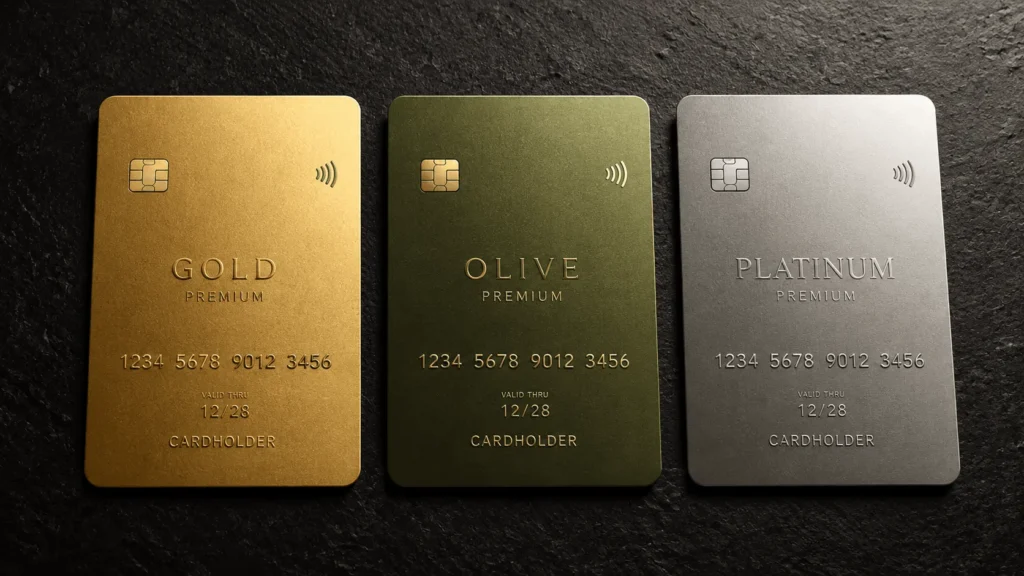
That positioning makes the Gold Card a strong fit for people whose spending centers on food rather than lounges or elite airline status. It costs more than an entry-level rewards card, but far less than the top-tier Platinum, with bonus categories that map onto everyday spending instead of occasional travel.
A Few More Things Worth Knowing
The $325 charge posts on your first statement after approval. It then repeats every year on that same anniversary date, no matter when you actually started using the card. This fee has climbed several times since the card launched in 1966, most recently from $250 in 2024. Up to five authorized users can be added at no extra cost, with a $35 charge for each additional card beyond that. Cancel within 30 days of the charge and Amex refunds it in full. Wait longer, and it becomes non-refundable. A no-fee product change may also be available if the card no longer fits your spending.