


Shampooers hold the title of the lowest-paying job in the USA. Federal wage data puts their mean pay at $14.07 an hour, or about $29,260 a year, against a national average of $69,770 across all occupations.
That single number does not tell the whole story. A cluster of jobs sits within a few thousand dollars of each other at the bottom of the pay scale, and most of them share the same traits: little to no education requirement, high turnover, and part-time or tip-based hours that federal wage tables do not always capture in full.
How the Bureau of Labor Statistics Tracks the Lowest Paying Jobs
The Bureau of Labor Statistics runs the Occupational Employment and Wage Statistics survey twice a year, covering more than 800 job titles nationwide. Each entry lists a median wage, a mean wage, and total employment, so the figures in this article come from that dataset rather than crowdsourced salary sites.
Median pay is usually the more honest number for finding the lowest-paying job in the USA, since a small group of high earners can pull a mean wage upward and hide how little a typical worker actually takes home. Tipped roles are an exception. A server’s base wage looks low on paper, but reported tips often push real earnings well above what the raw wage table shows.
The survey also excludes self-employed workers, which matters for occupations like gig delivery drivers and independent contractors. Those jobs can pay less than anything on the official list once fuel, vehicle wear, and unpaid waiting time are factored in, but they simply do not show up in BLS payroll data the way a salaried or hourly employee does.
How the Lowest Paying Jobs Compare to the Highest Paying Jobs
The gap between the two ends of the wage scale is wide enough to put the numbers above in context. Anesthesiologists, the highest paid occupation the BLS tracks, earn a mean annual wage of roughly $339,470, which is more than eleven times what a shampooer or fast food cook earns in a year. Surgeons and orthodontists are not far behind, each clearing well over $200,000 a year.
Healthcare and management roles dominate the top of the list almost every year, while food service, retail, and personal care roles dominate the bottom. That pattern has held for close to two decades of BLS reporting, and it says less about any single employer’s choices than about how the entire economy prices formal education and specialized licensing against hourly, easily replaceable labor.
The Lowest Paying Jobs in the USA
Eight occupations consistently rank at the bottom of the BLS wage tables. The list below runs from lowest to highest mean annual wage.
| Occupation | Mean Hourly Wage | Mean Annual Wage | US Employment |
| Shampooers | $14.07 | $29,260 | About 7,300 |
| Fast Food Cooks | $14.31 | $29,760 | About 673,000 |
| Amusement and Recreation Attendants | N/A | $30,240 | Varies by season |
| Fast Food and Counter Workers | $14.65 | $30,110 | About 3.7 million |
| Ushers, Lobby Attendants, and Ticket Takers | $15.91 | $33,080 | About 121,770 |
| Cashiers | N/A | $33,180 | Millions nationwide |
| Childcare Workers | $16.84 | $35,030 | About 518,910 |
| Home Health and Personal Care Aides | N/A | $36,120 | About 4.3 million |
1. Shampooers
Shampooers wash and rinse hair in salons before a stylist takes over, and the job rarely requires more than on-the-job training. It is a small occupation, with only a few thousand workers counted nationwide, which is part of why the pay stays so flat: there is little competition among employers for this exact role.
2. Fast Food Cooks
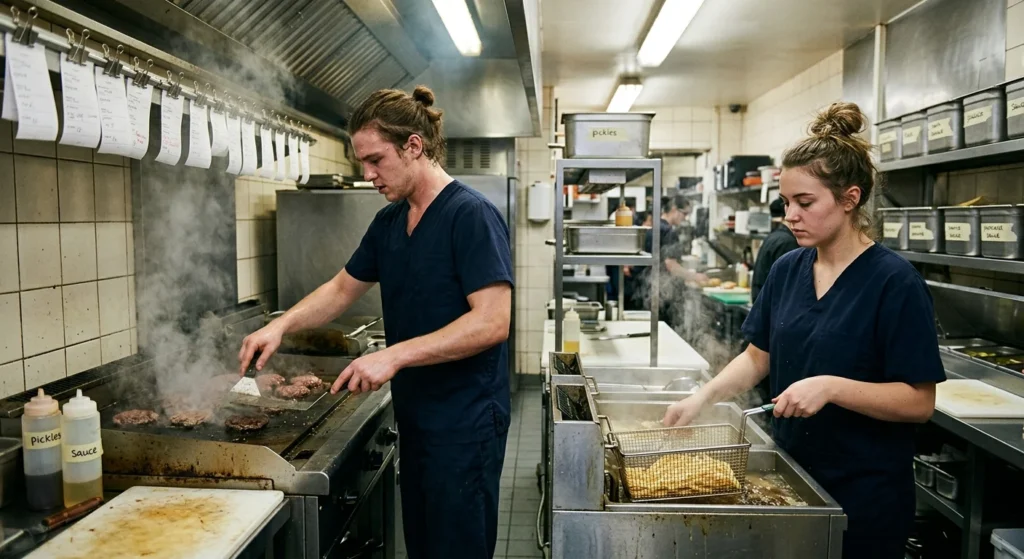
Fast food cooks prepare a narrow menu using large-volume equipment built for speed rather than variety. Chains train new hires quickly, which keeps the barrier to entry low and the wage low along with it. This occupation employs hundreds of thousands of workers, making it one of the largest low-wage jobs in the country.
3. Amusement and Recreation Attendants
These workers run rides, staff ticket booths, and hand out equipment at amusement parks, ski resorts, and sports complexes. Pay is seasonal in many markets, and a large share of the workforce is made up of teenagers and college students working a first job.
4. Fast Food and Counter Workers
This is one of the largest occupations in the country, with millions of workers taking orders and handling payment at counters across every state. High employment numbers keep wages competitive with the minimum in most regions rather than above it.
5. Ushers, Lobby Attendants, and Ticket Takers
Movie theaters, concert venues, and stadiums rely on this role to check tickets, seat guests, and answer basic questions. Shifts are often part-time and tied to event schedules, which limits weekly hours and total pay.
6. Cashiers
Cashiers remain one of the most common jobs in the country, and that scale keeps average pay near the bottom of the wage scale even as individual stores raise starting rates. Self-checkout adoption has also reduced hours available at some retailers.

7. Childcare Workers
Childcare workers care for children in homes, daycare centers, and preschools, often without a requirement for a college degree. Demand for the work is steady, but tuition-sensitive pricing at most centers caps how much a facility can pay staff.
8. Home Health and Personal Care Aides
This is the single largest occupation in the United States, with more than 4 million workers helping elderly and disabled clients with daily tasks. Pay stays low relative to the physical and emotional demands of the job, largely because Medicaid reimbursement rates set a ceiling on what many agencies can afford to pay.
Why the Lowest Paying Jobs in the USA Pay So Little
Every job on this list shares three conditions. None require a college degree, so the pool of eligible workers is large. Turnover is high, which keeps employers from investing much in wage growth for a role they expect to refill within months. And most of these jobs sit in industries such as food service, retail, and personal care, where thin profit margins limit how much a business can raise pay without cutting staff or hours elsewhere.
Automation plays a smaller role than people assume. Self-checkout lanes and kiosk ordering have trimmed some cashier and counter positions, but employment in food service and personal care has kept growing overall, according to BLS projections. The bigger driver is simply supply: millions of workers are willing to take these jobs, so wages settle near the legal floor rather than above it.
Part-time scheduling compounds the problem. Many of these roles cap hours below 35 a week on purpose, which keeps the position classified as part-time and out of reach of benefits like paid leave or employer health coverage. A worker’s annual income can end up lower than the hourly wage alone would suggest, since the BLS annual figures assume a standard full-time schedule that a large share of these workers never actually get.
How State Minimum Wage Laws Change the Picture
The federal minimum wage has sat at $7.25 an hour since 2009, but most of the jobs on this list pay above that floor because state and local laws set a higher rate. More than twenty states raised their minimum wage at the start of 2026, and workers in those states often earn several dollars more per hour than the national mean wage for the same job title.
That means the lowest-paying job in the USA on paper is not always the lowest-paying job in practice for a specific worker. A fast food cook in Seattle or Washington, D.C. can out-earn the national mean wage for the role by a wide margin, while the same job in a state that still follows the federal floor will sit closer to, or even below, the national average.
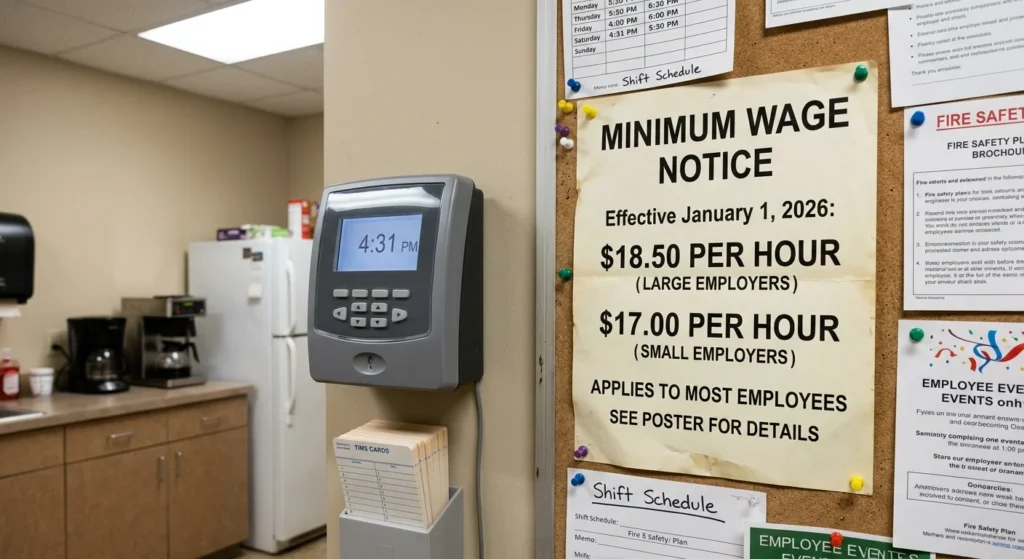
The Southern United States tends to show the widest gap between local pay and the national mean for these occupations. States such as Louisiana, Mississippi, and West Virginia report fast food and counter wages several dollars an hour below the national figure, largely because they have not raised their state minimum above the federal $7.25 rate and the cost of living in many of those areas runs lower than the coasts. A worker comparing job offers across state lines needs the local wage table, not the national average, to know what a listing actually pays.
What Workers in Low-Paying Jobs Can Do Next
Workers stuck in one of these roles usually have three practical paths forward. The first is geography: moving to a state or metro area with a higher minimum wage and lower cost of living can raise take-home pay without changing occupations at all.
The second is a lateral move within the same industry. A cashier who shifts into a shift-lead or inventory role, or a fast food cook who moves into a chain’s management training track, typically sees a meaningful jump in pay within the same skill set.
The third is a short credential. Community college certificate programs in fields like medical assisting, HVAC, or commercial driving often take under a year and lead to wages well above anything on this list, since they require a specific, verifiable skill that fewer workers hold.
None of these paths change the fact that someone has to fill these roles. But for an individual worker, knowing which levers actually move pay, location, lateral movement, and credentials, matters more than knowing the national average.
Union membership is worth checking too, even outside industries people usually associate with organized labor. Home health aides and childcare workers in states that allow collective bargaining for these roles report noticeably higher average pay than their counterparts in states without it, since a union contract can set a wage floor above whatever the state minimum happens to be. It will not turn one of these jobs into a high-earning career on its own, but combined with a move to a higher-wage state or a short credential, it closes a real part of the gap.