


The check number sits in two spots on every personal check. You’ll find it printed in the top right corner. It also appears again at the bottom, inside the row of machine-readable numbers. Both numbers should match each other. If you write checks regularly, order new checks online, or just received one, knowing where to look matters. It keeps you from confusing the check number with your account or routing number. This guide covers exactly where the check number appears and what it looks like. It also explains why banks print it twice and what to do if you can’t find one.
The Two Places Your Check Number Appears
Top Right Corner
When you glance at a blank personal check, the check number is usually the first thing you notice. It’s printed in the upper right corner, often just above or beside the date line. It’s a small number, typically three or four digits. It increases by one with every check you write from that account. Banks print it here for speed. It lets you, a teller, or anyone glancing at the check identify it right away.
Bottom of the Check, Inside the MICR Line
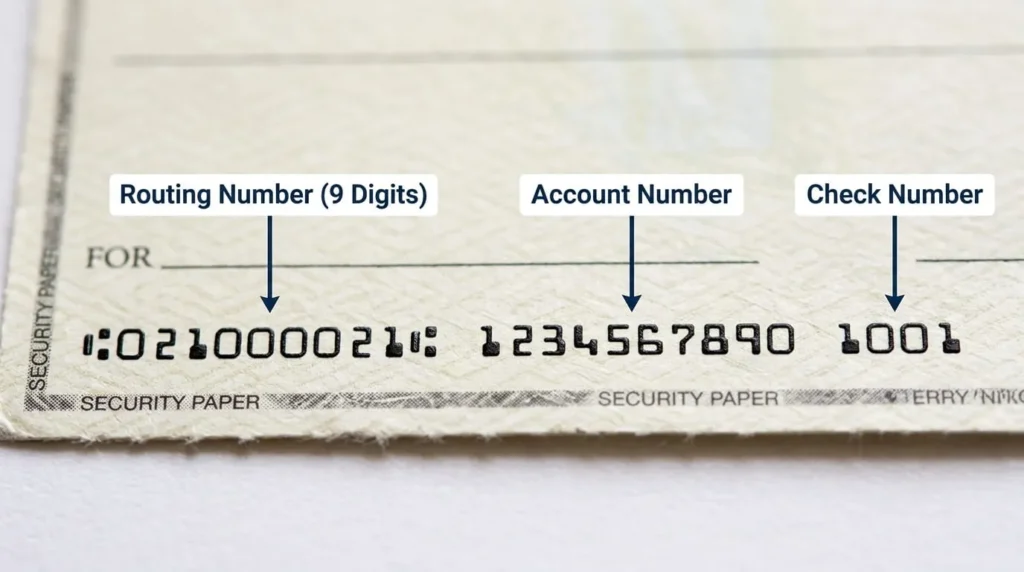
The second location runs along the bottom edge. It sits inside the strip of numbers printed in magnetic ink. This strip is called the MICR line, short for Magnetic Ink Character Recognition. Banks rely on MICR technology so sorting machines can read checks automatically at high speed. Within that line, the check number usually appears last, to the right of your account number. On most personal checks, the order reads routing number first, account number second, and check number third. Some banks reverse the last two numbers. That means a smaller share of checks list the check number before the account number. If you’re ever unsure which is which, remember one fixed rule. The routing number is always exactly nine digits and always comes first, no matter which bank issued the check.
Why the Check Number Is Printed Twice
Printing the check number in two places is intentional, not an oversight. It gives banks a built-in accuracy check. When a check clears, the processing system compares the number in the corner against the number encoded in the MICR line. A mismatch between the two can flag a check for manual review. That’s because it may point to an altered or counterfeit check. For you, this means the number in the top corner should always match the one at the bottom. If it doesn’t, treat that as a warning sign. Investigate before you deposit or cash the check.
What a Check Number Actually Looks Like
On a standard personal check, the check number is short, usually three or four digits. Brand new checkbooks from most banks start at 001 or 101. The number counts up sequentially with every check written. Older, well-used checkbooks can show numbers well into the thousands if the account has been open for years. Business checks often carry longer sequences, sometimes five or six digits. The number is also more likely to appear larger and bolder, since it needs to be scanned quickly during bulk processing. Nothing else on the check shares this exact three-to-six-digit format. That makes it fairly easy to tell apart from the other two numbers. The routing number is always nine digits, and the account number typically runs eight to twelve digits.
Check Number vs Routing Number vs Account Number
These three numbers sit next to each other at the bottom of the check. It helps to know what separates them.
| Number | Typical Length | What It Identifies | Usual Position |
| Routing number | 9 digits | Your bank or credit union | First, far left |
| Account number | 8 to 12 digits | Your specific checking account | Middle |
| Check number | 3 to 6 digits | This individual check | Last, far right (occasionally second) |
Here’s a quick way to remember the order. Routing numbers are always nine digits and always come first. Account numbers are usually the longest of the remaining two. Check numbers are the shortest of the three.
Why the Check Number Actually Matters
The check number matters for more than simple record keeping. Your bank uses it to identify one single check out of your entire account history. This becomes important in a few common situations.
Reconciling your check register or online banking activity so every written check gets accounted for. Requesting a stop payment, since the bank needs the exact number to cancel that one check. Flagging possible fraud, since checks issued out of sequence can signal a forged or altered check. Tracking a payment you already sent, especially when a landlord asks which check number to expect.
Keeping these numbers organized also helps at tax time. You may need to trace a specific deductible payment back to the check that covered it.
What If You Can’t Find a Check Number
Some checks legitimately don’t show a check number in the top corner. This is less common today, but it still happens. Starter checks are sometimes issued temporarily when you open a new account, before your personalized checks arrive. These occasionally print the check number only in the MICR line, not the corner. Temporary checks a teller hand-writes at a branch can follow the same pattern. If you’re holding a check and can’t spot a number in the top right, look at the bottom strip instead. It’s almost always there, even when the top corner is blank.
If you’re viewing a check image through mobile banking or a scanned deposit, the check number is still present. Most banking apps display it next to the payee name and amount. You can usually find it by tapping into the transaction details, even if it’s hard to spot on a small photo.
Business Checks Handle the Check Number a Little Differently
Business checks follow the same basic rules, but a few details shift. Businesses issue far more checks than individuals do. Their check numbers often run to five or six digits instead of three or four. Many businesses also print the check number in a larger font. This helps it get read quickly by high-volume check-processing equipment.
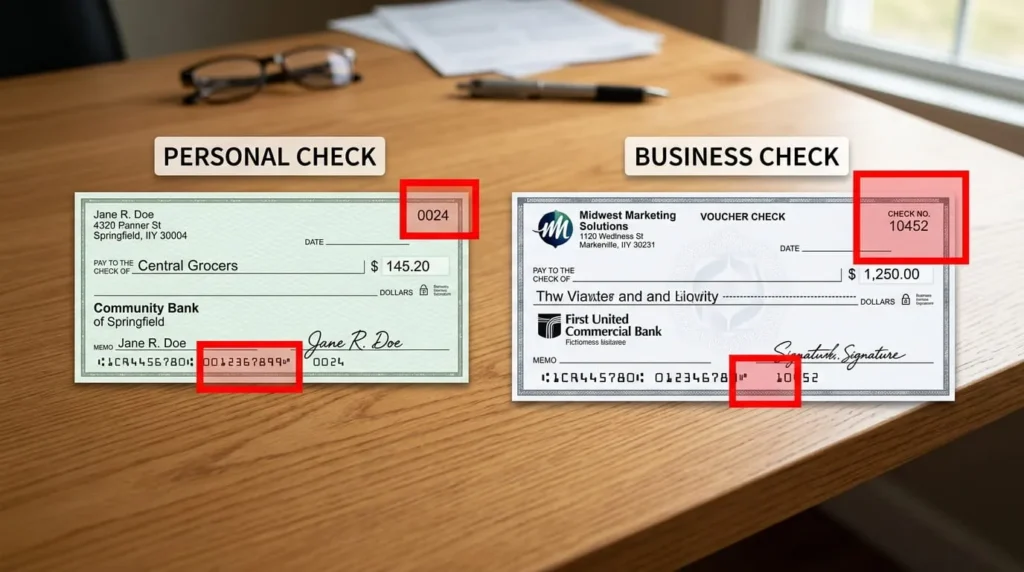
Some business checks place the check number in a slightly different spot along the MICR line. Others repeat it a second time near the signature area for internal filing. Don’t assume a business check will lay out exactly like a personal one. The safest way to confirm a business check number is simple. Check both the top right corner and the MICR line, then confirm the two numbers agree. The check number is just one piece of the puzzle — this full breakdown of every other part of a check covers the routing number, account number, and signature line too.
How to Find Your Check Number Without a Physical Check
You don’t need the paper check in hand to find a specific check number. A few reliable options can help.
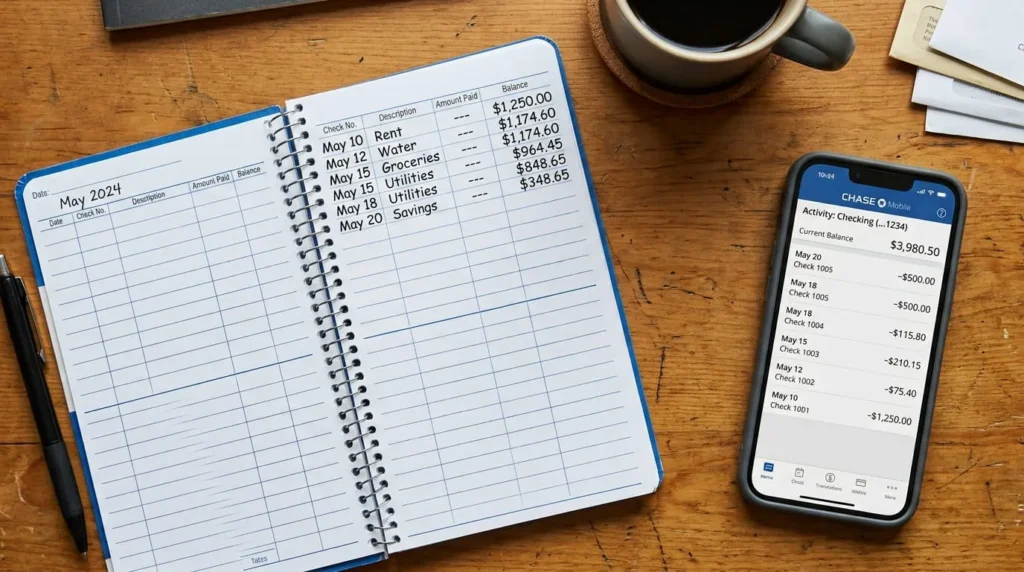
Online banking or your banking app, where cleared checks list the check number next to the date and amount. Your check register, the small booklet or spreadsheet where you log each check as you write it. A recent bank statement, which lists check numbers alongside other transactions for that period. A voided or previous check from the same checkbook, since sequential numbering lets you estimate a nearby number.
If none of these are available, your bank can usually look up the number for you. They just need the payee name, amount, and approximate date.