
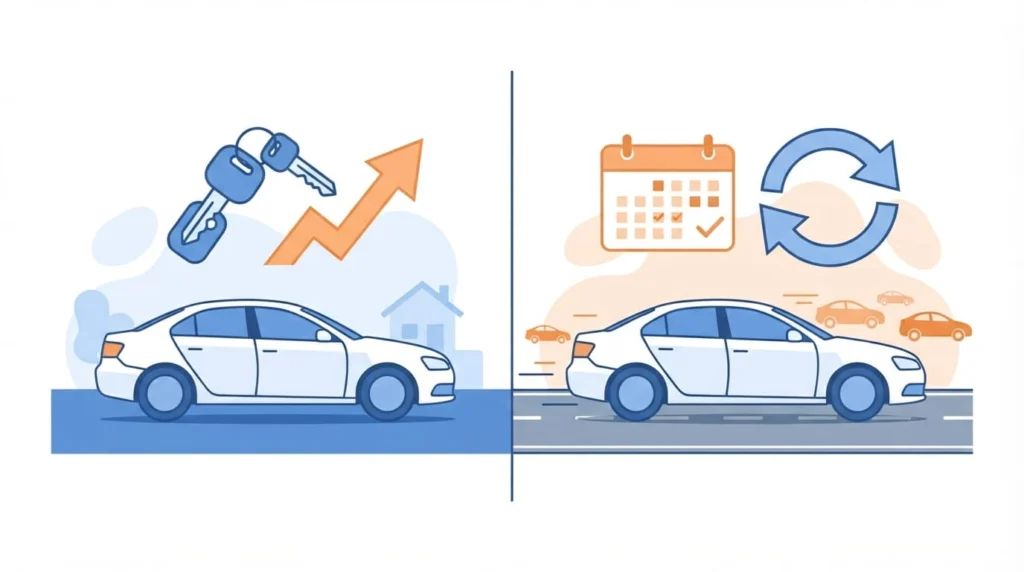

Financing a car costs more each month but builds ownership, while leasing costs less monthly but you never own the vehicle and face mileage limits. Choose financing if you plan to keep the car for years. Choose leasing if you want lower payments and a new car every few years.
What Lease VS Finance Actually Means
Financing means taking a loan, usually from a bank, credit union, or the dealership, and paying it off over 36 to 72 months. Once the last payment clears, the title is yours to keep or sell.
Leasing works more like a long-term rental. You pay for the portion of the car’s value you use up, plus interest and fees, then hand the keys back unless you buy it. A driver comparing a $30,000 sedan might see a 60-month loan near $550 a month, against a 36-month lease closer to $350 a month, since the lease only bills for value used during those three years.
Monthly Payments: Why Leasing Usually Costs Less Each Month
Lease payments are based on depreciation, not the sticker price. Say a $32,000 SUV is expected to be worth $18,000 after three years. The lease covers that $14,000 gap, plus a rent charge and taxes. A loan on the same SUV bills the entire $32,000 plus interest, so the monthly number is higher even though you end up owning something. That is why total cost, not the payment alone, should guide the decision
Down Payment and Upfront Costs Compared
Financing typically calls for a down payment worth roughly 10 to 20 percent of the car’s price, which lowers your loan balance and monthly bill. Leasing usually asks for a smaller amount upfront, often called a security deposit, and part of it may be refundable at lease end.
A buyer putting $4,000 down on a $30,000 car finances $26,000 plus interest. A lessee on the same car might put down $1,500 and get some back when the lease closes out cleanly.
Whichever route you choose, the lender or leasing company will require proof of full coverage, so shopping for the right insurer matters just as much as the loan terms
Who Owns the Car, and Why it Matters
With financing, you build equity every month, and that equity becomes real once the loan is paid off. You can sell the car, trade it in, or keep driving it payment-free for years.
With leasing, the leasing company holds the title the whole time. There is no equity to cash in and no trade-in value toward your next vehicle unless you buy out the lease first.
Mileage Limits and Wear-and-Tear Charges On a Lease
Most leases cap mileage at 10,000 to 12,000 miles a year. Financing carries no such limit, so you can drive as much as you want without penalty.
How Overage Fees Add Up
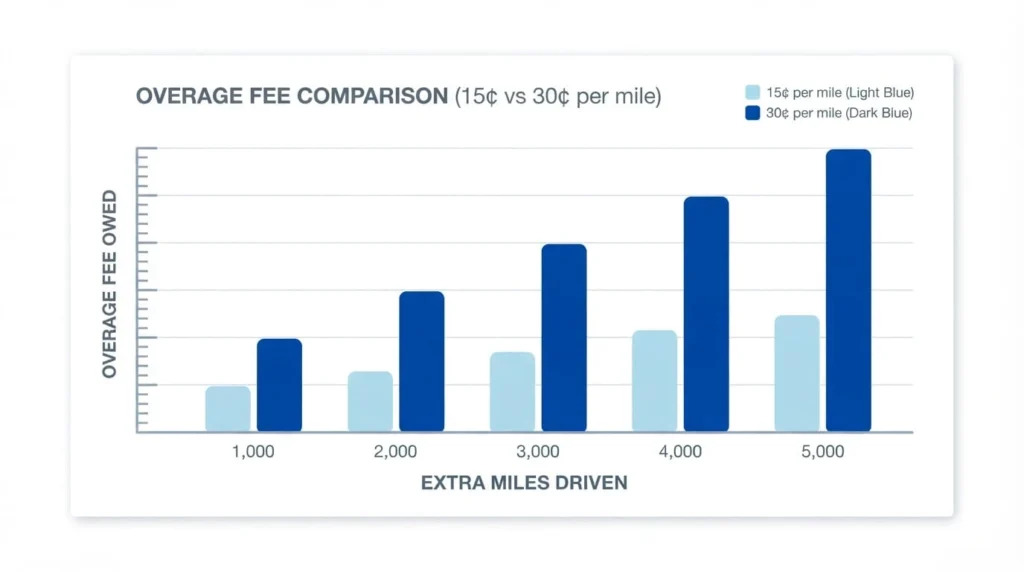
Overage charges usually run 15 to 30 cents per extra mile. A driver who expects 12,000 miles a year but logs 15,000 will owe for 3,000 extra miles, landing somewhere between $450 and $900 at lease end. Leases also charge for excess wear, such as torn upholstery or dents beyond normal use.
Depreciation, Residual Value and Why They Matter
A car’s residual value, what it is projected to be worth at lease end, is set by the leasing company using industry guides. A higher residual usually means a lower lease payment, since there is less value to pay off during the term.
Many new vehicles lose a large share of their value, often 15 to 25 percent, within the first five years. Finance the car and that depreciation is your problem at trade-in time. Lease it and the drop is already baked into the leasing company’s math.
Maintenance, Warranty and Repair Costs
A three-year lease usually stays inside the manufacturer’s original warranty, often three years or 36,000 miles, so major repair bills rarely land on the lessee. Financing means you cover repairs once the factory warranty runs out, which is why some buyers add an extended warranty to a longer loan.
Credit Score Requirements and Impact
Leasing companies often set a higher credit score bar than lenders financing the same car. A shopper with a 640 score might qualify for financing at a higher rate but get turned down, or quoted a steep money factor, on a lease.
Both options report to the credit bureaus and build your payment history the same way, as long as payments stay on time.
Ending the Deal Early: Penalties on Both Sides
Breaking a lease before the term ends usually means paying most or all of the remaining payments, since the leasing company priced the deal around that full stream. Paying off a car loan early is usually penalty-free, though a small number of loans carry prepayment fees, so check your contract before planning an early payoff.
Tax Benefits If You Use The Car For Business
Business owners and self-employed drivers can sometimes deduct lease payments as an operating expense for the portion tied to work. Financed vehicles used for business may instead let you deduct loan interest and depreciation. The rules depend on your business-versus-personal mileage split, so confirm the details with a tax professional before deciding based on the deduction alone.
Lease vs Finance: a Quick Decision Framework
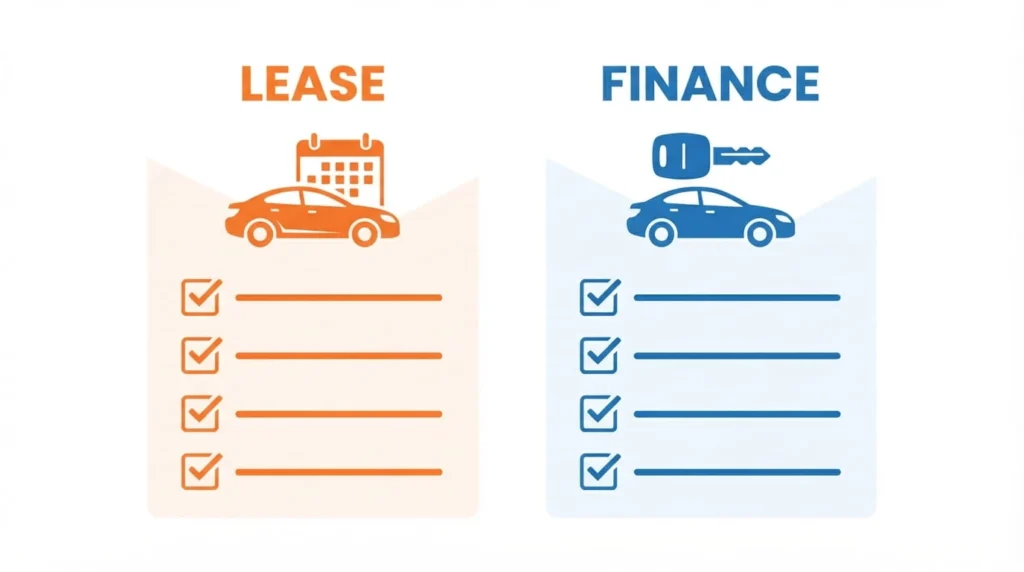
Choose leasing if lower monthly payments matter more than ownership, you like a new model every few years, you stay under 12,000 miles a year, and you take reasonable care of a car you will hand back.
Choose financing if you plan to keep the car for years after the loan is paid off, you drive more than the average lease allows, or you want to build equity and customize the car without restriction.
A Simple Example To See The Real Cost Difference
Take a $32,000 SUV. Financed over 60 months, total payments including interest might land near $37,000, after which you own a car worth perhaps $12,000 to $16,000. Leased for 36 months, total payments might land near $12,600, after which you own nothing unless you pay the buyout price.
Over a single term, leasing often looks cheaper. Over years of ownership, financing usually wins once you count the payment-free years after the loan closes.
The Bottom Line
There is no single right answer here. The better fit depends on how many miles you drive, how long you keep vehicles, whether ownership matters to you, and what your budget can absorb each month. Run the numbers on your actual driving habits before you sign anything.
FAQ’S
1:Is it Cheaper to Lease or Finance a Car?
Leasing usually costs less per month since you only pay for depreciation, not the full price. Financing usually costs less over several years, especially once the loan is paid off and you drive payment-free.
2:Can I Switch From a Lease to Buying the Car?
Yes. Most leases include a buyout option letting you purchase the vehicle at a set price, often called the residual value, once the term ends or sometimes earlier. Check your contract for the exact buyout terms and any early purchase fee.
3:What Happens if I Go Over the Mileage Limit on a Lease?
You pay an overage fee, typically 15 to 30 cents per mile, when you return the car. If you know you will drive more, ask about buying extra miles upfront, which usually costs less than paying the fee at lease end.
4:Can I Negotiate the Price of a Leased Car?
Yes. The negotiable price, called the capitalized cost, works like a purchase price and directly affects your monthly payment. Negotiate it as if buying the car outright, separate from lease-specific terms like mileage or term length.
5:Is Leasing a Good Idea if I Drive a Lot of Miles?
Usually not, unless you pay upfront for a higher mileage allowance. Standard leases assume 10,000 to 15,000 miles a year, and drivers who regularly exceed that often pay more in overage fees than they would have saved on payments, making financing more practical.