
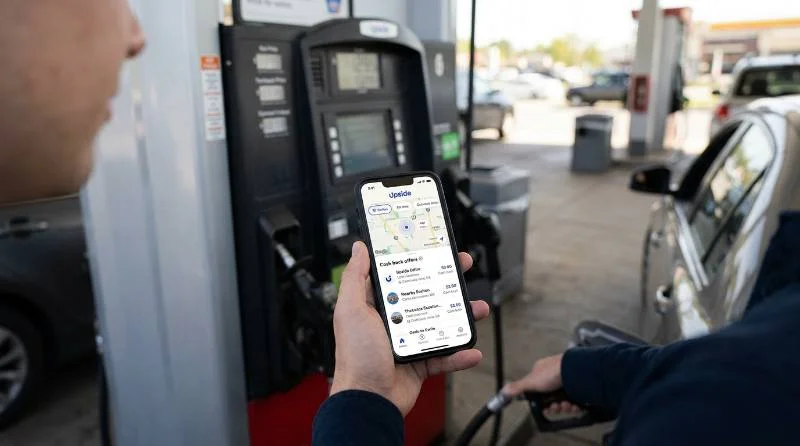

Upside is a legit cashback app that pays real money for gas, grocery, and restaurant purchases you’re already making. It holds a 4.8 rating on the App Store and 4.5 on Google Play from hundreds of thousands of users, though earnings depend heavily on which offers exist near you.
How Does Upside App Work
Upside partners with gas stations, restaurants, and grocery stores that pay to bring in more customers. Retailers fund the cash back offers directly, and Upside shares part of that with users, which is how the app stays free with no membership fee.
You open the app, browse offers near you sorted by gas, restaurant, grocery, or convenience, and claim one before paying as usual. After the purchase, either through a linked card, a check-in, or an uploaded receipt, Upside verifies the transaction and adds cash back to your balance.
The offer amount is shown upfront before you claim it, so there’s no ambiguity about what a specific gas station or restaurant pays that day. Offers refresh regularly and can change from one visit to the next, since retailers set their own budgets and adjust rates based on demand.
How to Use Upside App
Sign up takes about two minutes with an email or phone number. Once inside, the app shows a map of nearby participating locations along with the specific cash back rate at each one, since offers vary station to station rather than being a flat nationwide rate.
Claim the offer, make the purchase, then confirm it either by linking a payment card for automatic tracking or by taking a photo of the receipt. Card-linked purchases tend to process within 24 hours, while receipt uploads can take a bit longer if the image is unclear.
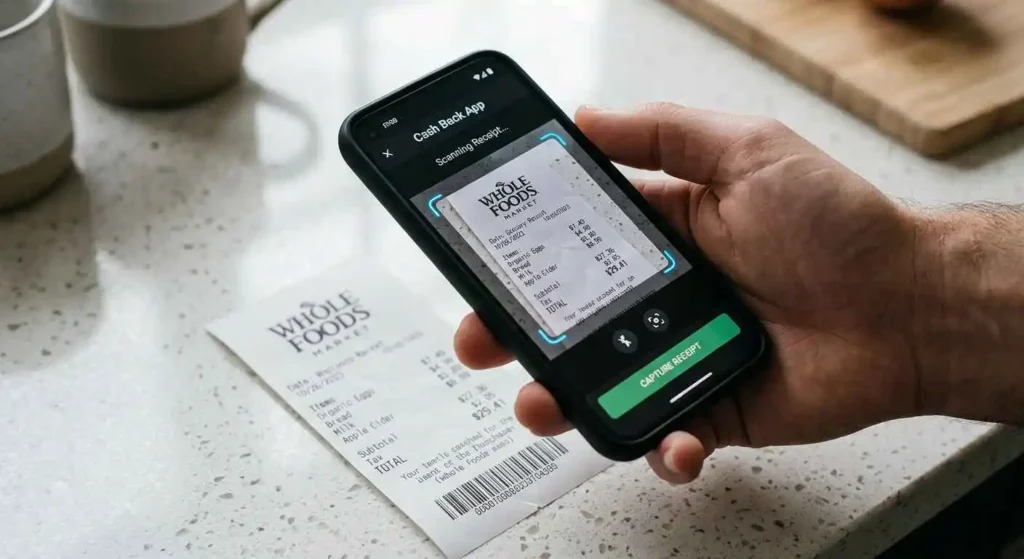
New users are usually better off starting with card-linking rather than manual receipts, since it removes the extra step of remembering to photograph and upload each purchase. Once a card is linked, qualifying transactions at claimed offers track automatically in the background.
Is Upside Legit
Upside is legitimate. Its business model relies on retailer partnerships rather than user fees, meaning stores pay to attract traffic and Upside passes a share of that back to customers as cash back. Users have collectively earned over a billion dollars through the platform since launch, which is not something a scam app sustains for years.
The app does score lower on some review aggregators like Trustpilot compared to its strong app store ratings, mostly tied to isolated complaints about receipt rejections or missing nearby locations rather than non-payment. Support tends to resolve these individually, including retroactive credit when a legitimate purchase was initially declined.
Data privacy is a fair question to raise with any app that links to a payment card. Upside states it does not sell personal purchase data to third parties, and card-linking is handled through standard encrypted banking connections similar to those used by budgeting apps like Mint or YNAB.
Is Upside Worth It
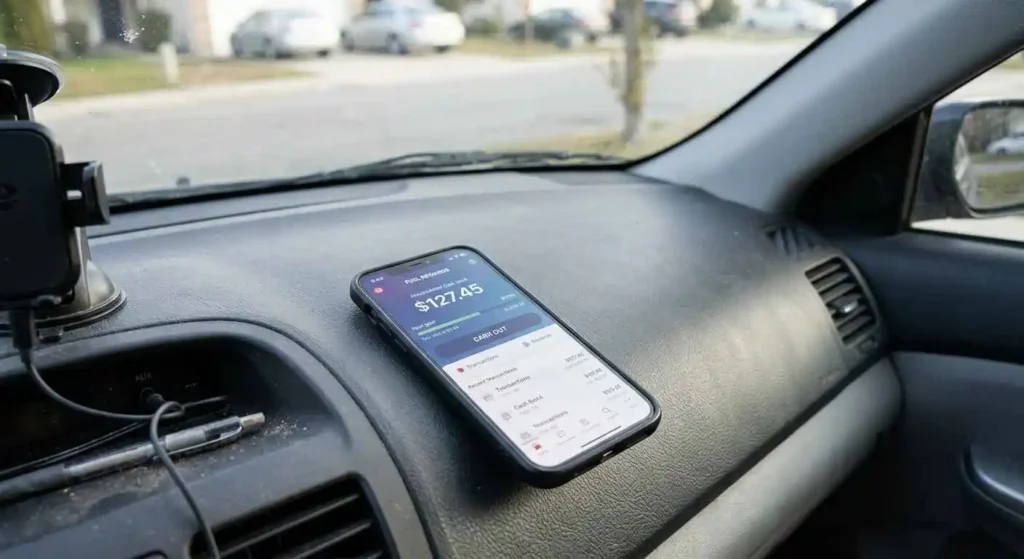
Whether Upside is worth it depends on how often you already buy gas, groceries, or restaurant food in areas with good coverage. One long-term user tracked earning around 116 dollars in cash back since 2021, with a notable jump to over 60 dollars in just two months once more restaurants and grocery stores joined the network in their area.
Gas remains the strongest category, with per-gallon offers commonly running between 15 and 55 cents depending on the station and market. A full 15-gallon tank at a 55-cent offer works out to over 8 dollars back on a single fill-up, which is meaningfully higher than most other gas rewards apps.
For someone who fills up once a week and shops at two or three participating grocery or restaurant chains, realistic monthly earnings land somewhere between 10 and 30 dollars. That range shifts up in cities with dense retailer coverage and down in rural areas where only a station or two participates.
Upside Gas App Reviews and Real Earnings
Most upside gas app reviews highlight the per-gallon cash back as the main draw, since gas is the most consistent and widely available offer category with over 50,000 participating stations nationwide. Coverage has expanded noticeably in recent years, with users reporting new restaurants and grocery chains added to their local network over time.
Earnings scale with how much you drive and how competitive local offers are. Someone filling up twice a month in a strong-coverage area will see very different results than someone in a region with only one or two participating stations, so actual mileage varies more with location than with app performance itself.
Upside also runs periodic promo codes that stack an extra few cents to as much as an additional 50 cents per gallon on top of the standard offer. Checking the app before each fill-up, rather than relying on a saved favorite station, usually surfaces the best available rate for that day.
My Experience Using Upside
I tested Upside over three weeks, linking my card for automatic gas tracking and manually uploading two grocery receipts. Gas purchases were credited within a day each time. One grocery receipt got initially rejected because the store had recently changed ownership on Upside’s system, and support corrected it within 48 hours after I flagged it.
Total earned came to just over 14 dollars across four gas fill-ups and two grocery trips, all cashed out through a direct bank transfer that took two business days to land. Nothing about the process felt hidden or difficult to redeem, which matched what most other reviewers describe.
The app’s map view made it easy to plan fill-ups around my usual driving route rather than going out of my way for a better rate. That convenience factor matters more day-to-day than the exact cents-per-gallon number, since an offer that requires a detour often isn’t worth the extra drive time.
Common Upside Complaints
The complaint that comes up most often is that a small number of participating gas stations price slightly higher than nearby non-partner stations, which can offset part of the cash back if you don’t check the total price first. This isn’t universal, but it’s worth a glance at a nearby competitor’s price before assuming the discount is automatic savings.
Coverage gaps are the second most common issue, particularly in smaller towns or rural areas where only one station or no stations at all participate. Users who travel frequently for work have reported inconsistent coverage from city to city, which limits how much the app can be relied on outside a routine.
Receipt rejections show up occasionally too, usually tied to unclear photos or a merchant that changed ownership without Upside’s records updating right away. Support has generally resolved these when contacted directly, based on both my own testing and other user accounts.
Pros
- Real cash back – no purchase requirement beyond what you’re already buying
- Strong gas category coverage
- Multiple redemption options – including direct bank transfer
- Responsive support – for rejected receipts
Cons
- Offer availability varies significantly by location
- Some users report nearby gas prices running slightly higher at participating stations
- Receipt-based redemption can be slower than card-linked tracking
Upside vs Other Cash Back Apps
| App | Best Category | Redemption | Card-Linking |
| Upside | Gas | Bank transfer, gift card | Yes |
| GasBuddy | Gas price tracking | Fuel rewards card | No |
| Ibotta | Grocery | PayPal, gift card | Yes |
Upside stands out for combining gas and everyday dining or grocery offers in one app with direct bank payout, while GasBuddy focuses purely on price comparison and Ibotta leans more toward grocery-specific deals. Card-linking sets Upside apart from apps that require manual receipt uploads for every single purchase, which cuts down on the extra step most users skip and forget.
For someone who wants one app covering both fuel and food spending without juggling separate accounts, Upside’s combined category coverage is the main practical advantage over single-purpose competitors.
Tips to Maximize Upside Cash Back
Checking the app before every fill-up rather than defaulting to a saved favorite station usually turns up a better rate, since offers shift day to day based on retailer budgets. Stacking a promo code on top of a strong gas offer, when one is available, adds a few extra cents per gallon at no added effort.
Linking a card for gas and using receipt uploads only for occasional grocery or restaurant trips strikes a reasonable balance between convenience and coverage. Keeping the app’s location permissions active also helps it surface nearby offers automatically instead of requiring a manual search each time.
Who Should Use Upside
Upside works best for drivers who fill up regularly and live in an area with solid station coverage, since gas offers make up the bulk of realistic earnings. It also suits households that already shop at a handful of chain grocery stores or restaurants, since stacking multiple categories compounds the monthly total.
It’s a weaker fit for anyone in a rural area with minimal participating locations, or for someone expecting the cash back to meaningfully offset a full grocery bill. Treating it as a small bonus on spending you were doing anyway, rather than a primary savings strategy, keeps expectations realistic.