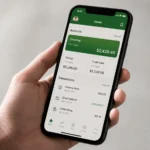


The Greenlight debit card is a prepaid Mastercard built for kids and teens, paired with a parent-controlled app that handles allowance, chores, savings, and spending limits. Parents load money onto the card, set the rules, and get a notification every time it gets used.
What Is the Greenlight Debit Card
Greenlight is a fintech company, not a bank. Deposits sit with a partner bank, and the card itself runs on the Mastercard network, so it works anywhere Mastercard is accepted, including online purchases and ATMs, and the debit card can be used online, in-store, and at ATMs.
Every plan covers the whole household rather than charging per child. Plans include debit cards for up to five kids and two adults per account, with the same flat monthly fee regardless of how many of those five kids you actually add. There is no separate signup fee for additional children within that limit.
Greenlight has no truly free version of its own. The only no-cost path is through a partner bank, such as Digital Federal Credit Union or North Shore Bank, which offer the Greenlight subscription free to their own members. Everyone else pays a monthly subscription starting at the entry tier.
How Much Does Greenlight Cost
Plans start at $5.99 a month for the whole family, and pricing scales up based on which extras a household wants, such as investing tools or identity protection.
1. Core Plan
The entry-level Core plan is aimed at families who mainly want a real debit card with spending visibility. It lets kids track their spending and savings balances, set their own goals, and earn a return on savings, while parents get store-level spending controls and the ability to add funds on demand. There is no investing feature at this tier.
2. Max Plan
The mid-tier Max plan adds features aimed at older kids and teens who are ready for more independence. At $10.98 a month, Max adds investing for kids with parental approval, 1% cash back on eligible purchases, a 3% savings rate, priority customer support, and purchase and phone protection. This is the plan most families choose once a child starts asking about investing or wants cash back on their own spending.
3. Family Shield Plan
The top tier, Family Shield, folds in identity and family safety features on top of everything in Max. Greenlight cut this plan’s price from $24.98 a month down to under $20, without removing any features, and the current rate lands at $19.98 a month. It suits families who specifically want identity monitoring alongside the banking features, rather than families who just want a basic card.

How the Card Works Day to Day
Once a plan is active, parents fund the account from a linked bank account and decide how money moves from there. Chores can be tied to automatic allowance payouts, and parents can approve or decline individual purchases in real time from the app.
Spending controls go beyond a simple dollar limit. Parents can block specific merchant categories, such as gaming purchases or fast food, and get a push notification the moment the card is used anywhere. For younger kids, this usually matters less than the chores and savings-goal features, since their balances and independence are naturally smaller.
For teenagers, the card starts to function closer to a normal checking account. On the Max and Family Shield tiers, older kids can also start investing small amounts with parental sign-off, which gives families an early, low-stakes way to talk about the stock market.
Fees to Watch For
Greenlight’s own fee structure is simple, but two costs sit outside its control. There are no ATM fees, no minimum spend requirement, and no foreign transaction fees when traveling internationally, which matters for families who travel.
That said, Greenlight does not charge for ATM withdrawals itself, but the ATM operator typically does, usually $2 to $5 for an out-of-network machine, and Greenlight does not reimburse that charge. A custom card design is also an added cost on top of the monthly plan rather than something bundled in for free.
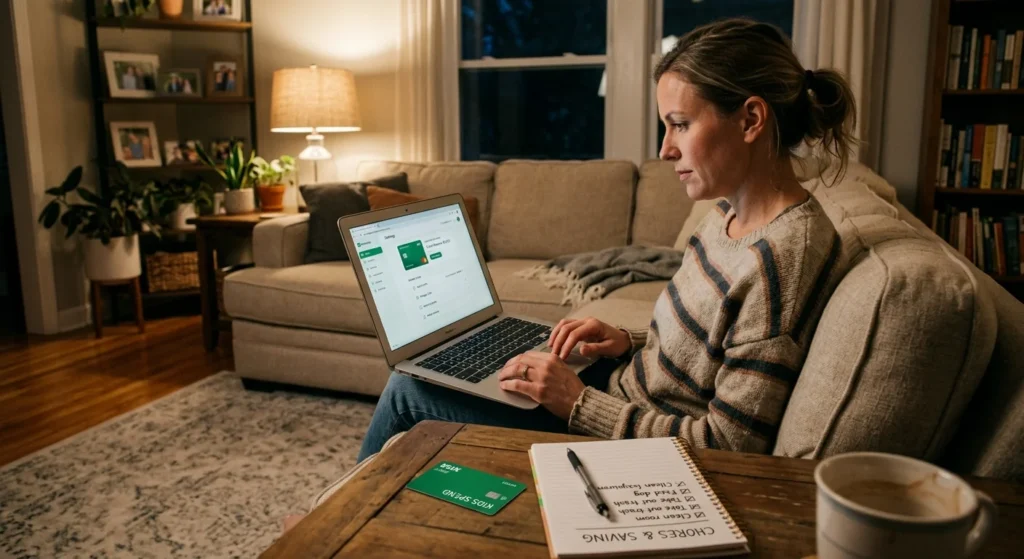
Families should also account for the fact that pricing is a subscription, not a one-time purchase. Without a bank partnership discount, the annual floor on the cheapest plan works out to $71.88 a year, which is worth comparing against how much a family actually plans to use the investing or identity features before choosing a higher tier.
Greenlight vs. Other Kids’ Debit Cards
Greenlight is not the cheapest option in this category, but it is one of the more complete ones. Greenlight, GoHenry, BusyKid, and Step all compete in this space, and Greenlight is generally viewed as one of the most full-featured of the group.
The bigger question for most families is not which app wins on paper, but whether a debit card is the right tool at all. If the main goal is getting chores done and motivating a child with rewards, a free chore-tracking app can solve that without adding a monthly banking fee, since Greenlight is built for families that specifically want the card, savings goals, and investing pieces together.
User ratings suggest the app itself holds up well against that broader feature set. Greenlight is rated 4.8 stars on the App Store and 4.7 stars on Google Play, which is high for a subscription banking product aimed at families.
Is the Greenlight Debit Card Worth It
The honest answer depends on what a family actually needs the card to do. For a real debit card, savings goals, and investing tools for older kids, Greenlight is competitively priced and well rated against the rest of the market.
Families whose main interest is chore tracking and small rewards are paying for banking infrastructure they will not use fully. In that case, the Core plan’s savings and spending features go mostly unused, and the household is better served by a lighter, free tool built specifically for chores.

For families who want their kid to hold and manage a real card, watch their own balance grow, and eventually try investing under supervision, the subscription cost is doing real work. Starting on Core and upgrading to Max once a child is older and asking for investing or cash back is a reasonable way to avoid overpaying early.