

The moment you file for bankruptcy, several things happen at once, and most of them happen faster than people expect. A single court filing puts a legal stop on collection calls, wage garnishments, and most lawsuits within hours. What follows over the next few months is a structured process with specific steps, deadlines, and outcomes that differ depending on which type of bankruptcy you file.
The Automatic Stay Starts the Instant You File
As soon as your bankruptcy petition is filed with the court, federal law puts an automatic stay into effect. This stay is not something you have to request separately. It applies the second the case number is assigned.
The automatic stay stops most creditors from contacting you, garnishing your wages, repossessing property, or continuing a lawsuit against you. Foreclosure proceedings pause. Debt collectors who keep calling after they know about your filing can face penalties for violating the stay.
The stay is not permanent protection for everything. Secured debts like your car loan or mortgage still need to be addressed inside the bankruptcy case, and certain actions such as criminal proceedings or some family support obligations are not covered. Your attorney or the court will notify creditors listed on your petition, but it is worth sending notice yourself to any creditor still contacting you directly.
Chapter 7 and Chapter 13 Lead to Different Outcomes
The paperwork you file determines which process you enter. Chapter 7 and Chapter 13 handle debt in fundamentally different ways, and knowing which one applies to your filing changes what happens next.
Chapter 7 Liquidation
Chapter 7 is built around liquidating non-exempt assets to pay creditors, then discharging most remaining unsecured debt. In practice, the large majority of Chapter 7 filers keep everything they own because state and federal exemptions cover typical household property, a car up to a certain value, and often home equity within limits.
A Chapter 7 case usually moves from filing to discharge in about four to six months. There is no repayment plan involved for unsecured debt like credit cards or medical bills. Once the case closes, those debts are gone.
Chapter 13 Repayment Plan
Chapter 13 works differently. Instead of liquidating assets, you propose a repayment plan that stretches over three to five years. This route is common for people who earn too much to qualify for Chapter 7, or who want to catch up on mortgage or car payments while keeping the property.
Under Chapter 13, you make one monthly payment to a trustee, who distributes it to your creditors according to the plan the court approved. Missing payments on the plan can lead to the case being dismissed, so the monthly commitment needs to be realistic from the start.
A Bankruptcy Trustee Is Assigned to Your Case
Every bankruptcy case gets a trustee, and this person plays a bigger role than most filers expect. The trustee reviews your paperwork, verifies your assets and income, and in Chapter 7 cases, identifies any non-exempt property that could be sold to pay creditors.
In Chapter 13, the trustee collects your monthly payment and distributes it to creditors according to the approved plan. The trustee also has the authority to object to your case if something in your paperwork looks inaccurate or incomplete, which is why accuracy on the initial filing matters so much.
The Means Test Decides Chapter 7 Eligibility
Not everyone can choose Chapter 7 freely. If your household income is above your state’s median for a family of your size, you have to pass a means test that looks at your income, expenses, and certain allowed deductions.
Failing the means test does not shut the door on bankruptcy. It usually means you file Chapter 13 instead, using the repayment structure rather than liquidation. Some filers with higher income but heavy allowed expenses, such as significant secured debt payments, still pass the means test and remain eligible for Chapter 7.
What Happens to Your Property and Assets
Exemptions determine what you keep. Every state has its own exemption list, and some states let filers choose federal exemptions instead if that works out better for their situation. Common exemptions cover a portion of home equity, one vehicle, retirement accounts, household goods, and tools used for work.

Property that exceeds exemption limits can be sold by the trustee in a Chapter 7 case, with proceeds going to creditors. This is less common than people assume. Most Chapter 7 filers have modest assets that fall entirely within exemption limits, meaning nothing gets sold.
Secured property works differently from exempt property. If you want to keep a financed car or a home with a mortgage, you generally need to keep making those payments, either directly or through a Chapter 13 plan, regardless of exemption status.
What Happens to Different Types of Debt
Bankruptcy treats debt categories differently, and this is one of the most misunderstood parts of the process.
Unsecured debt, including credit cards, medical bills, and most personal loans, is typically dischargeable in both chapters. Once discharged, you have no further legal obligation to pay it, and collection attempts on discharged debt can be reported to the court.
Secured debt, like car loans and mortgages, is tied to collateral. You can surrender the collateral and discharge any remaining balance, or keep making payments and keep the property. Bankruptcy does not erase the lien itself unless the debt is paid off or the collateral is returned.
Certain debts survive bankruptcy no matter which chapter you file. Most student loans, recent tax debt, child support, alimony, and debts from fraud or certain court judgments are not dischargeable in the ordinary process. Student loan discharge requires a separate, harder legal showing of undue hardship, and courts grant it inconsistently.
The 341 Meeting of Creditors
About a month after filing, you attend a meeting of creditors, often called a 341 meeting after the relevant code section. This is not a courtroom hearing in front of a judge. The trustee runs it, and it usually takes ten to fifteen minutes.
The trustee asks questions under oath about your paperwork, your income, and your assets. Creditors are legally allowed to attend and ask questions, though in practice they rarely show up for consumer cases. Bringing photo identification and proof of your Social Security number is required.
What Happens to Your Credit During and After Filing
A bankruptcy filing appears on your credit report and typically causes a significant score drop, often somewhere between 100 and 240 points depending on your starting score. Scores that were already low before filing tend to drop less, since much of the damage from missed payments was already reflected.
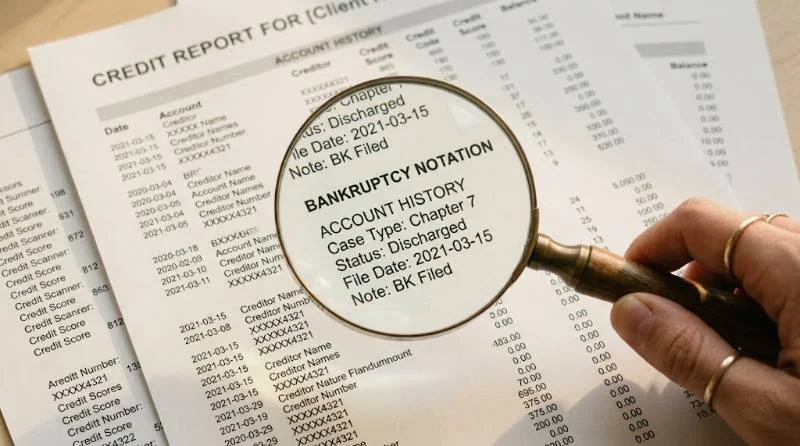
Chapter 7 stays on your credit report for up to ten years from the filing date. Chapter 13 generally stays for up to seven years, since it involves an actual repayment effort. Both timelines run from the filing date, not the discharge date.
The score impact fades faster than the listing itself. Many filers see meaningful score recovery within twelve to eighteen months if they use credit responsibly afterward, since lenders generally weight recent behavior more heavily than an older negative mark. Secured credit cards and on-time payments on any remaining debt help rebuild a track record.
How Long the Process Takes From Filing to Discharge
Timeline expectations differ sharply between the two chapters. Chapter 7 cases typically close in four to six months from filing to discharge, assuming no complications or objections. Chapter 13 cases run on the length of the approved repayment plan, which is three years for filers below the median income and five years for those above it.
Discharge in Chapter 13 does not happen until the full plan is completed. If a filer’s circumstances change partway through, such as job loss, the plan can sometimes be modified rather than dismissed, though this depends on the trustee and the court.
Life After Discharge: What Changes and What Doesn’t
Once your case is discharged, you receive a formal discharge order from the court. This order is the legal document that eliminates your personal liability for the debts included in the case. Creditors cannot legally attempt to collect on discharged debt after this point.
What does not change immediately is your access to new credit. Some lenders specialize in working with people who recently filed, often at higher interest rates, and building a positive payment history from that point forward matters more than anything else for rebuilding your score.

Your obligations for non-dischargeable debts, like recent taxes or support payments, continue exactly as before. Bankruptcy resolves what it is designed to resolve. It does not touch what falls outside its scope.
When Filing for Bankruptcy Might Not Be the Right Fit
Bankruptcy is not the correct tool for every debt situation. If most of your debt is student loans or recent tax obligations, filing may cost you the fees and the credit impact without discharging much. If your income and assets are high enough that most property would be sold under Chapter 7, and a Chapter 13 payment would be unmanageable, other options like debt settlement or a structured repayment plan outside bankruptcy might fit better.
Talking through your specific debt mix with a bankruptcy attorney before filing is the only reliable way to know whether the process will actually solve the problem you are trying to fix.