
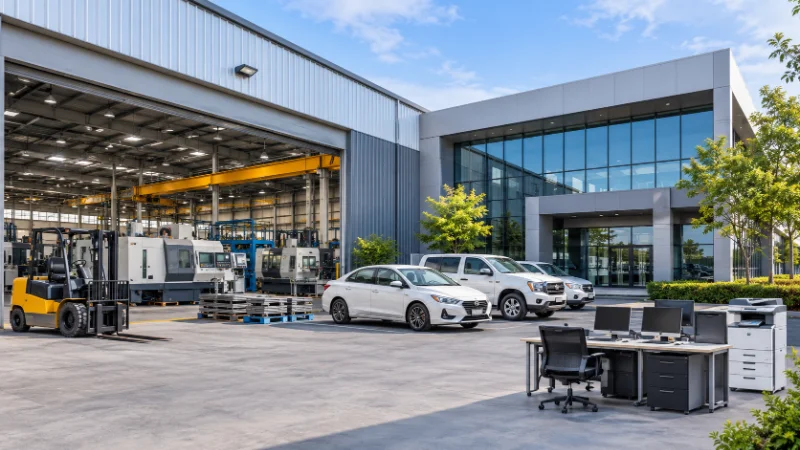

Fixed assets in accounting are long-term tangible resources a business owns and uses to support its operations rather than items it expects to sell as part of its normal business activities. Buildings, machinery, vehicles, computers, and production equipment are common examples.
They matter because purchasing a fixed asset is generally treated differently from paying an ordinary operating expense. Instead of recording the entire purchase as an expense immediately, businesses usually capitalize qualifying assets on the balance sheet and recognize their cost over time through depreciation.
Understanding how fixed assets are recorded, depreciated, and tracked is essential for maintaining accurate financial statements and monitoring the value of the resources a company uses every day.
What Qualifies as a Fixed Asset?
A fixed asset normally provides economic benefits for more than one accounting period and supports business operations.
Common examples include:
- Buildings and building improvements
- Machinery and manufacturing equipment
- Office furniture
- Computers and certain equipment
- Company vehicles
- Tools with longer useful lives
- Land
Inventory is not a fixed asset because the business intends to sell it as part of its normal operations. Cash and accounts receivable are also classified as current assets rather than fixed assets.
Intangible assets, such as patents and trademarks, are long-term resources, but they are generally accounted for separately from tangible property, plant, and equipment (PP&E).
Unlike current assets, which are typically expected to be converted into cash or used within a year or operating cycle, fixed assets are held for longer-term business use.
How Fixed Assets Are Recorded
When a business acquires an asset, the amount recorded can include more than its invoice price.
The initial cost may include expenditures directly necessary to acquire the asset and prepare it for its intended use. Depending on the asset, these costs could include freight, installation, testing, or other qualifying expenses.
Companies need clear fixed asset accounting policies so accountants know which purchases should be capitalized, how assets should be classified, and when depreciation should begin.
For example, suppose a company purchases manufacturing equipment for $50,000 and pays another $3,000 for delivery and $2,000 for installation. If those additional expenditures qualify as costs necessary to prepare the equipment for use, the recorded asset cost may be $55,000 rather than just its purchase price.

Use a Capitalization Threshold
Businesses commonly establish a capitalization threshold to avoid adding every inexpensive purchase to the fixed asset register.
A company might decide that qualifying equipment costing less than a particular amount will be expensed immediately, while purchases above that threshold are capitalized.
The policy should be applied consistently. Frequently changing the threshold or making exceptions simply to alter current-period expenses can reduce the reliability of financial reporting.
Why Fixed Assets Are Depreciated
Most fixed assets lose economic usefulness over time because of wear and tear, technological changes, or normal use.
Depreciation allocates an asset’s depreciable cost across its estimated useful life instead of recognizing the entire cost in one accounting period.
Suppose equipment costs $55,000, is expected to have a $5,000 residual value, and has a five-year useful life. Using straight-line depreciation, the depreciable amount would be $50,000, producing $10,000 of depreciation expense per year.
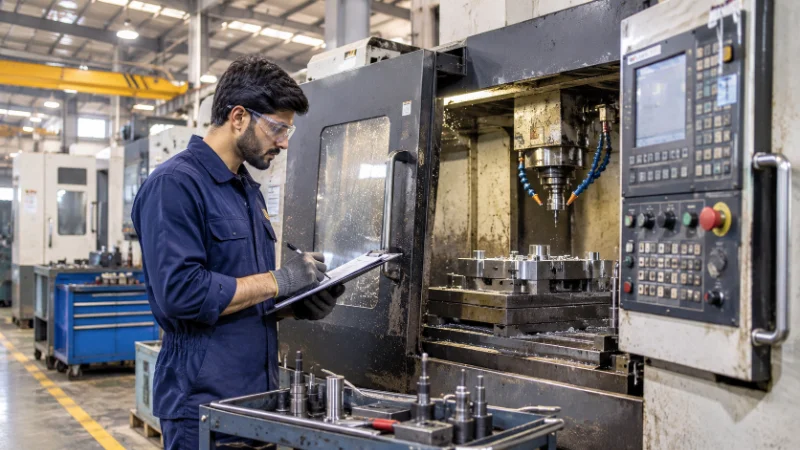
Businesses can use different depreciation methods depending on the asset and applicable accounting requirements. Common methods include:
- Straight-line depreciation: Allocates an equal amount of depreciation expense each year.
- Declining balance method: Recognizes higher depreciation expenses in the earlier years of an asset’s useful life.
- Units-of-production method: Calculates depreciation based on how much an asset is used or how much it produces.
The accounting entry generally includes a debit to depreciation expense and a credit to accumulated depreciation.
Accumulated depreciation is a contra-asset account. It reduces the carrying amount of the fixed asset without removing its original historical cost from the accounting records.
Land is normally not depreciated because it generally does not have a finite useful life in the same way as buildings or machinery.
Understand Carrying Value
The amount shown for a fixed asset on the balance sheet is not necessarily its current resale value.
An asset’s carrying amount is generally calculated from its recorded cost less accumulated depreciation and applicable impairment losses.
If a machine originally cost $100,000 and has accumulated depreciation of $60,000, its net carrying amount would generally be $40,000 before considering impairment.
That does not mean the company could sell the machine for $40,000. Its market value may be higher or lower depending on its condition, demand, age, and technological relevance.
The Financial Accounting Standards Board’s official ASC 360 guidance on property, plant, and equipment addresses the accounting framework for long-lived tangible assets under U.S. GAAP.
Separate Repairs From Capital Improvements
Not every amount spent on a fixed asset should increase its recorded value.
Routine repairs and maintenance generally keep an asset operating in its existing condition and are normally treated as expenses. More significant improvements may be capitalized when they increase capacity, extend useful life, or provide additional future economic benefits.
For example:
- Replacing a worn machine belt may be routine maintenance.
- Installing a major upgrade that substantially increases production capacity may qualify as a capital improvement.
- Repainting an office is usually maintenance.
- Constructing a permanent addition to a building is generally a capital expenditure.
Businesses need documented policies so similar costs are treated consistently from one accounting period to the next.
Keep a Detailed Fixed Asset Register
As a company grows, relying only on general ledger balances makes individual assets difficult to track.
A fixed asset register should contain enough information to trace each asset throughout its lifecycle, including:
- Asset description and identification number
- Purchase and placed-in-service dates
- Original cost
- Location or department
- Depreciation method
- Useful life
- Residual value
- Accumulated depreciation
- Disposal information
Businesses with multiple locations should also track asset transfers. If a computer, vehicle, or piece of machinery moves between departments, the records should reflect its current location.
Maintaining an updated register helps businesses monitor their assets, calculate depreciation accurately, and identify missing or outdated records.

Account for Disposals Correctly
Eventually, fixed assets are sold, scrapped, traded, or otherwise removed from service.
When that happens, the business needs to remove both the asset’s recorded cost and its accumulated depreciation from the books.
The proceeds received are then compared with the asset’s carrying amount. The difference generally produces a gain or loss on disposal.
For example, if equipment has a carrying amount of $8,000 and is sold for $10,000, the company generally records a $2,000 gain. If it sells for $5,000, the difference would generally be a $3,000 loss.
Leaving disposed assets on the register can overstate both gross assets and accumulated depreciation, so periodic physical reviews are important.
Why Fixed Asset Accounting Matters
Fixed assets can represent a significant portion of a company’s balance sheet. Poor records can lead to incorrect depreciation, missing assets, outdated schedules, and inaccurate financial reports.
A good process starts when an asset is purchased and continues through capitalization, depreciation, transfers, improvements, impairment reviews, and eventual disposal.
For a small business with a handful of assets, a carefully maintained register may be sufficient. As the asset portfolio grows, dedicated fixed asset management systems can reduce manual calculations and make lifecycle events easier to control.
The key is treating fixed assets as more than expensive purchases. They are long-term business resources whose cost, use, and remaining value need to be accounted for throughout the time the company owns them.