


Learning how to make money as a 12 year old starts with one honest fact. Most regular jobs are off limits at this age. That does not shrink your options much. Twelve is old enough to run a small business, win repeat customers, and save for something big.
This guide covers the legal rules and 12 ideas that work in real neighborhoods. It lists what each one pays and how to land your first customer. Kids will find a plan here. Parents will find the safety and money sections useful.
What a 12 year old can legally do for pay
Labor laws limit regular employment for kids under 14. Stores, restaurants, and offices generally cannot hire a 12 year old. Rules differ by state, so a parent should check the state labor department website before the first job.
Some work is usually allowed. Babysitting, yard work, pet care, and helping in a family-owned business are common examples. Selling your own products, like baked goods or crafts, also works because that is self-employment, not a job with a boss.
Avoid anything that involves ladders, power tools, or heavy equipment. Also avoid going into a stranger’s home without a parent knowing about it. Any job that asks you to hide your age is a red flag.
The best ways to make money as a 12 year old
These ideas are ordered from easiest to start to slowest to pay off. Prices are typical ranges. They change with your area and the season.
1: Dog walking and pet sitting
Dog walking pays roughly $5 to $15 per walk, depending on length. Feeding a neighbor’s cat or fish while they travel pays about $10 to $20 per visit. Start with small, friendly dogs you already know. Ask a parent before handling any large or unfamiliar dog. Vacation pet care earns more, because a trip means several visits in a row.

2: Yard work
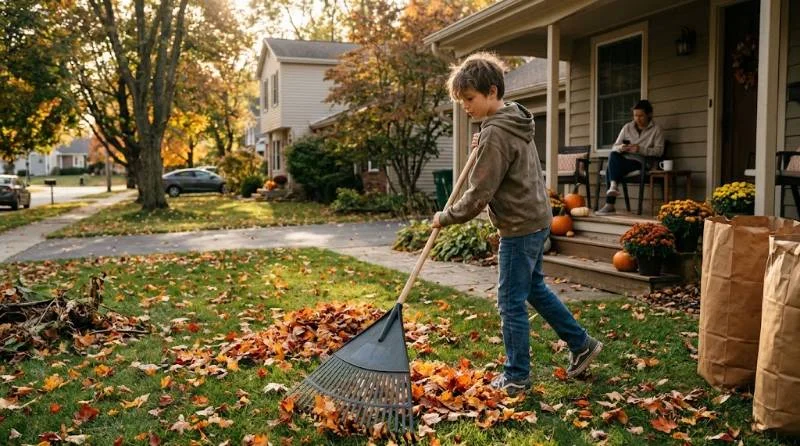
Raking leaves, pulling weeds, and watering gardens usually pay $10 to $20 per hour. Fall is the busiest season. Skip riding mowers and any tool with a blade unless an adult supervises. Many homeowners will happily pay a kid for the simple jobs they keep postponing.
3: Car washing
A basic exterior wash pays $5 to $10 per car. A full inside and out job can reach $15 to $25. Bring your own bucket, sponges, and towels so the customer supplies nothing. Offering a weekly or monthly wash turns one customer into steady income.
4: Mother’s helper
A mother’s helper plays with young children while a parent stays in the house. It pays about $8 to $12 per hour. This is a smart step toward babysitting. A short babysitting course from a group like the Red Cross builds skills and makes parents trust you faster.
5: Trash can service
Offer to roll bins to the curb and back each week for $3 to $5 per house. Ten houses on your street add up to solid weekly income with almost no equipment. You can also rinse the bins for an extra fee.
6: Snow shoveling
In snowy areas, a shoveled driveway pays $10 to $25, depending on size. Work in short stretches and wear warm layers. Never use a snowblower without an adult. Pair this with trash can service so you earn all year.
7: Homework help and reading buddy
If you are strong in a school subject, younger kids and their parents will pay for help. Reading with a first grader or checking math practice sheets pays $8 to $15 per hour. Hold sessions at the kitchen table with a parent nearby.
8: Tech help for older neighbors
Many older adults want help with phone settings, video calls, and photo sharing. Kids who grew up with devices explain these things well. Charge $10 to $20 per hour. Work with a parent close by. Never touch banking apps or ask for passwords.
Baked goods and lemonade
A lemonade stand still works on hot weekends, and a good location matters more than the recipe. Homemade food has legal rules in many areas. A parent should check local cottage food and permit rules before you sell baked goods. Price to cover ingredients first, then add profit. A $4 cookie box that costs $1.50 to make leaves you $2.50.
1: Handmade crafts
Friendship bracelets, painted rocks, stickers, and bookmarks sell for $2 to $8 each. Craft fairs, school-approved events, and family gatherings are the best places to sell. Keep supplies cheap at first. Test one product with ten buyers before making fifty.
2: Selling outgrown things
Toys, books, games, and clothes your family no longer uses can turn into cash. A parent should post items on a resale app or help you run a yard sale. Clean everything first. Clean items sell faster and for more.
3: Online selling or video content, with a parent
Most platforms require users to be 13 or older, and many require 18 for payment. A 12 year old cannot open a seller account or monetize a channel alone. A parent can own the account while you make the products or videos. Expect slow results, because most channels earn nothing for months. Treat online work as a long project, not a quick paycheck. Be skeptical of paid surveys and any offer that asks for an upfront fee.
How much can a 12 year old realistically earn?
Most kids earn between $20 and $100 a week during busy seasons. Your pay depends on how many hours you work and how many regular customers you have. Recurring jobs matter more than big one-time jobs.

Here is a sample week. Three dog walks at $8 each bring in $24. Two yard jobs at $15 each add $30. Ten trash can pickups at $4 each add $40. That totals $94 for about six hours of work.
Your first month will usually earn less. Building a customer list takes time. Most kids need two to three weeks before the requests start coming in.
How to find your first customersH3: Start with people who already trust you
Ask relatives, neighbors, and family friends first. They know you, so there is less risk for them. Tell them exactly what you offer and what it costs. A vague “I’ll do anything” pitch gets ignored. A clear offer gets a yes.
1: Use a short pitch
Try something like this: “Hi, I’m Maya from down the street. I walk dogs for $8 a walk. Can I walk yours this week?” Keep it to two sentences.
2: Make a simple flyer
Print a small flyer with your first name, your service, your price, and a parent’s phone number. Never put your home address or last name on it. A parent should approve every place you post it.
3: Ask for referrals
After each job, ask the customer if a friend might need the same help. Happy customers are your best advertising. One referral is worth more than twenty flyers.Safety rules for kids who work
Safety matters more than money. Follow these rules on every job.
- A parent knows where you are, who the customer is, and when you will be home.
- Work in daylight, close to home, and never alone inside a home you do not know.
- Keep your address, school, and full name private online and on flyers.
- Take payment in cash or through a parent’s payment app.
- Say no to any job that feels wrong, and tell a parent right away.
What to do with the money you earn
Decide on a split before the first dollar comes in. A common split is 50 percent saving, 30 percent spending, and 20 percent giving. Adjust it to fit your goals.
Keep a notebook with the date, job, customer, and amount. This takes two minutes. It also shows which jobs pay best per hour. Many kids find that trash can service beats yard work once they track their time.
Ask a parent about a custodial savings account or a teen debit account managed by an adult. A cash jar is fine for a few weeks. A bank account protects the money from accidental spending.
Small amounts from occasional jobs often do not require a tax return. Self-employment income above a low yearly threshold can, even for kids. A parent should check with a tax professional if earnings grow.
When this advice does not apply
Not every idea fits every kid. Apartment dwellers cannot offer yard work, but they can walk dogs, tutor, and help with tech. Rural kids may have few neighbors within walking distance. Family farm chores or selling garden produce with a parent may fit better.
If you play sports or have a heavy homework load, pick one weekly recurring job instead of many small ones. Two hours of steady work each week beats a burst of effort that burns you out. If nobody hires you after two weeks, change your pitch or price instead of quitting.