
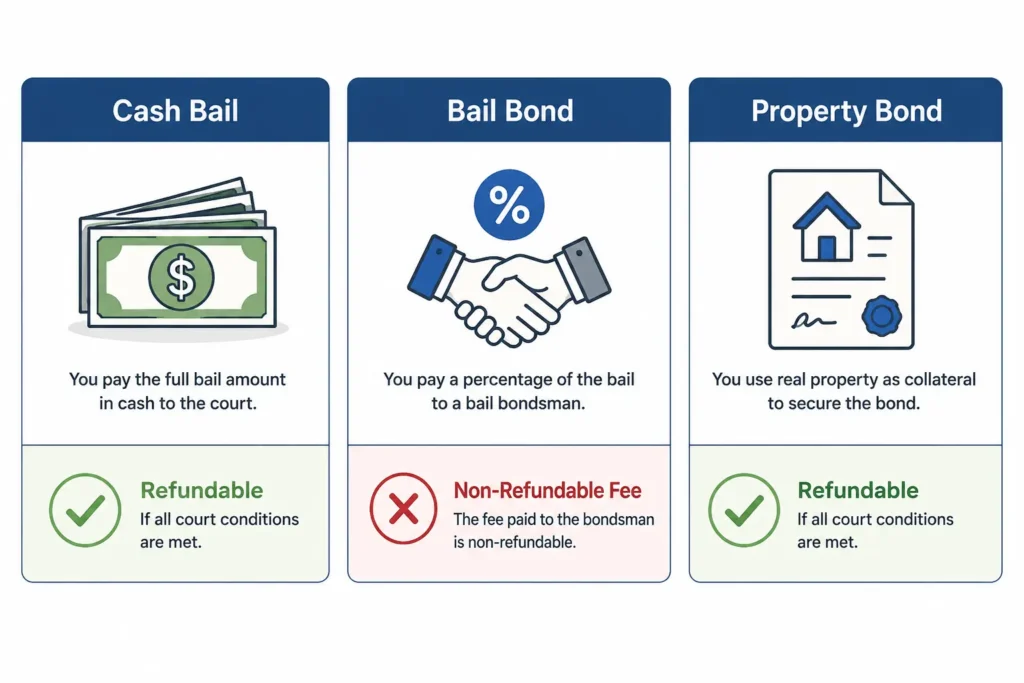
Yes, often, but not always. If you or a family member paid cash bail directly to the court and the defendant shows up for every hearing, the money comes back. If you paid a bail bondsman instead, that fee is gone for good, no matter how the case ends.
How Cash Bail Refunds Work
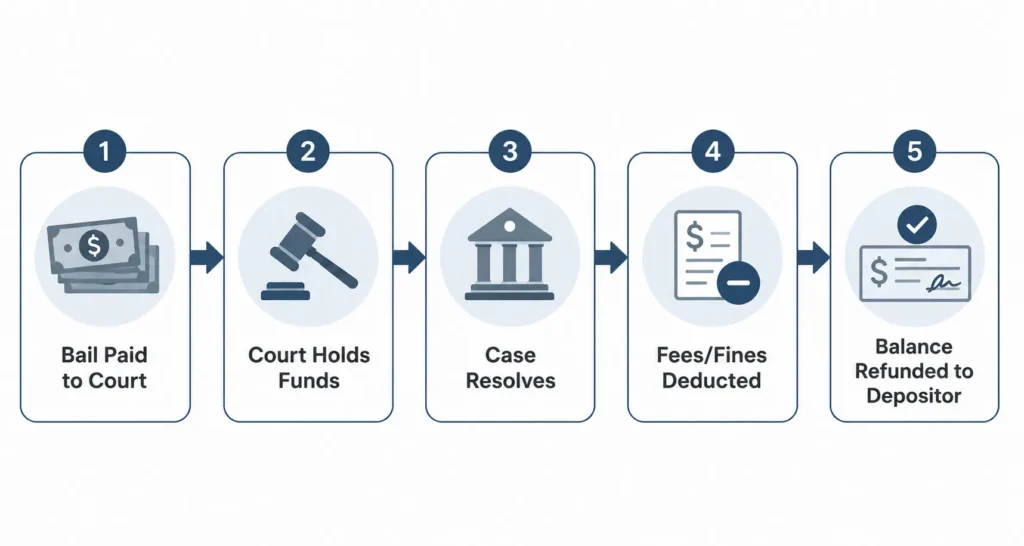
Cash bail is the simplest version of this system. Someone pays the full bail amount, in cash or by card, directly to the court clerk. The court holds that money as a kind of promise: show up to every hearing, and it comes back when the case closes.
The outcome of the case doesn’t usually decide the refund. A guilty plea, a conviction, a dismissal, or an acquittal all lead to the same result, as long as the defendant kept every court date. The Bail Project, a nonprofit that posts bail for low-income defendants, puts it plainly: once the trial ends, the person gets the bail money back regardless of guilt or innocence, because the refund is tied to appearance, not outcome.
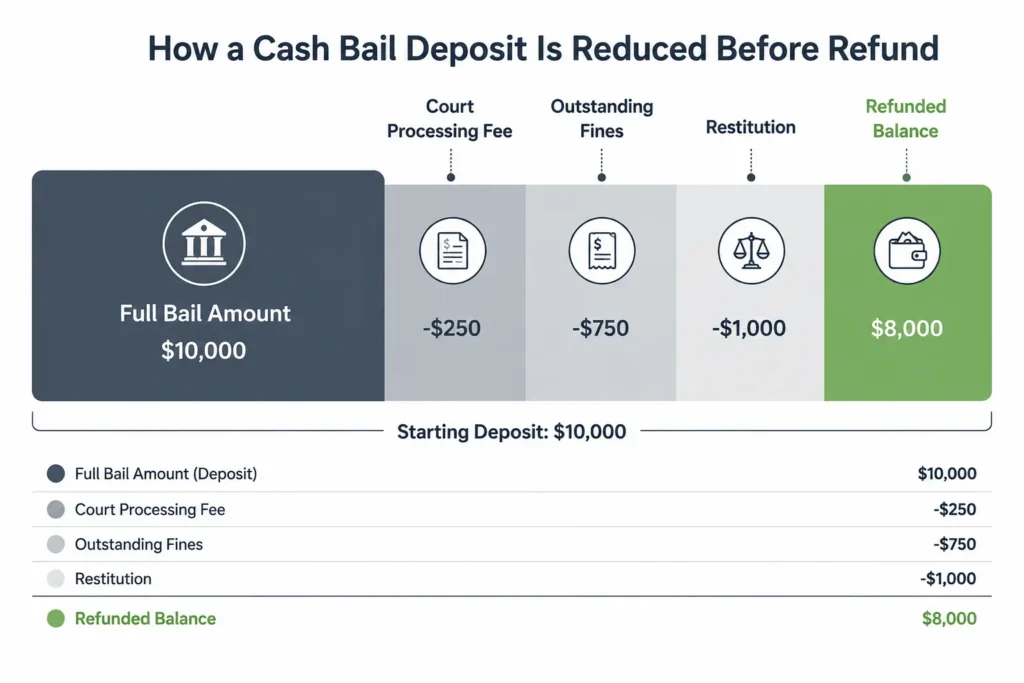
That’s the theory. In practice, courts often subtract something first. Processing fees, administrative charges, or outstanding fines tied to the case can all come out of the refund before a check gets cut.
Why Bail Bond Premiums Are Never Refunded
Most people can’t hand over the full bail amount in cash, so they go through a bail bondsman instead. This is where the “do you get bail money back” question gets a harder answer, because the money you pay a bondsman isn’t bail. It’s a fee.
1. What a Bail Bondsman Fee Actually Pays For
A bail bond agent typically charges 10 percent of the total bail amount, sometimes more depending on the state and the perceived risk. In exchange, the agent posts the full bail with the court on the defendant’s behalf. That payment is a premium, similar to an insurance premium, and it compensates the agent for taking on the risk that the defendant skips court.
Because it’s a service fee rather than a deposit, it isn’t returned. It doesn’t matter if the case is dismissed the next day or if the defendant attends every hearing without a single problem. The bondsman already did the job the fee paid for: getting the person out of jail. Any collateral put up to secure the bond, such as a car title or a lien on a house, is a separate matter and gets released once the case closes and the bond is exonerated.
Property Bonds and Collateral Refunds
Some courts allow a property bond instead of cash. Here, real estate stands in for money, with the court placing a lien on the property equal to the bail amount. No cash changes hands upfront.
If the defendant meets every court obligation, the court lifts the lien once the case ends. If they don’t, the court can move to foreclose, and the property becomes tied up in a way that’s often more damaging and slower to unwind than a straightforward cash bail forfeiture. Property bonds also tend to take longer to process, both at posting and at release, because they involve title searches and lien paperwork rather than a same-day cash transaction.
What Can Reduce Your Bail Refund
Getting money back rarely means getting back every dollar you put down. A few things chip away at the total.
1. Court Costs and Administrative Fees
Many courts keep a small percentage of cash bail as a processing or administrative fee, separate from anything owed for the case itself. This is standard practice and applies whether the case ends in conviction or dismissal. It’s worth asking the court clerk about this fee before posting bail, since the percentage varies by jurisdiction.
2. Fines and Restitution Deductions
If the case results in fines, court costs, or restitution, the court can apply the held cash bail toward those amounts before releasing what’s left. This surprises a lot of people who assumed “refund” meant the full deposit back. If you posted bail for someone else and don’t want your money used to cover their fines, some courts let you file as a third-party depositor at the time of payment, which can protect your funds from being redirected.
When You Won’t Get Your Bail Money Back
1. Missing a Court Date
This is the clearest way to lose bail money. If the defendant fails to appear, the court can declare the bail forfeited, meaning the full amount is kept by the court. A bench warrant typically follows, along with the possibility of a separate failure-to-appear charge.
2. Violating Release Conditions
Bail often comes with conditions beyond simply showing up: no contact with certain people, travel restrictions, drug testing, or check-ins with a supervising officer. Breaking those conditions can lead to forfeiture even if the defendant never misses a hearing.
Who Actually Receives the Refund
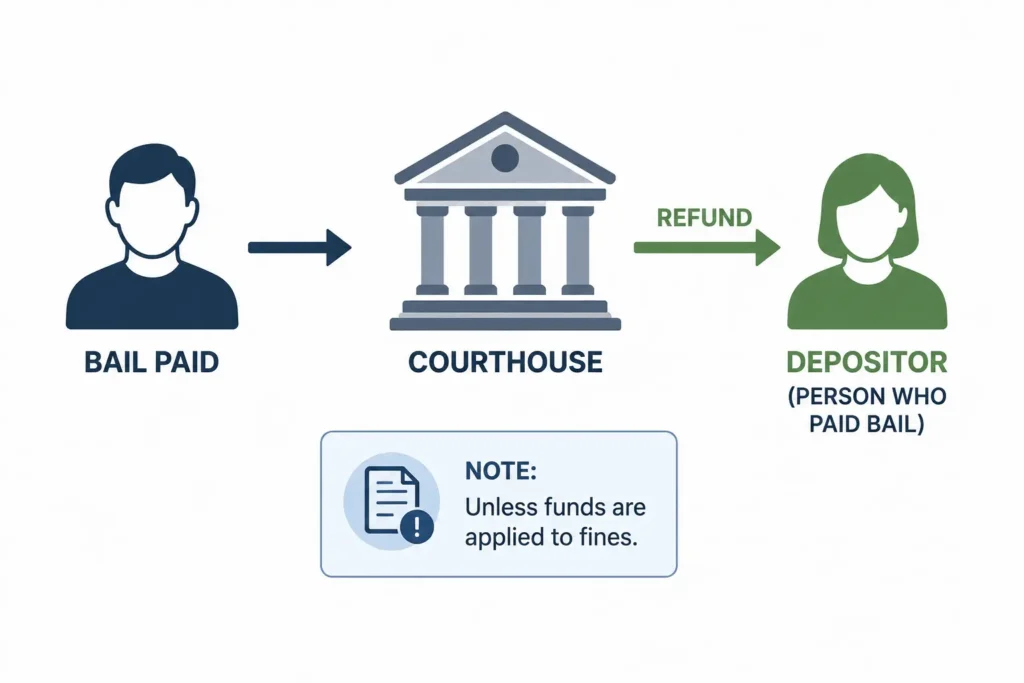
The refund goes to whoever is listed as the depositor on the court’s paperwork, which isn’t always the defendant. If a parent, spouse, or friend paid the bail, the court generally issues the refund to that person, not to the defendant, unless the funds get applied to the defendant’s fines first. This is one more reason to keep the receipt and case number from the day bail was posted.
How Long Does a Bail Refund Take
Timing depends entirely on the court and the type of bail. Cash bail refunds typically move faster than property bond releases, since there’s no lien to clear or title paperwork to process. Delays are common simply because a case has to be formally closed before the court’s finance office processes anything, and that step can lag behind the actual court date. Calling the clerk’s office with the case number is usually the fastest way to get a real answer for a specific case. If bail money is tied up longer than expected, raising cash quickly through other means can help bridge the gap in the meantime.
Steps to Get Your Bail Money Back
Once a case closes, the refund isn’t always automatic. Depositors sometimes need to submit a form, show identification, or confirm a mailing address before the court releases funds. Keeping the original receipt, staying reachable at the address on file, and following up with the clerk’s office a few weeks after the case closes will avoid most delays.
Getting bail money back mostly comes down to two things: how the bail was paid, and whether every court obligation was met. Cash bail and property bonds are built to be returned. Bail bond premiums are not, and no amount of good behavior changes that.
Frequently Asked Questions
1. Do you get bail money back if the defendant is found guilty?
Yes, for cash bail. The refund depends on whether the defendant attended every required court appearance, not on the verdict. A guilty finding doesn’t cancel a cash bail refund on its own.
2. Do you get bail bond money back if charges are dropped?
No. The premium paid to a bail bondsman is a service fee, not a deposit, so it stays non-refundable even if the charges are dropped or dismissed before trial.
3. How much of the bail money do you actually get back?
Often close to the full amount, minus any court processing fees, outstanding fines, or restitution the court decides to deduct. Ask the clerk’s office what fees apply in that specific jurisdiction.
4. What happens to bail money if someone skips court?
The court can forfeit the entire amount. A bench warrant is typically issued, and the person who posted bail loses the money regardless of who paid it.
5. Can someone else get the bail refund instead of the defendant?
Yes. The refund usually goes to whoever is listed as the depositor on the court’s paperwork, which is often a family member or friend rather than the defendant.