

When buying or selling property, one common question is who pays stamp duty: the buyer or the seller? In most countries that charge stamp duty on property purchases, the buyer is generally responsible. However, the rules depend on the country and the type of property transaction.
In the United States, property buyers and sellers usually deal with real estate transfer taxes instead of a nationwide tax called stamp duty. The responsibility for paying these taxes depends on state laws, local rules, and the agreement between both parties.
Understanding these costs before signing a purchase agreement can help you avoid unexpected expenses at closing.
What Is Stamp Duty?
Stamp duty is a government tax charged on certain legal documents and transactions. In property purchases, it generally applies when ownership of land or a home transfers from one person to another.
The name and rules differ between countries. For example, England and Northern Ireland use Stamp Duty Land Tax (SDLT), while Scotland uses Land and Buildings Transaction Tax and Wales uses Land Transaction Tax.
In the United States, similar charges are commonly called real estate transfer taxes, documentary transfer taxes, or real estate excise taxes. State and local governments may collect these taxes when a property deed is transferred or recorded.
The amount is often calculated using the property’s sale price or taxable value. Some jurisdictions use a fixed rate, while others apply different rates depending on the transaction.
Who Pays Stamp Duty, the Buyer or the Seller?
In countries such as England and Australia, the buyer generally pays stamp duty when purchasing a property. The seller does not normally pay this particular purchase tax.
In the United States, there is no single nationwide rule. The person responsible for a property transfer tax depends on the state and sometimes the city or county where the property is located.
For example:
- In Michigan, the seller is legally responsible for the state real estate transfer tax, although the buyer may pay on the seller’s behalf by agreement.
- In Georgia, the seller is generally liable, but the purchase agreement can arrange for the buyer to pay.
- In Washington, the seller usually pays the real estate excise tax. If the seller does not pay, the buyer can become responsible.
- In New York, the seller generally pays the base transfer tax, while certain additional taxes are normally the buyer’s responsibility.
These examples show why buyers and sellers should check the rules for the property’s exact location before completing a transaction.
How Do Property Transfer Taxes Work in the USA?
Property transfer taxes are charges imposed when ownership of real estate changes. They help state and local governments collect revenue from property transactions.
The tax may be collected when the deed is submitted for recording. In some locations, the transfer cannot be recorded until the required tax has been paid.
The calculation depends on local legislation. It may be based on the property’s selling price, the amount of consideration exchanged, or another taxable value.
For example, Georgia calculates its real estate transfer tax using the property’s sale price. Michigan uses a rate based on each $500 or fraction of $500 of the property’s value.
Some cities and counties also impose additional transfer taxes. This means the total cost can differ between two properties in the same state.
Who Pays Transfer Tax in Different US States?
The following examples demonstrate how payment responsibility differs across the country.
1. Michigan
Michigan charges a state real estate transfer tax when ownership of qualifying real property is transferred through a recorded instrument.
The seller, also called the grantor, is legally responsible for paying the state tax. The current state rate is $3.75 for every $500 or fraction of $500 of the property’s value.
However, a buyer and seller can agree that the buyer will pay the tax on the seller’s behalf. The legal responsibility and the payment arrangement are two different things.
2. New York
New York has a real estate transfer tax that generally makes the seller responsible for the base tax.
However, certain additional taxes have different payment rules. For example, the New York City mansion tax is generally paid by the buyer when the applicable residential property purchase meets the required threshold.
The purchase agreement can also affect who bears certain transfer tax expenses. Buyers should review the applicable state and city rules before closing.
3. Georgia
Georgia imposes a real estate transfer tax when property ownership changes.
The seller is generally liable for the tax, although the buyer may agree to pay it under the sales contract.
The tax must be paid before the deed or other qualifying document can be recorded. The amount is calculated using the property’s value under Georgia’s applicable tax rules.
4. Washington
Washington calls its property transfer tax the Real Estate Excise Tax (REET).
The seller usually pays this tax when selling real estate. However, if the seller does not pay, the buyer may become responsible.
The tax rate depends on the sale price and applicable state and local rules. Certain transfers may qualify for exemptions.

Can the Buyer and Seller Split Stamp Duty?
Yes, depending on the applicable law, buyers and sellers can sometimes agree to share property transfer taxes.
For example, a seller may agree to cover part of the transfer tax to make a property deal more attractive. Alternatively, the buyer may accept responsibility for a cost that would normally be paid by the seller.
However, an agreement between the parties does not automatically remove any legal tax liability imposed by state law.
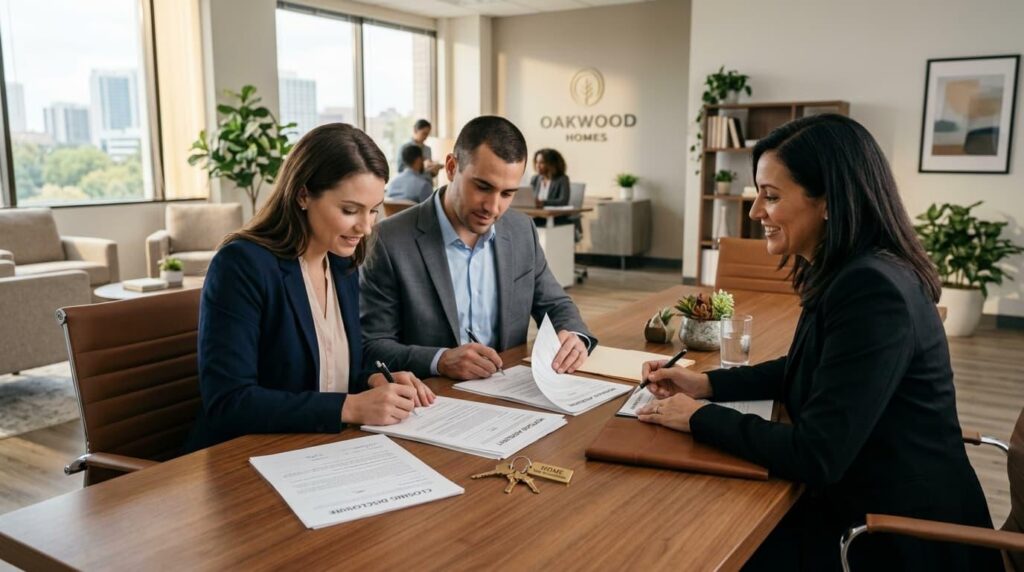
Before signing the purchase agreement, both parties should clearly identify:
- Which party will pay the state transfer tax.
- Whether city or county transfer taxes apply.
- Who will cover deed recording fees.
- Whether any additional taxes or exemptions apply.
- How the expenses will appear on the closing statement.
Putting these details in writing helps prevent disagreements during the closing process.
What Is the Difference Between Stamp Duty and Closing Costs?
Stamp duty, or property transfer tax, is only one possible expense associated with buying or selling real estate.
Closing costs include several other charges that may apply during the transaction. These expenses can be divided between the buyer and seller according to local customs, legal requirements, and their agreement.
Common buyer closing costs include:
- Loan origination and lender fees.
- Home appraisal and inspection fees.
- Title search and title insurance charges.
- Mortgage recording fees.
- Prepaid property taxes and homeowners insurance.
Sellers may have different expenses, including real estate agent commissions, mortgage payoff charges, title-related fees, and applicable transfer taxes.
It is important not to confuse property transfer taxes with annual property taxes. Property taxes are generally based on property ownership and assessed value, while transfer taxes are connected to a qualifying ownership transfer.
How Can You Find Out Who Must Pay?
The easiest way to determine payment responsibility is to check the laws and tax guidance for the property’s location.
Follow these steps before completing a property purchase or sale:
- Identify the property’s location. Find out which state, county, and city govern the transaction.
- Check the transfer tax rules. Visit the relevant state or local revenue department’s official website.
- Review the purchase agreement. Look for clauses explaining who pays transfer taxes and recording fees.
- Ask the closing agent. A title company, escrow officer, or real estate attorney can explain the expected charges.
- Review the closing disclosure or settlement statement. Check that the costs are allocated according to the agreement and applicable law.
If you are purchasing property in another country, check that country’s tax authority instead. The US transfer tax system and foreign stamp duty systems do not necessarily follow the same rules.
What Should Buyers and Sellers Remember?
The person who pays stamp duty depends on the country where the property is located. In many countries, including the UK and Australia, the buyer generally pays the property purchase tax.

In the United States, the equivalent expense is usually called a real estate transfer tax or excise tax. Some states make the seller responsible, while other jurisdictions allow different payment arrangements or impose additional buyer taxes.
Before agreeing to a property transaction, check local tax requirements and make sure the purchase agreement clearly explains who will cover each expense. This is the best way to understand your financial responsibility and avoid surprises at closing.