
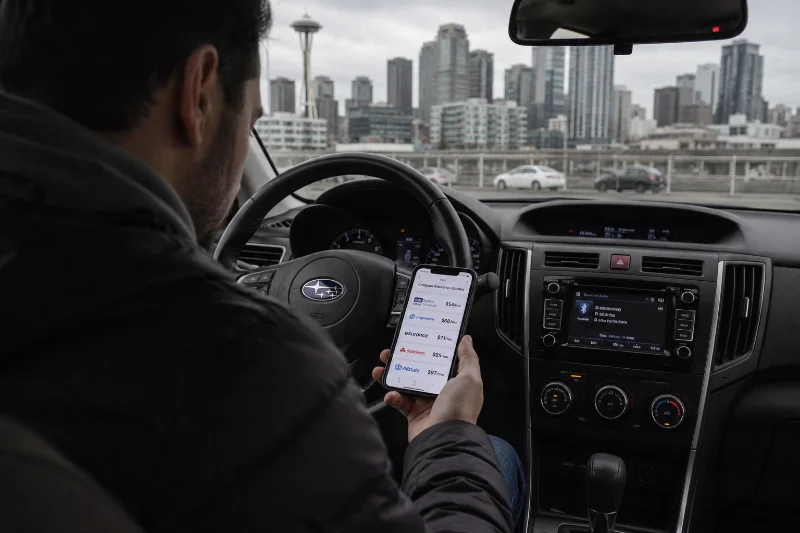

Cheap car insurance in Seattle starts around $63 a month for state minimum coverage, though the exact number depends heavily on which company you ask. Full coverage in the city runs closer to $180 to $234 a month on average, well above both the Washington state average and the national average. The gap between the cheapest and priciest insurers in Seattle is wide enough that shopping around can save a driver several hundred dollars a year.
Average Cost of Cheap Car Insurance in Seattle Right Now
Rates vary by source because each analysis pulls from a different mix of ZIP codes, driver profiles, and coverage levels. NerdWallet’s most recent filings-based analysis puts full coverage in Seattle at $2,899 a year, compared with $2,360 statewide. Insure.com’s data lands close behind at $2,803 a year for full coverage, about $414 above the Washington average it calculated.
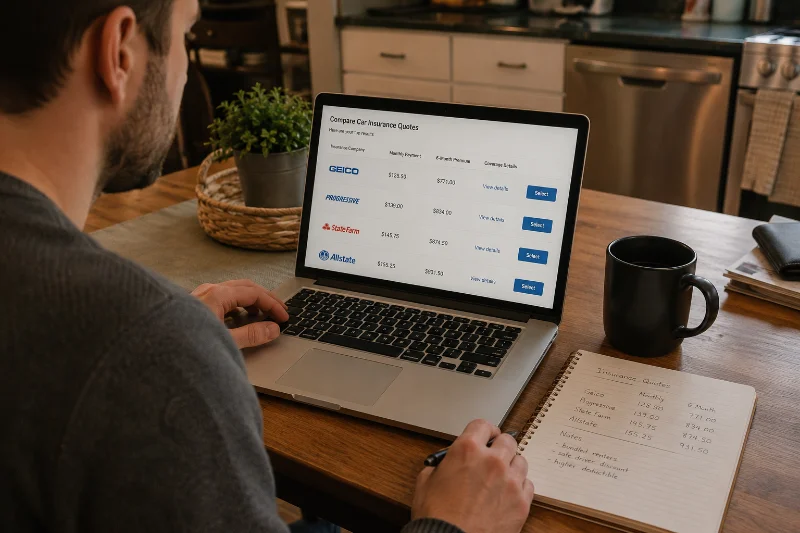
The Zebra’s customer data shows a six-month full coverage policy averaging $1,078, or roughly $180 a month, with PEMCO coming in as the cheapest company in its sample at $593 for six months. Compare.com, which pulls from real-time quotes rather than filings, found State Farm offering the lowest average rate in the city at $72 a month for a typical driver profile.
These numbers will not match your own quote. Your age, credit history, driving record, ZIP code, and the car you drive all move the needle, sometimes by hundreds of dollars a year. Treat the figures above as a benchmark for whether a quote you receive is actually competitive.
Washington’s Minimum Coverage Requirements
Washington law requires drivers to carry liability coverage of at least 25/50/10. That breaks down to $25,000 in bodily injury coverage per person, $50,000 per accident, and $10,000 in property damage coverage per accident. Washington is an at-fault state, so the driver responsible for a crash is on the hook for the other party’s injuries and vehicle damage up to those limits.
Insurers in Washington must offer personal injury protection and uninsured motorist coverage, though you can decline both in writing. About one in five Washington drivers is uninsured, according to Insurify’s data, which is one reason many agents recommend carrying uninsured motorist coverage even though it is not mandatory.
The state minimums have not changed in years and have not kept pace with repair and medical costs. A moderate collision can easily exceed the $10,000 property damage cap, leaving you personally responsible for the rest. Many insurance professionals suggest limits closer to 100/300/100 for drivers in dense traffic areas like Seattle.
Cheapest Car Insurance Companies in Seattle
No single company is cheapest for every driver, but a few names show up repeatedly across independent rate analyses. PEMCO, a Pacific Northwest-based insurer, appears as the lowest-cost option in both The Zebra’s and InsureMojo’s Seattle data. GEICO ranks as the cheapest full coverage option in Insure.com’s analysis, at an average of $2,224 a year, with Travelers close behind at $2,576.
State Farm shows up as the cheapest minimum coverage carrier in both Compare.com’s real-time quote data and MoneyGeek’s scoring model, which also ranks GEICO first overall for balancing affordability with coverage options. Progressive comes out ahead in MoneyGeek’s full coverage comparison, at roughly $1,444 a year for its sample driver.
The takeaway is not that one company wins outright. It is that regional carriers like PEMCO can undercut the national names for Seattle drivers specifically, while GEICO, State Farm, and Progressive stay consistently competitive across most driver profiles. Getting quotes from at least three or four companies, including one regional insurer, is the single most reliable way to find your actual cheapest rate.
Why Seattle Drivers Pay More Than the Rest of Washington
Seattle consistently prices above the state average, and the reasons are mostly structural rather than random. Dense traffic increases the frequency of fender benders and at-fault claims. InsureMojo’s crash data shows Seattle logged over 19,000 collisions between June 2022 and June 2025, with fatalities rising even as total crash counts dropped.
Vehicle theft is another factor Insurify points to directly, noting Seattle’s high theft rate as a driver of higher premiums relative to the rest of the state. Frequent rain adds to the claims volume too, since wet roads mean more weather-related accidents even without any change in driver behavior.
None of this means a Seattle driver is stuck paying above-average rates. It does mean your baseline starting point is higher than someone quoting the same coverage in, say, Spokane, where State Farm’s cheapest liability-only rate runs closer to $47 a month according to Insurify. Understanding why the city costs more helps set realistic expectations before you start comparing quotes.
How Your Seattle ZIP Code Changes Your Rate
Car insurance pricing is not uniform across Seattle, and this is where a lot of general advice falls short. Insurers price by ZIP code because claims history, theft reports, and traffic density differ block by block, not just city by city. NerdWallet’s analysis of Seattle’s most populated ZIP codes found meaningful spread even among neighborhoods a few miles apart.
A driver in a denser, higher-traffic ZIP code near downtown or South Lake Union will typically see a higher quote than someone in a quieter residential ZIP further from the urban core, even with an identical driving record. Parking situation matters too. A car parked on the street overnight in a high-theft area usually costs more to insure than the same car parked in a private garage.
If you are comparing quotes and one insurer’s number looks unusually high, ask the agent whether it reflects your exact ZIP code or a citywide average. Some online quote tools default to a broader area code before you enter your full address, which can overstate or understate your real premium until you confirm the details.
Full Coverage vs Minimum Coverage: Which Makes Sense in Seattle
Minimum coverage in Seattle averages somewhere between $62 and $76 a month depending on the source, while full coverage runs $180 to $234 a month. The difference is not just price. Minimum liability coverage pays for damage you cause to others; it does nothing for your own car if you are at fault, hit by an uninsured driver, or dealing with theft or weather damage.
If you finance or lease your car, your lender will require full coverage, so the choice is made for you. If you own the car outright and it is worth less than a few thousand dollars, liability-only can be a reasonable way to cut costs, since a full-coverage payout would be capped at the car’s low value anyway. For anything worth $5,000 or more, most advisors recommend keeping comprehensive and collision coverage, particularly in a city with Seattle’s theft and weather profile.
Seattle’s rate spread is a good example of why price alone shouldn’t decide it — this guide on how to actually pick one covers the factors worth weighing beyond the monthly number.
How to Lower Your Car Insurance Rate in Seattle
A clean driving record is still the single biggest lever most drivers have. An at-fault accident can add roughly $67 a month to a Seattle premium according to The Zebra’s data, and a DUI can push average increases even higher based on Insure.com’s violation breakdown.
Beyond driving history, a few practical moves tend to move the needle for Seattle drivers specifically:
Bundle your auto policy with renters or homeowners coverage through the same carrier, since most insurers discount both policies when bundled. Ask about usage-based or telematics programs if you drive fewer miles than average, since Seattle’s traffic means many residents commute shorter distances than the state average driver. Raise your deductible on comprehensive and collision if you have savings set aside to cover it out of pocket, which lowers your monthly premium in exchange for more risk if you file a claim.

Improving your credit score also matters in Washington, where insurers are still permitted to factor it into pricing. Finally, requote every 12 to 18 months rather than letting a policy auto-renew indefinitely, since new customer discounts and shifting company pricing strategies mean last year’s cheapest insurer is not always this year’s.
When It Is Worth Shopping for a New Quote
Rate shopping is worth doing any time your circumstances change. Moving to a new ZIP code within Seattle, buying a different car, adding or removing a driver from your policy, or hitting a milestone birthday can all shift your premium enough to justify new quotes. A three-year-old at-fault accident or ticket dropping off your record is another common trigger, since most violations stop affecting your rate after three to five years depending on the insurer.
It is also worth requoting simply because insurers price risk differently and those models change over time. A company that was expensive for you two years ago may now be the cheapest option in your ZIP code, and the only way to know is to compare current quotes rather than assuming your existing policy is still competitive.
Set a recurring reminder a month before renewal to pull two or three fresh quotes, including one from a regional carrier like PEMCO alongside a national name like GEICO or Progressive. Keep your current declarations page handy, so you are comparing identical coverage limits and deductibles across every quote. A five-minute comparison at renewal time is a small habit that, over several years, can add up to real savings on a Seattle driver’s total insurance spend.