

No state has zero property tax, but a few come surprisingly close. If you are asking what states don’t have property tax, Alaska is the nearest match, because the state charges homeowners nothing statewide and only 24 cities and boroughs levy a local tax, according to the Alaska Department of Commerce.
Everywhere else, the real question is how little you will pay. Hawaii, Idaho, Wyoming, Alabama, and a handful of others have effective rates at or below 0.52%, while ATTOM puts the national average at 0.90%.
This guide covers the 2026 rates, the dollar bills behind them, and what these states charge you in other ways.
Why Every State Still Has Property Tax
Property tax pays for a large share of local government, including schools, roads, and emergency services. That dependence is why no legislature has dropped it entirely.
Replacing it is expensive. A Tax Foundation analysis cited in 2026 coverage of Florida’s proposals found the state’s average sales tax rate would need to rise from 7.02% to 15.34% to cover lost homeowner property tax revenue.
That math explains why even the lowest-rate states keep the tax and trim it with exemptions.
Alaska: The Closest Thing to No Property Tax
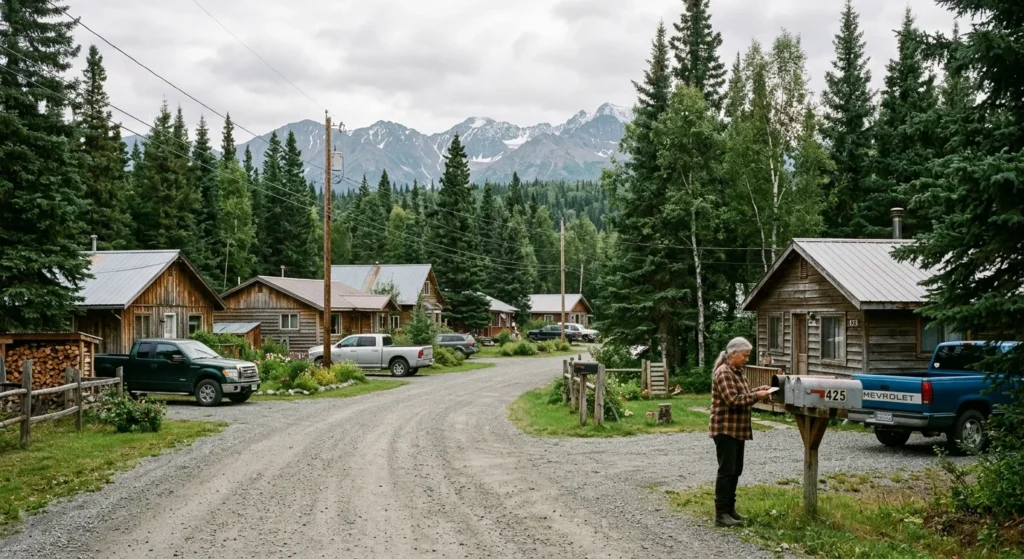
Alaska has no statewide property tax on homes, no state income tax, and no statewide sales tax. Property tax is a local decision. The Alaska Office of the State Assessor reports that only 24 municipalities levy one.
Where Alaskans Still Pay It
The state does levy a 20-mill (2%) tax on oil and gas property, according to a 2026 Alaska fiscal note. Municipalities can tax the same property, and the owners take a credit against the state bill.
If you live in a borough or city that taxes property, you pay it. AARP, citing the Tax Foundation, puts Alaska’s average property tax rate at 0.94% of assessed value in 2024, which is higher than every state in the table below. Places without a taxing municipality charge no local property tax.
What Alaskans Pay Instead
No statewide sales tax does mean no sales tax. The Department of Commerce reports that 107 municipalities charge a local sales tax, with rates from 1% to 7%.
The state funds much of its government through oil revenue instead of income or statewide sales taxes.
States With the Lowest Property Tax Rates in 2026
If you want the lowest effective rate rather than zero, these ten states lead. The figures come from ATTOM’s April 2026 data as reported by Kiplinger, which covers 89.6 million single-family homes.
| State | Effective Rate | Median Annual Bill | Median Home Value |
| Hawaii | 0.33% | $2,239 | $976,000 |
| Idaho | 0.39% | $2,038 | $475,000 |
| Wyoming | 0.40% | $1,767 | $483,000 |
| Alabama | 0.43% | $788 | $282,000 |
| Arizona | 0.43% | $1,879 | $470,000 |
| Utah | 0.45% | $2,525 | $589,000 |
| West Virginia | 0.48% | $865 | $259,000 |
| Delaware | 0.48% | $1,768 | $396,000 |
| Tennessee | 0.50% | $1,442 | $389,000 |
| Nevada | 0.52% | $2,027 | $496,000 |
WalletHub’s 2026 ranking uses a different method and gives Hawaii 0.27% and Alabama 0.38%, so expect small differences between sources.
A Low Rate Does Not Guarantee a Low Bill
Hawaii has the lowest rate, yet its median bill is $2,239 because the median home is worth $976,000. Alabama’s rate is higher at 0.43%, but its median bill is only $788 on a $282,000 home. West Virginia lands at $865.
Utah shows the other side. A 0.45% rate still produces a $2,525 bill on a $589,000 home. The rate tells you how heavily a county taxes value, and home prices decide the dollars.
County differences matter too. ATTOM’s data shows Baldwin County, Alabama, at 0.35% and $1,706 a year, while Dallas County, Alabama, pays about $530 at 0.38%.
Who Gets the Most Out of a Low-Rate State
Property tax does not disappear when a mortgage is paid off, so retirees on fixed incomes feel it every year. Owners of expensive homes feel the rate most, because the tax scales with value.
Take a $976,000 home. At Hawaii’s 0.33% rate, the tax before exemptions is about $3,221. At the 0.90% national average, the same home would owe about $8,784.
That gap is why high-value buyers often compare effective rates before they compare listings.
Hawaii, Wyoming, and Alabama Up Close
Hawaii’s tax is controlled by its four counties: Honolulu, Maui, Kauai, and Hawaii. Each sets its own exemptions, so two owners of similar homes on different islands can see different bills.
Wyoming has an effective rate of 0.40% and a median bill of $1,767. The state also runs a deferral program, a veterans exemption, a long-term homeowner exemption, and a refund program, each with its own application deadline.
Alabama’s low median bill comes from modest home values paired with a low rate. Bills still depend on the county you live in.
Exemptions That Cut Bills Further
Each state layers breaks on top of its rate. Honolulu gives a home exemption of $120,000 for owners under 65 and up to $160,000 for owners 65 and older for 2025 to 2026. Alabama’s regular homestead exemption deducts up to $4,000 in state tax and $2,000 in county tax from the assessed value.
West Virginia exempts up to $20,000 of assessed value for homeowners 65 and older or permanently disabled. Delaware gives homeowners 65 and older a school tax credit of up to $500. Idaho’s senior reduction runs from $250 to $1,500, and Nevada exempts up to $35,400 for disabled veterans and their surviving spouses.
Most of these require a primary residence and an application. Ask the county assessor before assuming you qualify.
How Effective Rate Differs From the Posted Rate
The effective rate is the median tax paid divided by the median home value, and that is the number used in every ranking here. It differs from the posted rate on a county tax notice.
Some states tax only a fraction of market value, according to Gerald’s 2026 guide, so two states with similar posted rates can end up with very different effective rates. Always compare the effective rate when you are weighing states, and ask the assessor for the posted rate when you are weighing two specific homes.
No Income Tax Is Not the Same as No Property Tax
Many searchers mix the two. Tennessee and Alaska have no state income tax, yet both still allow property tax, and Alaska’s average rate of 0.94% sits above most of the lowest-rate states.
A state can also lean hard on one tax to avoid another. Kiplinger’s 2026 list shows Tennessee pairing a 0.50% effective rate with one of the highest sales tax rates in the country.
If your goal is a smaller overall tax bill, add up income tax, sales tax, and property tax for your own household. A retiree with a paid-off home and modest spending may come out differently than a first-time buyer with a high salary.
What You Pay Instead
Low property tax often shifts the burden elsewhere. Tennessee has no income tax, but Kiplinger notes it has one of the highest sales tax rates in the country. Alaska skips both state taxes and leans on oil money and local levies.
ATTOM found the highest effective rates in the Northeast and Midwest and the lowest in the South and West. A small property bill can still sit inside a heavy overall tax load, so compare total taxes instead of one line item.
States Trying to Eliminate Homeowner Property Tax
Several legislatures went after the tax in 2026. North Dakota expanded its primary residence credit from $500 to $1,600 a year, according to the Waterloo Courier, using oil tax savings to help pay for it. Governor Kelly Armstrong has said he wants most primary residences on a path to zero within a decade, as reported by Realtor.com.
Proposals also surfaced in Florida, Georgia, Ohio, and Indiana, where House Bill 1288 would end collection in 2027. Texas Governor Greg Abbott has pushed to eliminate school property taxes. Proposals are not law, and some may have changed, so check your state legislature before counting on one.
Even where a credit wipes out most of a bill, the tax still exists on paper.
How to Estimate Your Own Bill Before You Move
Multiply the assessed value by the effective rate. A $400,000 home at Alabama’s 0.43% works out to about $1,720 a year, at Tennessee’s 0.50% about $2,000, and at Nevada’s 0.52% about $2,080.
That is a starting point. Call the county assessor and ask how the home is assessed, whether a sale triggers reassessment, and which exemptions apply to you. The assessor’s answer beats any state average.
Rates also move. ATTOM CEO Rob Barber said higher tax bills combined with declining home values pushed effective rates up, so a figure you read today may be higher when you buy.
This article is general information, not tax advice. A licensed CPA can confirm numbers for a specific address.
So when someone asks what states don’t have property tax, the accurate reply is that none do, and Alaska is the one place where a homeowner can realistically pay nothing.