


How does overdraft work? When a payment is larger than the money available in your checking account, your bank either covers it and charges an overdraft fee, or declines it and, at some banks, charges a returned-item fee. Which one happens depends on the payment type, the choices you made when opening the account, and your bank’s policy.
At many large banks, the standard fee is about $35, according to the Congressional Research Service. That means a $6 coffee can turn into a $41 expense. Below, you will see how overdrafts are processed, what they cost, what federal rules say, and how to stop paying for them.
What an Overdraft Actually Is
An overdraft happens when you spend more than your available balance. The word available matters, because it is often lower than the posted balance you see first in your banking app.
Say your app shows $300, but a $90 hotel hold and a $60 gas station authorization are still pending. Your available balance is $150, and that is the number the bank checks before approving a new payment. A deposit that has not cleared may not count yet.
When the bank pays something your balance cannot cover, it is fronting you the money. Legally, though, it is not treated as a loan. Overdraft fees fall under an exception to the Truth in Lending Act of 1968, so you do not get standard loan disclosures, as MoneyRates explains.
How an Overdraft Plays Out, Step by Step
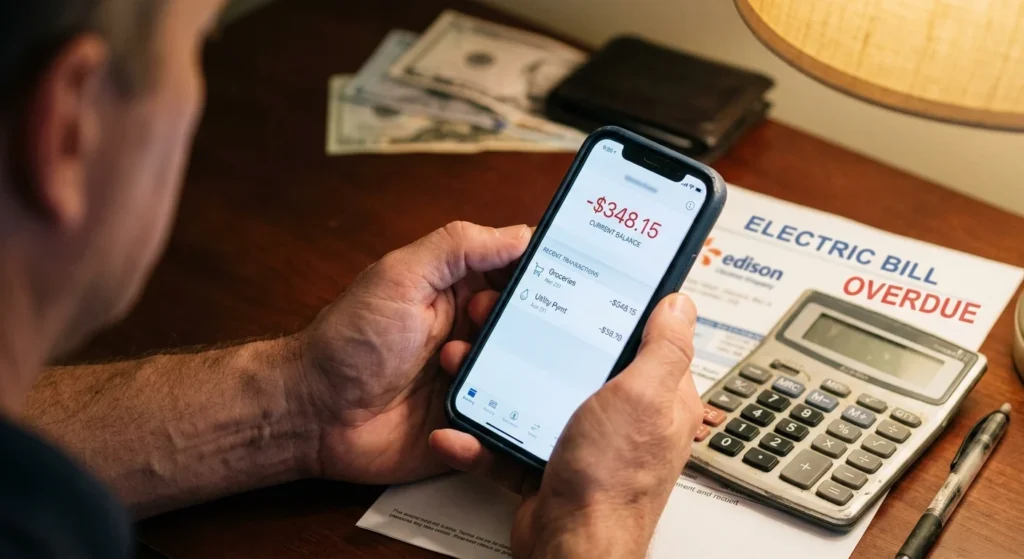
These numbers are illustrative, not from a real account. You start the day with $60. A $45 debit card purchase leaves you with $15. Later, a $120 electric bill is paid automatically from the account.
The bank pays the bill anyway. Your balance drops to negative $105, and a $35 fee takes it to negative $140. When your $200 paycheck arrives, the bank takes the $140 first and leaves you with $60.
Notice which payment caused the trouble. Banks can pay bills and checks into overdraft without asking you first. A debit card purchase works differently, as the next section explains.
Which Payments Can Overdraw Your Account
Not every payment type follows the same rules. The differences decide whether you pay a fee or just get declined.
Checks and Automatic Bill Payments
Checks, ACH transfers, and automatic bill payments can be paid into overdraft without your permission. If the bank returns one instead, you may owe a returned-payment fee to the bank and another to the company you were paying.
Debit Card Purchases and ATM Withdrawals
For ATM withdrawals and one-time debit card purchases, federal rules require your bank to get your opt-in before charging a fee to cover them. This comes from Regulation E, which the CFPB publishes as 12 CFR 1005.17 and which has applied to these transactions since 2010.
If you never opted in, the card is declined at the register, and no fee is charged. If you did opt in, the purchase goes through, and the fee shows up later. Recurring card payments, like a gym membership, are outside that opt-in rule, so ask your bank how it treats them.

You can usually check or change your choice in your bank’s app, in online banking, or by phone.
How Much Overdraft Fees Cost
The CFPB has said the typical overdraft fee is $35, while the average debit card transaction that triggers one is only about $24. In plain terms, the penalty is often bigger than the purchase.
The agency also found that households paying these fees averaged $225 a year. The Congressional Research Service adds that frequent overdrafters would have saved the most under the CFPB’s proposed cap.
Fees vary by bank. Bank of America limits its overdraft fee to $10, according to the Consumer Federation of America, and a few banks have dropped overdraft fees entirely.
Several things can push the bill higher. Many banks allow more than one fee per day, usually with a daily cap. Some add an extended overdraft fee if the account stays negative for several days. The order a bank posts transactions also matters, because processing the largest payment first can push more small ones into overdraft. Your fee schedule should state the posting order.
What a $35 Fee Really Costs
Most guides skip this angle: treat the fee like interest. Suppose you overdraw by $24 and repay it in 14 days. A $35 fee on $24 is about 146 percent of the amount borrowed. Annualized, that is roughly 3,800 percent APR (35 ÷ 24 × 365 ÷ 14). That is my own arithmetic, not a rate any bank publishes, but it shows why overdrafts are expensive short-term borrowing.
Overdraft Fees vs. Insufficient Funds Fees
An overdraft fee is charged when the bank pays a payment you could not cover. A non-sufficient funds (NSF) fee is charged when the bank refuses to pay it. Many large banks have cut NSF fees in recent years, so read your fee schedule.
A bounced payment can cost you elsewhere too. The business you paid may add a returned-payment fee, and a missed rent or utility bill can bring a late fee.
Overdraft Protection Options
Banks offer several ways to cover a shortfall, and the costs differ a lot.
1. Transfers From a Linked Savings Account
The bank moves money from savings to checking when you run short. Transfer fees are usually much lower than a standard overdraft fee, and some banks charge nothing. It only helps if savings has money in it.
2. A Linked Credit Card or Line of Credit
This draws on a credit line instead. You pay interest, and a credit card may treat the draw as a cash advance with its own fee and higher rate. Read the terms before linking one.
3. Opting Out of Coverage
Opting out of debit card and ATM coverage is free and takes a few minutes. The trade-off is getting declined at checkout, which many people prefer to a $35 charge. It does not stop overdrafts from checks or automatic bills.
Where Federal Rules Stand Now
In late 2024, the CFPB finalized a rule that would have capped overdraft fees at $5 for banks and credit unions with at least $10 billion in assets. Banks could have charged more if they could show their costs. Congress overturned the rule in May 2025 under the Congressional Review Act.
So fees now depend on each bank’s own policy plus the Regulation E opt-in rules above. The CRS notes the Act bars the CFPB from issuing a rule in substantially the same form, and courts have not yet tested what that phrase means.
Some states have their own consumer protection rules, so your state banking regulator’s website is worth a look.
What Happens If the Account Stays Negativ
Banks expect you to bring the account back above zero quickly. Some give until the end of the next business day to avoid a further fee, but this varies, so ask yours.
If the balance stays negative for weeks, the bank may close the account and send the debt to collections. The closure can also be reported to ChexSystems, a consumer reporting agency banks use to screen new account applicants, which can make opening another checking account harder for years.
If you do get hit with a fee, call the bank. Some will refund a one-off fee if you ask, especially when your history is clean. It costs nothing to try.
How to Read Your Bank’s Overdraft Policy
Your fee schedule and account agreement hold the real answers, and both are usually posted on the bank’s website. Look for these details before you rely on any general guide, including this one.
Check the fee per item, the daily limit on fees, the extended overdraft charge, and the posting order. Then confirm whether you are opted in to debit card coverage and how long you have to deposit funds after an overdraft.
Credit unions follow the same Regulation E opt-in rules but set their own fees, so comparing two or three institutions is worth ten minutes.
How to Avoid Overdraft Fees
Most overdrafts come from small timing mistakes, not big spending. A few habits fix most of them.
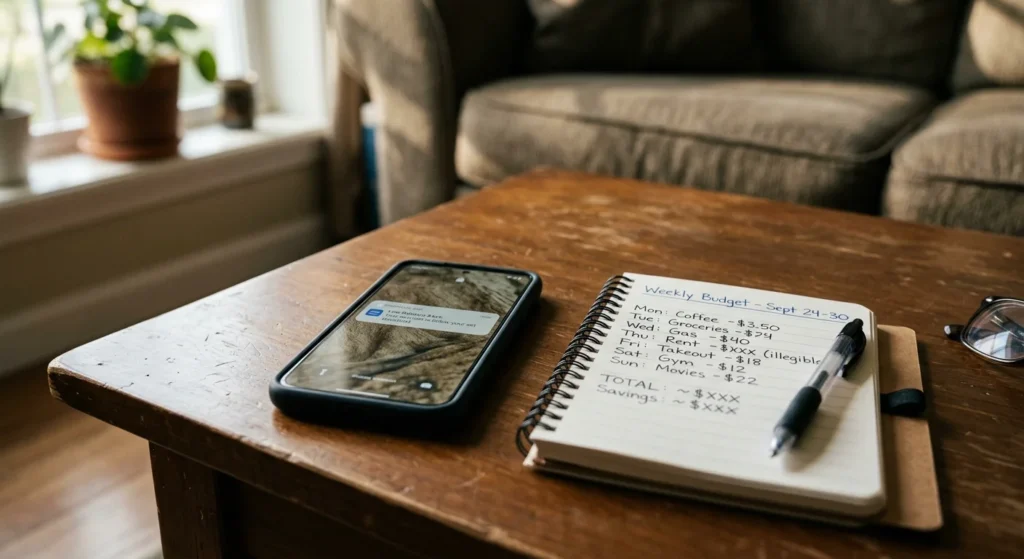
- Turn on low-balance alerts in your bank’s app, set high enough to cover your next two or three bills.
- Check your available balance, not the posted one, before big purchases and bill dates.
- Move autopay dates so they land right after payday, not right before it.
- Keep a cushion of $100 or so in checking that you treat as zero.
- Ask about a checking account with no overdraft fees. Accounts certified under the Bank On national standards are built without overdraft fees.
When Overdraft Coverage Can Make Sense
Coverage is not always a bad deal. If a $900 rent payment would otherwise bounce and trigger a $75 late fee, paying a $35 overdraft fee once may be the cheaper path.
The problem starts when it becomes routine. If you overdraw more than once or twice a year, a different account type, a savings buffer, or a nonprofit credit counselor, such as an agency affiliated with the National Foundation for Credit Counseling, is usually a better fix.
This article is general information about U.S. bank accounts, not financial or legal advice. Fees and rules differ by bank, so read your account agreement or ask your bank directly.