
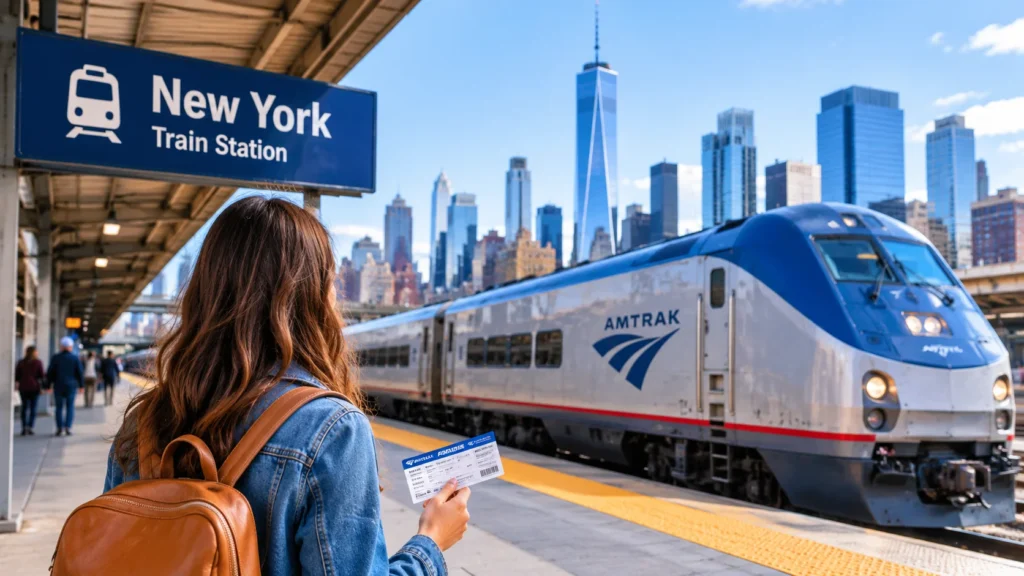

No, you do not pay VAT on standard train tickets in the UK. Train fares are zero-rated, which means the VAT rate is 0%, so passengers do not pay an additional tax when buying a rail ticket.
This applies to ordinary domestic train journeys, including standard class, first class, advance tickets, off-peak fares and season tickets. However, some additional services connected with a train journey, such as food, drinks and certain parking services, may have VAT at the standard rate of 20%.
Understanding the difference can help passengers, employees and business owners read their travel receipts correctly. If you have ever wondered, “is there VAT on train tickets?”, the answer is no for ordinary UK passenger rail fares, but there are a few details worth knowing.
Why Are Train Tickets Zero-Rated for VAT?
UK train tickets are zero-rated because passenger transport receives special VAT treatment under UK tax law. HM Revenue and Customs (HMRC) explains these rules in VAT Notice 744A, which covers the VAT treatment of passenger transport.
Under the relevant legislation, passenger transport in vehicles designed or adapted to carry at least 10 passengers can qualify for the zero rate. Trains clearly fall within this category.
Zero-rated means the service is still a taxable supply, but the VAT charged is 0%. Therefore, railway companies do not add 20% VAT to ordinary passenger fares.
For example, if you purchase a train ticket for £40, you pay £40. The railway company does not add another £8 in VAT.
This treatment is different from VAT-exempt services. Although both zero-rated and exempt services do not result in VAT being charged to the customer, they have different implications for businesses and their VAT accounting.
According to HMRC guidance, zero-rated passenger transport remains within the VAT system. This distinction matters particularly to railway operators when accounting for VAT on their business expenses.
Do All Types of Train Tickets Have 0% VAT?
Yes, ordinary UK passenger rail fares are generally zero-rated regardless of the ticket type or travel class. The VAT treatment does not change simply because you choose a more expensive ticket.
The following types of rail tickets generally have 0% VAT:
- Advance train tickets purchased before the travel date.
- Anytime tickets that allow flexible travel.
- Off-Peak and Super Off-Peak tickets.
- First Class and Standard Class tickets.
- Weekly, monthly and annual season tickets.
- Single and return train tickets.
For example, if you purchase a First Class ticket for £120, the fare remains zero-rated. You do not pay £24 in additional VAT.
The same principle applies to an ordinary £15 Off-Peak ticket. The ticket price is the amount you pay for the passenger transport service.
CrossCountry Trains also confirms on its official customer support page that all rail tickets are zero-rated for VAT.
What Other Travel Expenses Have VAT?
Although train fares have 0% VAT, other products and services you purchase during your journey may have different VAT rates.
This is where passengers sometimes become confused. A single journey can include several purchases, and each purchase may have a separate VAT treatment.
For example, buying a train ticket and a sandwich from the onboard shop does not mean both items receive the same VAT treatment.
Here are some common examples:
| Travel expense | General VAT treatment |
| Standard train ticket | 0% |
| First Class train ticket | 0% |
| Season ticket | 0% |
| Onboard food and drinks | Usually 20% |
| Station car parking | Usually 20% |
| Left luggage services | Generally 20% |
| Taxi journey | Usually 20% if supplied by a VAT-registered operator |
| Train journey connected with a separate taxi service | Depends on the individual supply |
The standard VAT rate in the UK is 20%. However, the exact treatment of additional services depends on how they are supplied and the circumstances of the transaction.
HMRC’s VAT Notice 744A explains the distinction between passenger transport and other services connected with travel.
Is There VAT on Food and Drinks Bought on a Train?
Yes, food and drinks purchased separately on a train are generally subject to VAT at 20% when standard-rated.
For example, imagine you buy a £5 sandwich from an onboard shop. If the item is standard-rated and £5 is the VAT-inclusive price, approximately 83p represents VAT.
This is a separate purchase from your train ticket. The zero-rated treatment of passenger transport does not automatically apply to refreshments sold during the journey.
The same general principle applies to many food and drink purchases at railway stations. The precise VAT rate can depend on the product and how it is sold.
Is There VAT on Train Station Parking?
Station parking charges are generally subject to 20% VAT when supplied as a taxable parking service by a VAT-registered operator.
For example, if you pay £12 for station parking, the VAT element would be £2 when the entire charge is standard-rated and VAT-inclusive.
There can be exceptions depending on who provides the parking and the nature of the service. Public on-street parking and privately operated off-street parking can receive different VAT treatment.
Therefore, do not assume that every expense at a railway station is zero-rated simply because your train ticket is.
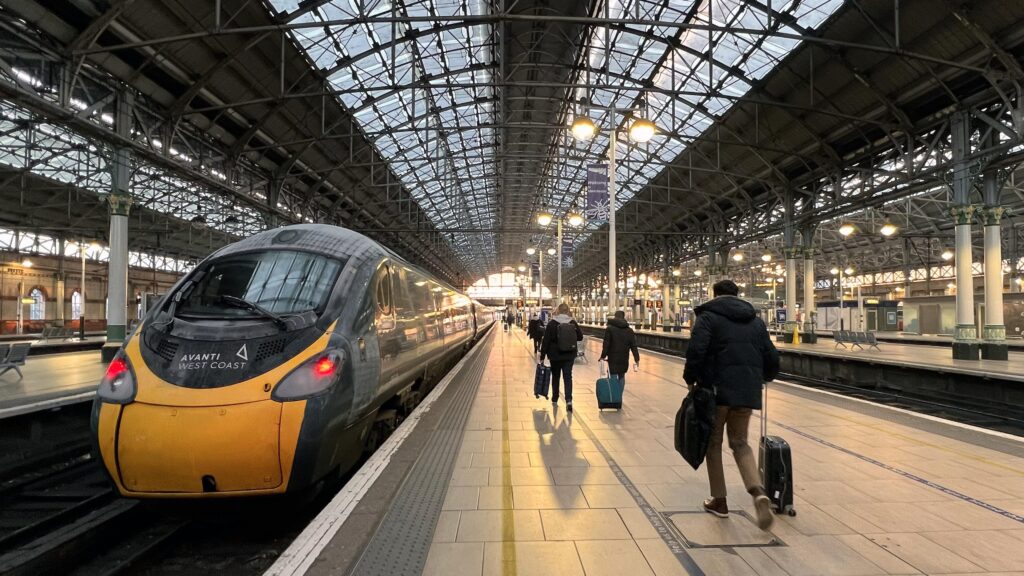
Can Businesses Claim VAT Back on Train Tickets?
Businesses and self-employed workers often ask whether they can reclaim VAT when purchasing train tickets for business travel.
The answer is generally no. Since ordinary UK rail fares are zero-rated, there is no VAT charged on the ticket for a business to reclaim.
For example, suppose a company employee travels from London to Birmingham for a business meeting and purchases a £60 train ticket.
The company can record the £60 as an eligible business travel expense, subject to its normal accounting and tax rules. However, it cannot reclaim VAT from the ticket because the fare contains no VAT.
This is an important difference between claiming a business expense and reclaiming VAT.
A business may be able to deduct an allowable travel expense when calculating taxable profits, depending on the circumstances. That does not mean it can claim VAT on the same purchase.
What Should You Do With a Train Ticket Receipt
If you purchase train tickets for work, keep the receipt or booking confirmation as evidence of the expense.
A suitable record should show:
- The name of the railway operator or ticket supplier.
- The journey date and route.
- The amount paid.
- The ticket or booking reference.
- The business purpose of the journey, where relevant.
You should record the train fare as a zero-rated expense or use the appropriate accounting category recommended by your accountant or bookkeeping software.
Do not enter the ticket amount as a standard-rated purchase just because your accounting software asks for a VAT category.
If your ticket receipt does not display a separate VAT amount, that is normally expected. CrossCountry confirms that rail tickets are zero-rated, so there is no VAT charge to display.
Is There VAT on International Train Tickets?
International rail journeys have slightly different VAT rules because the journey may take place inside and outside the UK.
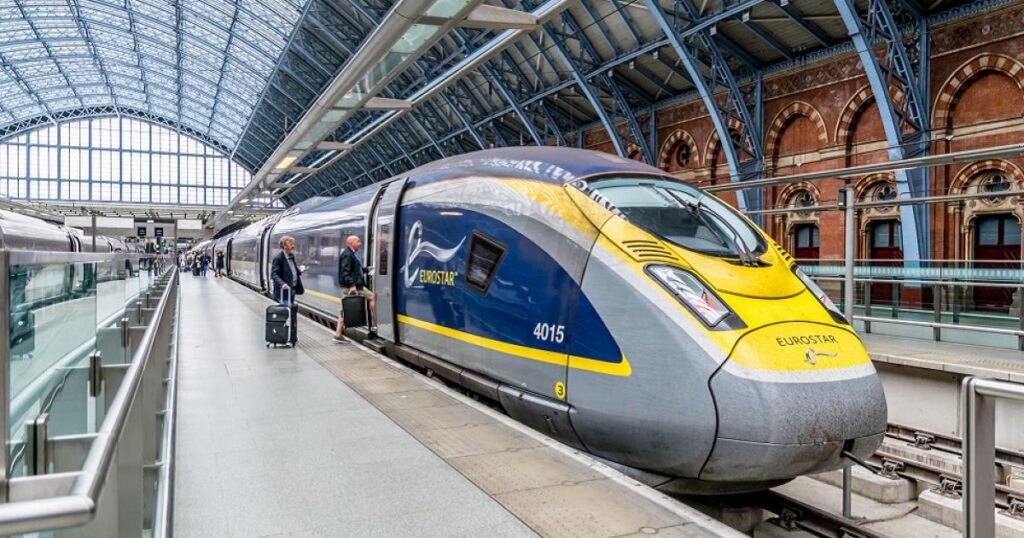
For example, when travelling from London to Paris on Eurostar, the journey crosses from the UK into another country.
According to HMRC, passenger transport that takes place partly within and partly outside the UK is generally zero-rated for the part taking place within the UK. The part outside the UK is outside the scope of UK VAT.
This means the international journey does not simply receive the same VAT treatment as a journey that takes place entirely within the UK.
The same general principle applies to qualifying international passenger transport journeys involving other countries.
HMRC explains these rules in Section 3 of VAT Notice 744A.
What About Eurostar Tickets?
Eurostar tickets are different from ordinary domestic rail tickets because the train travels between countries.
For a London to Paris journey, the UK portion is generally zero-rated, while the portion outside the UK is outside the scope of UK VAT.
Passengers should not assume that the entire international journey is subject to a separate 20% VAT charge.
If you need to understand the VAT breakdown for an international booking, check the documentation provided by the train operator or ticket supplier.
Are Heritage Railway and Tourist Train Tickets Zero-Rated?
Not every service that uses railway tracks automatically qualifies for zero-rated passenger transport.
Ordinary passenger rail services generally qualify because trains are designed to carry at least 10 passengers. However, special tourist attractions and entertainment services can have different VAT treatment.
For example, a miniature railway ride at an amusement park is not automatically treated like an ordinary passenger train service.
HMRC specifically excludes novelty rides on miniature and model railways, ghost trains and similar attractions from the general definition of passenger transport.
There are also special rules for transport connected with entertainment and cultural attractions. If the same supplier provides admission to an attraction and transport to, from or within that attraction, the transport may not qualify for zero-rating.
This means the nature of the service and the relationship between the supplier and attraction matter.
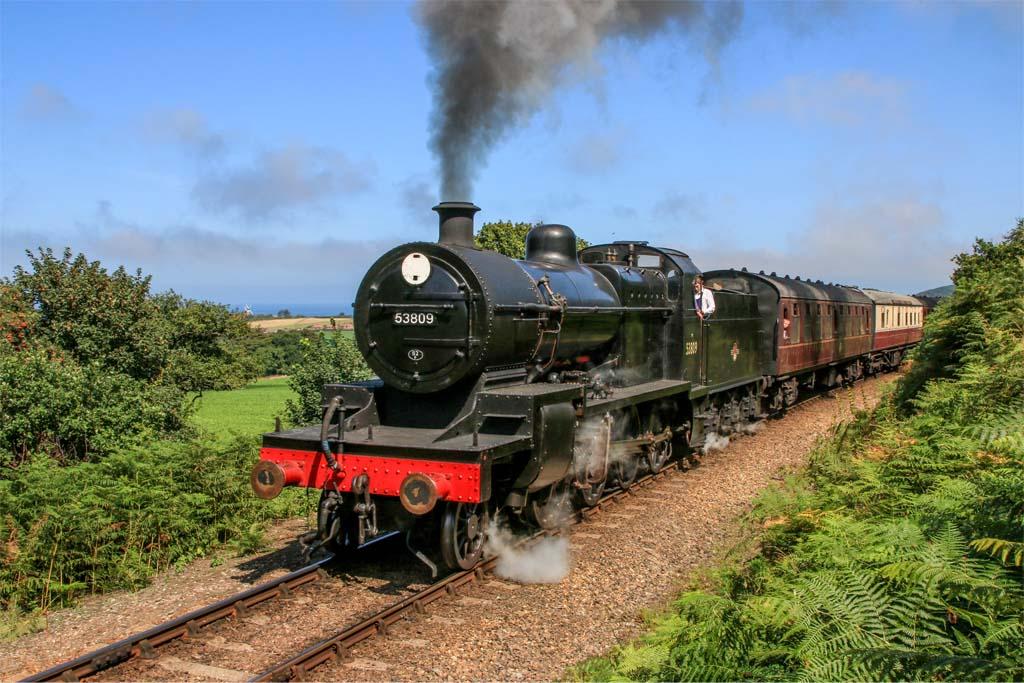
If you are buying a ticket for a heritage railway, steam train experience or tourist attraction, check the operator’s VAT information instead of assuming that the ordinary rail fare rules apply.
Zero-Rated vs VAT-Exempt Train Tickets: What Is the Difference?
Many people believe zero-rated and VAT-exempt mean the same thing because neither normally adds VAT to the customer’s bill.
However, they are different categories under the UK VAT system.
A zero-rated service is taxable at 0%. A VAT-exempt service is outside the scope of taxable supplies in the usual VAT accounting sense.
This difference matters more to businesses than ordinary passengers.
| Feature | Zero-rated | VAT-exempt |
| VAT charged to customer | 0% | No VAT |
| Part of taxable VAT system | Yes | No |
| VAT shown as a separate charge | Usually no | Usually no |
| Input VAT recovery | Generally possible, subject to normal rules | Generally restricted, subject to exceptions |
For example, an ordinary UK train fare is zero-rated, not VAT-exempt.
A railway operator can generally recover eligible input VAT on costs connected with its taxable business activities, subject to the normal VAT recovery rules.
For passengers, the immediate result is the same: there is no additional VAT to pay on the ordinary train fare.
However, businesses should use the correct VAT category when recording transactions because zero-rated and exempt supplies have different accounting consequences.
Will UK Train Tickets Ever Have 20% VAT?
The standard VAT rate in the UK is 20%, but ordinary passenger rail fares are currently zero-rated.
This means you should not calculate an additional 20% charge when budgeting for a standard domestic train journey.
There has been public discussion about the cost of zero-rating passenger transport. A July 2026 written parliamentary answer reported that the estimated cost of the VAT zero rate for domestic passenger transport was £5.8 billion in 2025-26. This figure includes other public transport, such as buses, and is not a rail-only estimate.
Any future change to the VAT treatment of train fares would require an official policy or legislative change.
For now, passengers should follow the existing HMRC guidance rather than assume that the standard 20% rate applies to their rail ticket.
How to Check Whether VAT Is Included in Your Train Ticket
If you want to check the VAT treatment of a train booking, start with the receipt or booking confirmation.
Look for the total fare, the railway operator’s details and any separate charges.
A normal UK train ticket may not show a VAT amount because its passenger transport element is zero-rated.
If your receipt includes other purchases, such as food, parking or additional services, check whether those items have separate VAT information.
For an unusual booking, the supplier can explain how the charge has been treated. Businesses with complicated expense claims should also confirm the accounting treatment with a qualified accountant.
The most reliable source for the general rule is HMRC’s VAT Notice 744A, which explains the rules for UK passenger transport.
Conclusion
So, is there VAT on train tickets? No, ordinary UK passenger train tickets are zero-rated, meaning passengers pay 0% VAT on their rail fares.
This applies to standard, first-class, advance, off-peak and season tickets. However, separate purchases such as onboard refreshments and station parking may carry 20% VAT.
If you are purchasing tickets for business travel, remember that you can record eligible fares as business expenses, but you cannot reclaim VAT that was never charged. Always check HMRC guidance when dealing with unusual railway services or international journeys.