
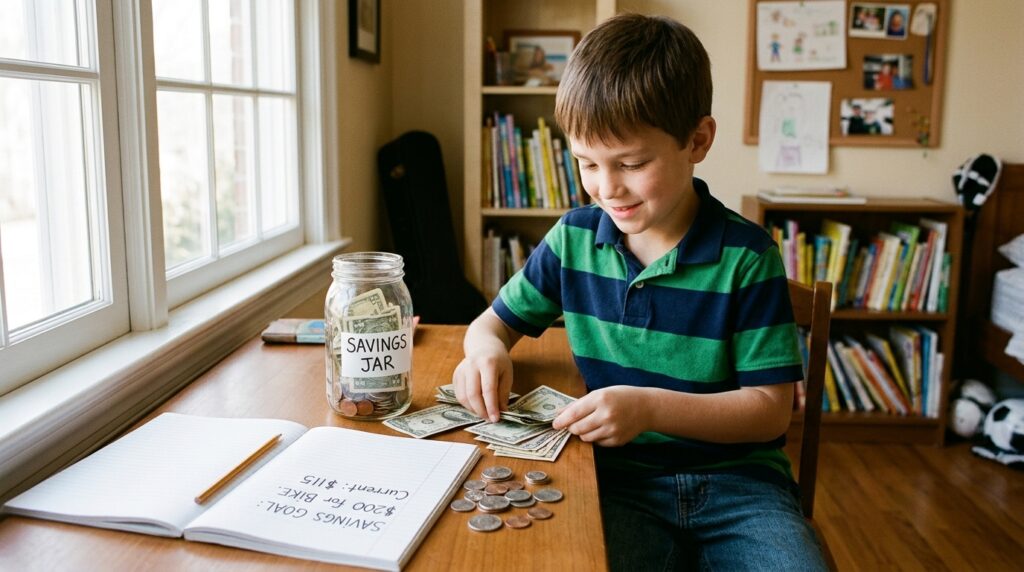

Saving money as a kid is easier when you have a plan and know what you are saving for. Whether you want to buy a new video game, bicycle, toy, phone, or something special, you can reach your goal by saving small amounts regularly. You do not need a big allowance or an expensive savings account to get started.
The trick is to understand where your money goes, avoid unnecessary purchases, and put some money aside whenever you receive it. Here are practical ways to start saving, even if you only have a few dollars.
Set a Savings Goal
The first step is deciding what you want to save for. Having a clear goal makes it easier to avoid spending your money on things you do not really need.
For example, imagine you want to buy a $60 video game. Instead of asking your parents to purchase it immediately, make a plan to collect the money yourself.
Write down three things:
- What you want to buy.
- How much it costs.
- How much money you can save each week.
You can also put a picture of your goal somewhere you see every day. It will remind you why you started saving.
Save Part of Your Allowance
If your parents give you an allowance, try not to spend all of it immediately. Decide how much you want to save before spending anything.
A simple starting point is saving 10% of the money you receive. This means keeping $1 from every $10 you get. If you receive $20, you could save $2.
You can also save 20% or more if you have a big purchase in mind. The right amount depends on your goal and how much money you receive.
The Consumer Financial Protection Bureau recommends building a habit of saving at least 10 cents from every dollar received.
Use a Piggy Bank or Savings Jar
A piggy bank or clear savings jar is an easy place to keep your money. You can watch your savings grow every time you add another coin or dollar.
Try using three separate jars:
- Save: Money for a bigger purchase or future goal.
- Spend: Money for snacks, small toys, or other personal purchases.
- Share: Money you want to donate or use to help someone.
This method helps you understand that every dollar has a purpose. You can decorate your jars and write their names on them to make saving more interesting.
For larger amounts, ask a parent or guardian to help you find a safe place to keep your savings.
Find Small Ways to Earn Extra Money
You can save more quickly when you have extra money coming in. If you do not receive an allowance, ask your parents whether there are suitable tasks you can do to earn a little money.
Some age-appropriate ideas include:
- Washing the family car with adult supervision.
- Helping organize a garage.
- Watering plants.
- Raking leaves.
- Folding laundry.
- Helping relatives with simple household tasks.
- Selling old toys or books with your parent’s permission.
If you are a teenager, you might also consider babysitting, tutoring younger students, or walking a neighbor’s dog when it is legal and safe for your age.
Always discuss paid work with your parents first. Never visit strangers, share personal information online, or accept an online job that asks you to pay money upfront.
Stop Spending Money on Things You Do Not Need
Small purchases can use up your savings without you noticing. Buying candy, drinks, snacks, and inexpensive toys several times a week can become expensive.
Before purchasing something, ask yourself whether you really want it or simply feel like buying it at that moment.
Try these habits:
- Wait 24 hours before buying something you do not need.
- Compare prices before choosing a product.
- Avoid buying something just because your friends have it.
- Bring a snack or water bottle from home when allowed.
- Keep track of small purchases.
For example, spending $3 on snacks five times a week adds up to $15. If you saved that amount instead, you would have $60 after four weeks.
Make a Weekly Savings Plan
A weekly plan helps you understand how long it may take to reach your target. You do not have to save the same amount every week. Start with an amount that fits your situation.
Here is an example of someone saving for a $50 purchase:
| Week | Amount Saved | Total Savings |
| Week 1 | $5 | $5 |
| Week 2 | $10 | $15 |
| Week 3 | $5 | $20 |
| Week 4 | $10 | $30 |
| Week 5 | $10 | $40 |
| Week 6 | $10 | $50 |
This example shows how small deposits can turn into a larger amount. If you receive extra birthday money or earn money from an approved chore, you can reach your target sooner.
Keep Track of Your Spending
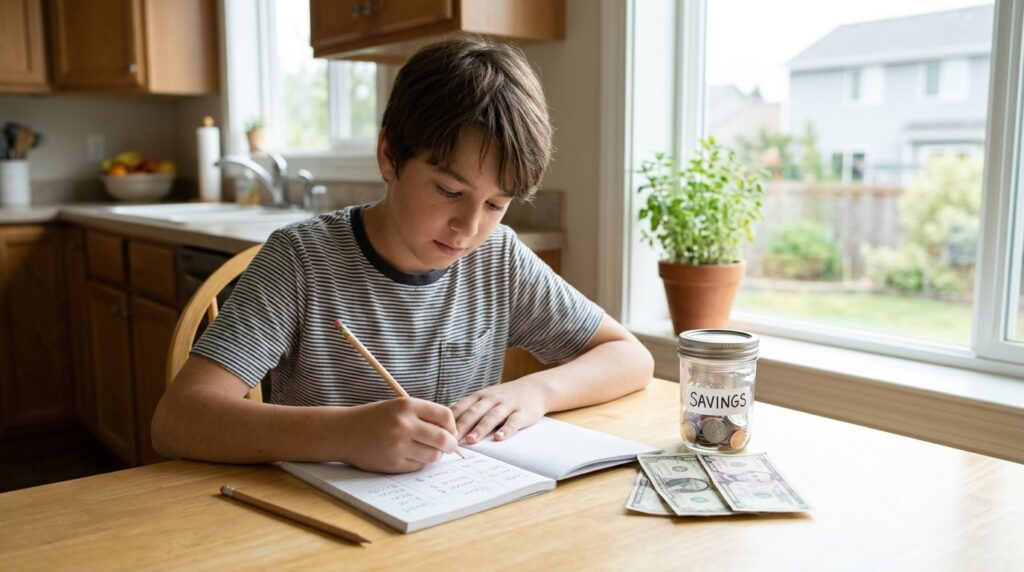
You cannot easily save money if you do not know where it goes. Keeping a simple record helps you notice unnecessary spending.
Use a small notebook or ask a parent to help you create a spreadsheet. Write down every amount you receive and spend.
For example:
| Activity | Amount |
| Allowance received | $10 |
| Bought a snack | $2 |
| Bought a small toy | $1 |
| Added to savings | $7 |
Check your record at the end of each week. You might discover that you spend more money on snacks or small purchases than you expected.
Save Your Birthday and Holiday Money
Birthday gifts and holiday money can give your savings a helpful boost. Instead of spending everything immediately, decide how much you want to keep for your savings goal.
For example, if you receive $40 for your birthday, you could save $30 and use the remaining $10 for something fun.
You can also ask relatives to give you money toward a specific purchase instead of buying several small gifts. Explain what you are saving for so they understand your goal.
Remember that you do not need to save every dollar. Keeping a little spending money can make your plan easier to follow.
Try a 30-Day Savings Challenge
A 30-day challenge can make saving feel like a fun activity. Choose a small amount to save each day or week and mark your progress on a calendar.
Here is one example:
- Days 1-7: Save $1 each day.
- Days 8-14: Save $1 each day.
- Days 15-21: Save $2 each day.
- Days 22-30: Save $1 each day.
By the end of 30 days, you will have saved $39.
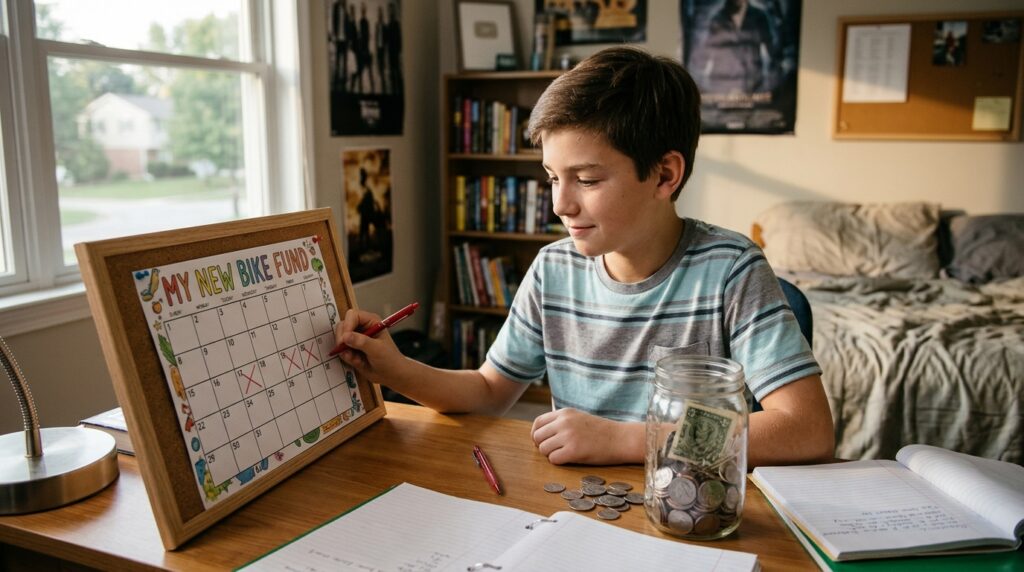
If you cannot save every day, that is fine. You can adjust the amounts based on your allowance or earnings. The goal is to build a habit that you can continue after the challenge ends.
Ask Your Parents About a Savings Account
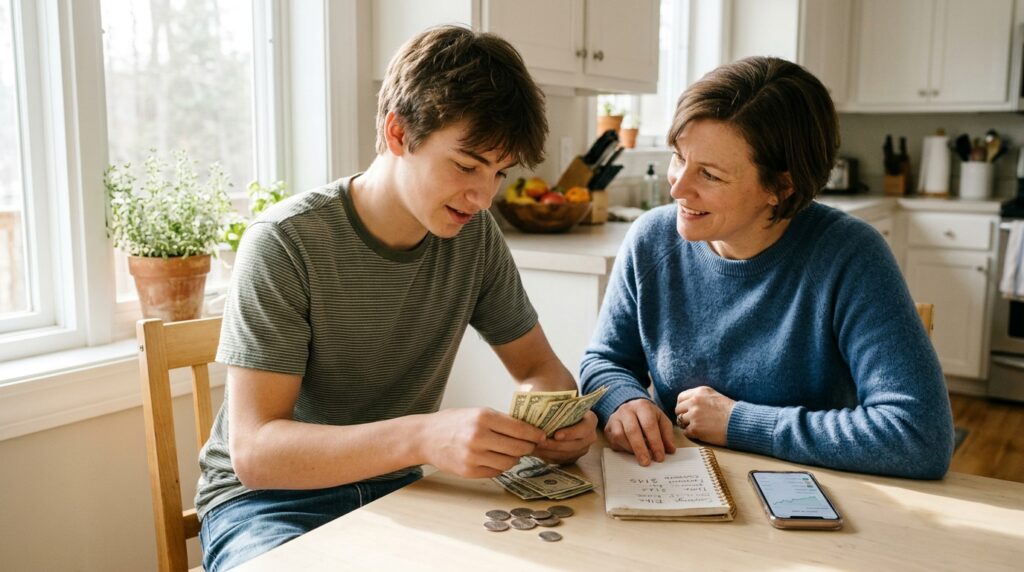
When your savings start growing, you may want a safer place to keep your money. Ask your parents or guardian whether you can open a children’s savings account with their help.
A savings account at an eligible federally insured bank or credit union can help you keep your money separate from everyday spending. Some accounts may also pay interest, which means you can earn a little extra money over time.
Before opening an account, ask an adult to help you understand:
- Whether the account has monthly fees.
- Whether there is a minimum balance.
- How deposits and withdrawals work.
- Whether a parent or guardian must be a joint owner.
Younger children will usually need an adult’s help with banking arrangements. The CFPB also recommends discussing savings accounts and banking with children.
Learn to Save Without an Allowance
You can still save money if your parents do not give you regular pocket money. Start by looking for safe ways to earn small amounts.
Ask whether your family has extra tasks you can complete for an agreed payment. You could also organize a supervised yard sale to sell toys, books, or games you no longer use.
Another idea is to save gift money instead of spending it immediately. Even a few dollars can help you get closer to your target.
Do not feel discouraged if your savings grow slowly. What matters is making a habit of keeping some money whenever you receive it.
Be Patient and Celebrate Your Progress
Saving money takes time, especially when you have a small allowance. You may feel tempted to spend your savings when you see something exciting at a store, but remember the goal you chose.
Celebrate small achievements along the way. If you reach $10, $25, or half of your target, take a moment to recognize your progress.
You can also ask your parents if they are willing to match a small part of your savings. For example, they might add 25 cents for every dollar you save. The CFPB describes this as a matching plan that can encourage children to keep saving.
The next time you receive allowance, birthday money, or payment for an approved task, put some aside. That simple habit is a practical way to learn how to save up money as a kid and work toward something you really want.
Make Your First $100 Savings Goal
Saving your first $100 can feel like a big achievement. The easiest way to reach it is to divide the target into smaller amounts instead of trying to collect everything at once.
For example, you could follow this plan:
| Savings Milestone | Amount |
| First target | $10 |
| Second target | $25 |
| Third target | $50 |
| Fourth target | $75 |
| Final target | $100 |
If you save $5 every week, you will reach $100 in 20 weeks. If you occasionally earn extra money from approved chores or receive birthday gifts, you may get there sooner.
Keep your savings record somewhere you can check regularly. Watching your progress can help you stay motivated when reaching your goal takes longer than expected.
Change Your Saving Habits as You Get Older
The best way to save money can change as you grow up. Younger children may receive money from parents and relatives, while teenagers may have opportunities to earn money through supervised work.
Here are some ideas based on age:
Ages 8-10: Start with a piggy bank, save coins, and learn the difference between things you need and things you want.
Ages 11-13: Create a weekly savings target, track purchases, and look for suitable ways to earn extra money with parental permission.
Ages 14-17: Consider a supervised savings account, save part of your earnings from an eligible part-time job, and plan for bigger purchases.
You do not have to follow someone else’s savings schedule. Choose a method that fits your age, responsibilities, and available money.