
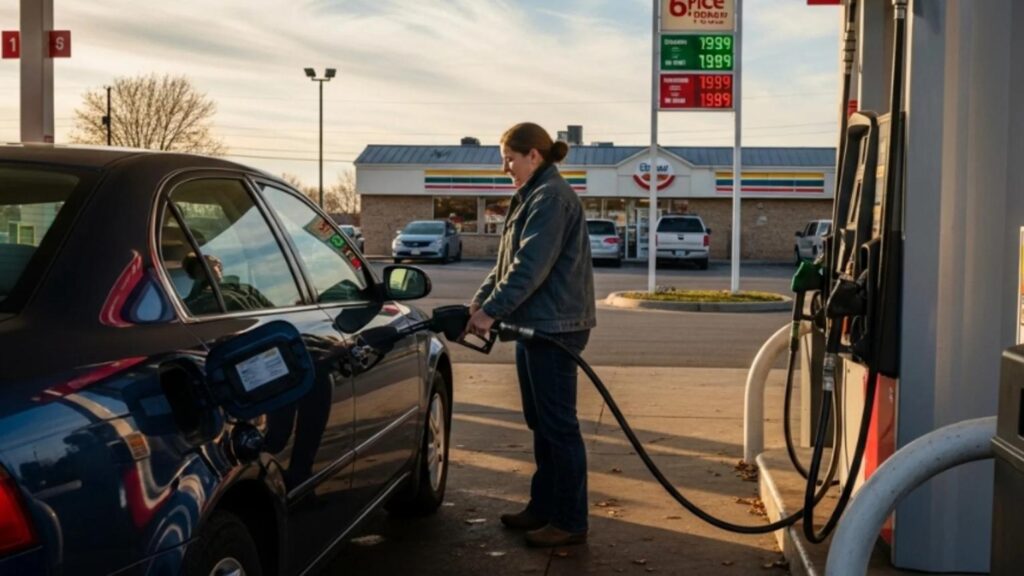

Gasoline can take a noticeable amount out of your monthly budget, especially if you drive to work, take children to school, or travel regularly. The good news is that you can save money on gas by comparing fuel prices, improving your driving habits, maintaining your vehicle, and using discounts whenever they make financial sense.
You don’t need to purchase a new car or completely change your routine. A few practical adjustments can help you use less fuel and spend less at the pump. Here are 15 ways to keep your gasoline expenses under control.
Compare Gas Prices Before Filling Up
One of the easiest ways to save money on gas is to compare prices at nearby stations before filling your tank. Gas prices can differ between stations, even within the same neighborhood.
Use apps such as GasBuddy to check local fuel prices. The AAA Gas Price Finder is another option for comparing prices across the United States.
Before choosing a station, consider:
- The price per gallon.
- The distance from your current location.
- Whether the listed price requires cash or a membership.
- Whether the price applies to your vehicle’s fuel grade.
Avoid driving several extra miles just to save a few cents. Calculate the additional fuel needed to reach the cheaper station before deciding.
Change Your Driving Habits
The way you drive affects how much gasoline your vehicle consumes. Frequent acceleration, speeding, and sudden braking can increase fuel consumption.
According to the U.S. Department of Energy’s FuelEconomy.gov, aggressive driving can reduce gas mileage by approximately 15% to 30% at highway speeds and 10% to 40% in stop-and-go traffic.
Try these habits:
- Accelerate gradually instead of pressing the gas pedal hard.
- Maintain a safe distance from other vehicles.
- Anticipate traffic lights and slow down smoothly.
- Avoid unnecessary lane changes.
- Follow posted speed limits.
These adjustments can improve fuel economy without requiring additional spending.
Keep Your Tires Properly Inflated
Underinflated tires create additional rolling resistance, which can make your engine use more fuel. Checking your tire pressure regularly is a simple way to avoid unnecessary fuel expenses.
FuelEconomy.gov estimates that keeping tires properly inflated can improve gas mileage by an average of 0.6%, with improvements reaching up to 3% in some cases.
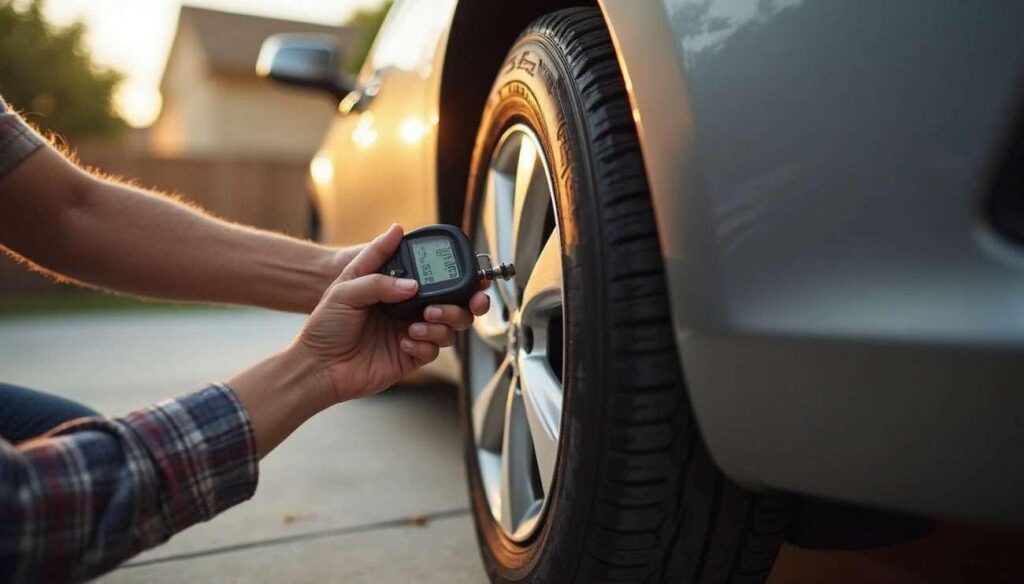
Check your tires at least once a month and before longer trips. Find the recommended pressure on the sticker inside the driver’s door or in your owner’s manual. Don’t automatically use the maximum pressure printed on the tire itself.
Use Gas Rewards Programs
Many gas stations offer loyalty programs that give customers discounts or points when they purchase fuel. These programs can help reduce your spending if you regularly visit participating stations.
For example, Shell Fuel Rewards offers discounts at participating locations, while other fuel brands have their own loyalty systems.
You can also look for grocery store rewards programs that allow customers to earn fuel discounts through qualifying purchases.
Before signing up, check:
- How many cents you can save per gallon.
- Whether discounts have expiration dates.
- Which locations participate.
- Whether minimum purchases or spending requirements apply.
Choose a program that fits your normal shopping habits. Buying extra products just to earn gas points can cancel out the savings.
Remove Unnecessary Weight From Your Car
Carrying unnecessary items can reduce fuel efficiency because your vehicle needs more energy to move additional weight.
Check your trunk and back seats for heavy objects you rarely use. Remove unnecessary tools, sports equipment, boxes, and other items when you don’t need them.
Roof racks and cargo carriers can also increase wind resistance, particularly at highway speeds. Remove them when they aren’t being used.
You don’t need to empty your vehicle. Focus on removing items that add weight without serving a purpose.
Plan Your Trips
Making several short trips throughout the day can increase fuel consumption, especially when the engine repeatedly starts cold.
Try combining errands into one outing. For example, visit the grocery store, pharmacy, and post office during the same trip if they are close to one another.
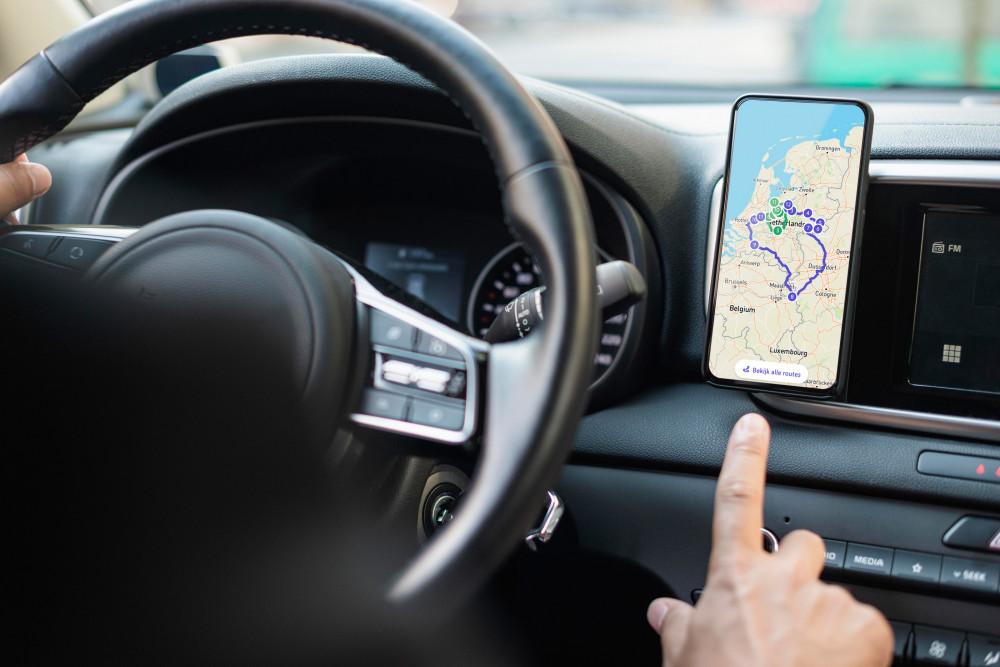
Use a navigation app to check traffic conditions and identify a practical route. A shorter route isn’t always faster or more fuel-efficient if it involves heavy traffic and frequent stops.
Planning also helps prevent unnecessary journeys caused by forgotten errands.
Avoid Leaving Your Engine Running
Idling means keeping your engine running while your vehicle is stationary. It consumes fuel without moving you toward your destination.
FuelEconomy.gov reports that idling can consume approximately a quarter to half a gallon of fuel per hour, depending on engine size and air conditioning use.
Avoid leaving your vehicle running while waiting outside a store or sitting in a parking space. If you expect to remain stopped for more than a short period, switch off the engine when it is safe and appropriate.
Follow your vehicle manufacturer’s guidance, especially in extreme weather or situations where you need the engine running for safety.
Use Cruise Control on Suitable Highways
Cruise control can help maintain a steady speed on suitable highways, which may reduce unnecessary acceleration and braking.
It is particularly useful when traffic is flowing smoothly, and the road is relatively flat.
However, avoid using cruise control on slippery roads, steep hills, or in heavy traffic when you need to adjust your speed frequently.
The goal is to maintain a consistent, legal speed without making unnecessary changes to the accelerator.
Use the Correct Type of Gasoline
Paying extra for premium gasoline doesn’t automatically improve your vehicle’s fuel economy.
Check your owner’s manual to determine which octane rating your engine requires. If your vehicle is designed to operate on regular gasoline, purchasing premium fuel generally provides no additional fuel economy benefit.
FuelEconomy.gov explains that using higher-octane gasoline than recommended usually offers no advantage under normal driving conditions.
However, if your manufacturer requires premium gasoline, follow that recommendation. Using the wrong fuel can create mechanical problems and potentially affect your vehicle warranty.
Compare Gas-Saving Apps and Cash-Back Offers
Gas-saving apps can help you find lower fuel prices and access promotional discounts. GasBuddy is one option for comparing station prices, while cash-back services such as Upside offer participating drivers eligible fuel promotions.
Before using an offer, compare the final price rather than focusing only on the advertised discount.
For example, imagine one station sells gas for $3.40 per gallon, and another sells it for $3.35. If reaching the cheaper station requires a long detour, the extra fuel may cancel out the price difference.
Also check the offer’s terms, participating locations, and payment requirements.
Maintain Your Vehicle Regularly
A poorly maintained vehicle may consume more fuel than necessary. Regular servicing helps identify problems that can affect engine performance and fuel economy.
Follow your manufacturer’s recommended maintenance schedule. Pay attention to:
- Engine warning lights.
- Recommended engine oil.
- Tire alignment and condition.
- Spark plugs and other scheduled replacements.
- Unusual engine noises or performance changes.
Don’t replace parts simply because you expect them to improve mileage. Ask a qualified mechanic to diagnose actual problems before paying for repairs.
Reduce Air Conditioning Use When Practical
Air conditioning places an additional load on your vehicle’s engine, which can increase fuel consumption.
You don’t need to avoid using your AC completely, especially during hot weather. Instead, use it sensibly.
Park in shaded areas when possible, use ventilation before switching on maximum cooling, and choose a comfortable temperature.
At highway speeds, driving with the windows open can increase aerodynamic drag. The best choice depends on your vehicle, speed, and weather conditions.
13. Consider Carpooling or Public Transportation
Sharing a ride is another practical way to reduce your monthly fuel expenses.
If you travel to the same workplace as a friend or colleague, consider arranging a carpool. You can alternate driving responsibilities or divide fuel expenses.
Public transportation can also reduce the number of miles you drive, particularly for regular commuting.
Even sharing one or two trips each week can make a difference over time.
Track Your Monthly Gas Spending
You cannot easily identify unnecessary fuel expenses without knowing how much you spend.
Keep a simple record of your fuel purchases. Write down the date, amount paid, gallons purchased, and approximate mileage.
For example, suppose you purchase 40 gallons of gasoline in a month at $3.50 per gallon. Your monthly fuel expense is $140.
If you reduce your consumption by 10%, you would use four fewer gallons and save $14 at the same fuel price.
Tracking your spending also helps you recognize whether a new driving habit or discount program is actually working.
Check Whether a Warehouse Club Membership Saves Money
Some warehouse retailers, including Costco and Sam’s Club, offer gasoline to eligible members at competitive prices.
However, cheaper fuel doesn’t automatically make a membership worthwhile.
Compare the price difference with the annual membership cost, your usual fuel consumption, and the distance to the station.
For example, if a station saves you 15 cents per gallon and you purchase 40 gallons each month, your potential fuel savings are $6 monthly, or $72 annually.
That calculation helps you decide whether the membership makes financial sense based on fuel savings alone.
A Simple Weekly Plan to Spend Less on Gas
Saving money becomes easier when you follow a routine instead of looking for discounts only when your tank is empty.
Try this simple weekly approach:
- Before Monday: Check nearby gas prices and compare available discounts.
- During the week: Combine errands and avoid unnecessary driving.
- Every few weeks: Check tire pressure and look for vehicle maintenance issues.
- Before weekends: Plan longer journeys and compare fuel stops along your route.
- At the end of the month: Review your fuel spending and identify where you can reduce costs.
You can adjust this routine according to your work schedule, vehicle, and driving needs.
The U.S. Department of Energy provides additional guidance. Its recommendations cover driving behavior, maintenance, and trip planning.
The best way to reduce your fuel expenses is to combine several small changes. Compare prices, drive smoothly, maintain your vehicle, and take advantage of discounts that fit your regular routine. These practical habits can help you save money on gas without making unnecessary sacrifices.