


A car payment that swallows too much of your paycheck feels fixed. It is not. Here is how to lower car payment without refinancing. Your lender, your insurer, and the car itself all offer room to move.
Refinancing is the default advice, but it is not always available. A low credit score, a high balance compared to the car’s value, or an older vehicle can block approval. Even when you qualify, fees and a longer term can cancel out the savings.
This guide covers nine options, from calls you can make today to bigger moves such as selling the car. Each one comes with its long-term cost, because a lower payment is not always a cheaper loan.
How To Lower Car Payment Without Refinancing: Start With Your Numbers
Before you call anyone, pull up your loan statement. Note your remaining balance, interest rate, months left, and payoff amount. Then check what the car is worth today using a valuation guide such as Kelley Blue Book or Edmunds.
The gap between payoff and value decides which options are open. If the car is worth more than you owe, you have positive equity and plenty of choices. If you owe more, you have negative equity, and some options need extra cash.
A common rule of thumb is to keep the payment under about 15 percent of take-home pay. It is a guideline, not a rule, but it shows how urgent your problem is.
Ask Your Lender For A Loan Modification
A modification changes the terms of your existing loan without creating a new one. The most common change is a longer term, which spreads the same balance over more months.
Lenders usually want a reason. Job loss, reduced hours, medical bills, or a divorce all count. Expect to provide pay stubs, a budget, and a short hardship letter. A clean payment history also helps your case.
Here is a worked example. Say you owe $20,000 at 9% APR with 48 months left. Your payment is about $498. Stretch the loan to 60 months and it drops to about $415. That saves $83 a month but adds roughly $1,000 in interest.
That trade works when cash flow is the real problem. It is a poor deal if you are only slightly stretched. Ask whether the lender reports the change to credit bureaus, and get the new terms in writing.
What To Say When You Call
Be direct. Say your payment no longer fits your budget, name the change that caused it, and ask what hardship options exist. Then ask for each option in writing, including fees and the effect on your credit. Take notes with the date and the name of the representative.
Request A Payment Deferral
A deferral lets you skip one or more payments, usually during a short emergency. It does not lower your payment. It buys time.
Interest typically keeps accruing during the skipped months. The lender then adds the missed payments to the end of the loan or spreads them across the remaining term. Ask exactly how yours will be handled, and whether a fee applies.
Use a deferral for a temporary setback, such as a gap between jobs. If your income has dropped for good, a modification fits better.
Cancel Add-Ons You No Longer Need
Many car loans include financed extras such as GAP coverage, an extended warranty, or tire protection. Check your original contract. If these were rolled into the loan, you pay interest on them every month.
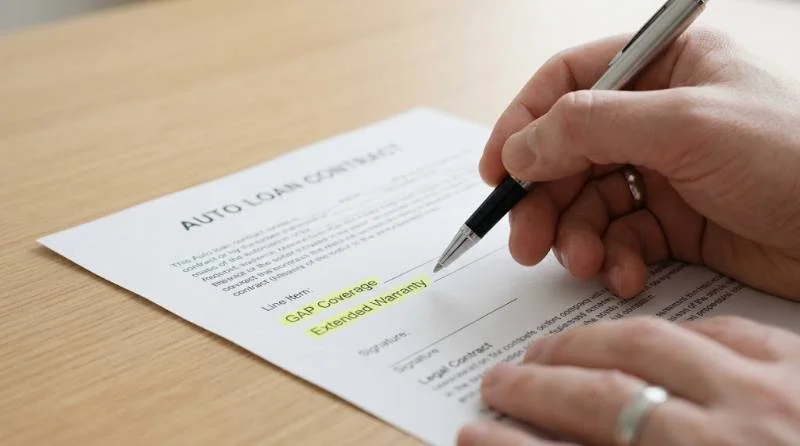
Many of these products can be cancelled for a prorated refund. The refund usually goes toward your loan balance. Ask your lender to recalculate the payment afterward, since some loans keep the same payment and simply shorten the term.
Keep GAP coverage if you have negative equity. If the car is totaled, GAP covers the difference between the insurance payout and your balance. Dropping it too early can leave you with a bill and no car.
Lower Your Car Insurance Bill
Insurance is part of the true cost of owning the car, and it is the easiest part to trim. Quote the same coverage from several insurers, because price gaps can be large. Repeat this at every renewal.
Raising your deductible lowers your premium. Only do it if you can cover the higher amount from savings. Dropping collision and comprehensive on an older, low-value car can also save money. Check your loan contract first, since lenders require full coverage while you owe money.
Ask about discounts for bundling, clean driving, low mileage, and safety features. Telematics programs track your driving habits, so skip them if you often brake hard.
Pay Extra Toward Principal
Extra payments do not lower this month’s bill, but they can lower future ones if your lender recasts the loan. A recast recalculates the payment on the smaller balance while keeping the same end date. Not every auto lender offers it, so ask.
Without a recast, extra payments still shorten the loan and cut total interest. Tell the lender in writing to apply the money to principal. Otherwise it may count as an early payment on the next bill.
A tax refund or bonus makes a good lump sum. First confirm the loan has no prepayment penalty. Most do not, but check.
Do Biweekly Payments Help?
Paying half your payment every two weeks adds up to one extra full payment a year. That shortens the loan and saves interest. It does not lower your monthly bill, and it demands more cash flow. Use it only if your lender applies each half payment on arrival.
Trade In For A Cheaper Car
A trade-in replaces your loan with a smaller one on a less expensive vehicle. With positive equity, the trade-in value works as a down payment.
Watch the term. Dealers often hit your target payment by stretching the new loan to 72 or 84 months. Compare total cost, not just the monthly number. A shorter term on a cheaper car saves real money.
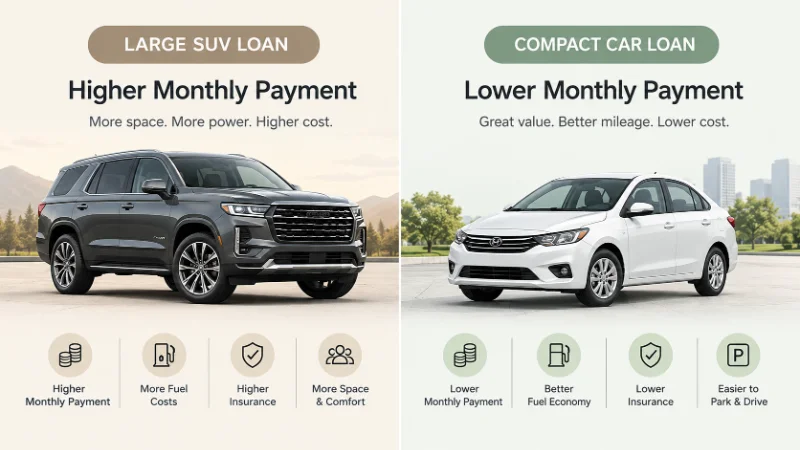
Negative equity changes the math. Dealers can roll the old balance into the new loan, but that means borrowing more for a lesser car. Avoid it unless you have no other choice.
Sell The Car And Buy Something Cheaper
Selling privately usually brings more money than a trade-in. Ask your lender for a payoff letter, and ask how title transfer works while a lien exists.
If the sale price covers the payoff, the leftover cash becomes a down payment on a cheaper car. If it falls short, you must pay the difference at closing. Savings can cover that gap. So can a personal loan, but it adds a new payment.
Buy a used car with a payment you can afford and a shorter term. A reliable older car with a small loan often beats a newer one with a long loan.
What To Do If You Owe More Than The Car Is Worth
Negative equity limits your options, but it does not close every door. The goal is to shrink the gap before you sell or trade.
Pay down principal with every spare dollar, cancel unneeded add-ons, and keep the car a little longer. Cars lose value fastest in their early years, so the gap often closes faster later.
If you must sell now, cover the shortfall in cash or ask your lender about a separate plan for the difference. Avoid rolling it into a new car loan, since that starts the next loan underwater.
Transfer Or Exit A Lease
This applies only if you lease. Lease transfer services let someone else take over your remaining term and payments. The leasing company must approve the transfer, and some charge a fee.
Ask whether you stay responsible if the new driver stops paying. Also check the mileage on the car, because a high-mileage lease is harder to hand off.
Free Up Cash Elsewhere In Your Budget
If the payment will not move, shift money toward it. Audit subscriptions, dining, and unused memberships for one month. Send the savings straight to the loan so they do not disappear.
Extra income helps too. Selling unused items, picking up weekend shifts, or driving for a delivery app all work. If you drive for pay, confirm your insurance covers it, since standard personal policies often exclude delivery and rideshare work.
When Refinancing Is Still The Better Move
Refinancing deserves a fair look in a few cases. Your credit score may have risen a lot since you took the loan. Your original rate may have been high because you financed at the dealership. Or nothing else here lowers the payment enough.
Credit unions often quote lower rates than dealerships. Some offer a rate estimate through a soft credit check, so you can see numbers without a hard inquiry. Compare that against the options above.
Mistakes To Avoid
Do not stop paying and hope the lender will not notice. Late payments hurt your credit and can lead to repossession. Call before you miss a payment, because lenders have more options for borrowers who reach out early.
Do not accept a first offer without checking total cost. Do not use a title loan or payday loan to cover a car payment. Those products carry steep rates and can put your car at risk.
How To Choose The Right Option
Match the fix to the problem. For a short cash crunch, ask for a deferral. For a lasting income drop, ask for a modification and cut your insurance. For a car you can no longer afford, sell or trade down.
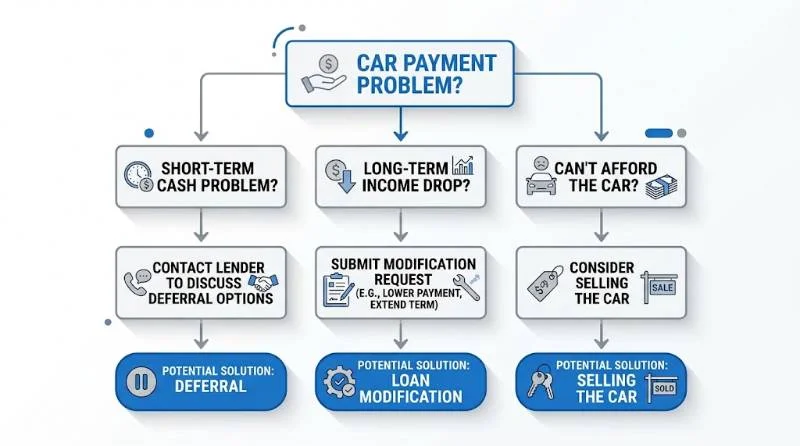
If you owe more than the car is worth, start with add-on cancellations, insurance savings, and extra principal payments. They work slowly, but they do not force you to cover a gap. Work through one option at a time and recheck your statement after each.